

What to Write in a Sympathy Card (Messages and Examples)
Sitting down to write a sympathy card is hard. You want to say something that helps, but every sentence feels either too small or too much. Many people end up just signing their name under the printed verse, or putting the card off until it feels too late.
The truth is that a sympathy card does not need perfect words. It needs a few honest ones. Below is a simple way to structure your message, plus examples for a friend, a coworker, the loss of a parent and more, and a few phrases that are better left out.
Quick answer: In a sympathy card, write a short, sincere message: say you are sorry for their loss, mention the person who died by name, share a brief memory or something you admired about them, offer one specific way to help, and close warmly. For example: “I am so sorry about your mom. I will always remember her laugh at our family barbecues. I would love to bring dinner over next week. Thinking of you, Sarah.” Three or four lines is enough.
A Simple Formula for Any Sympathy Card
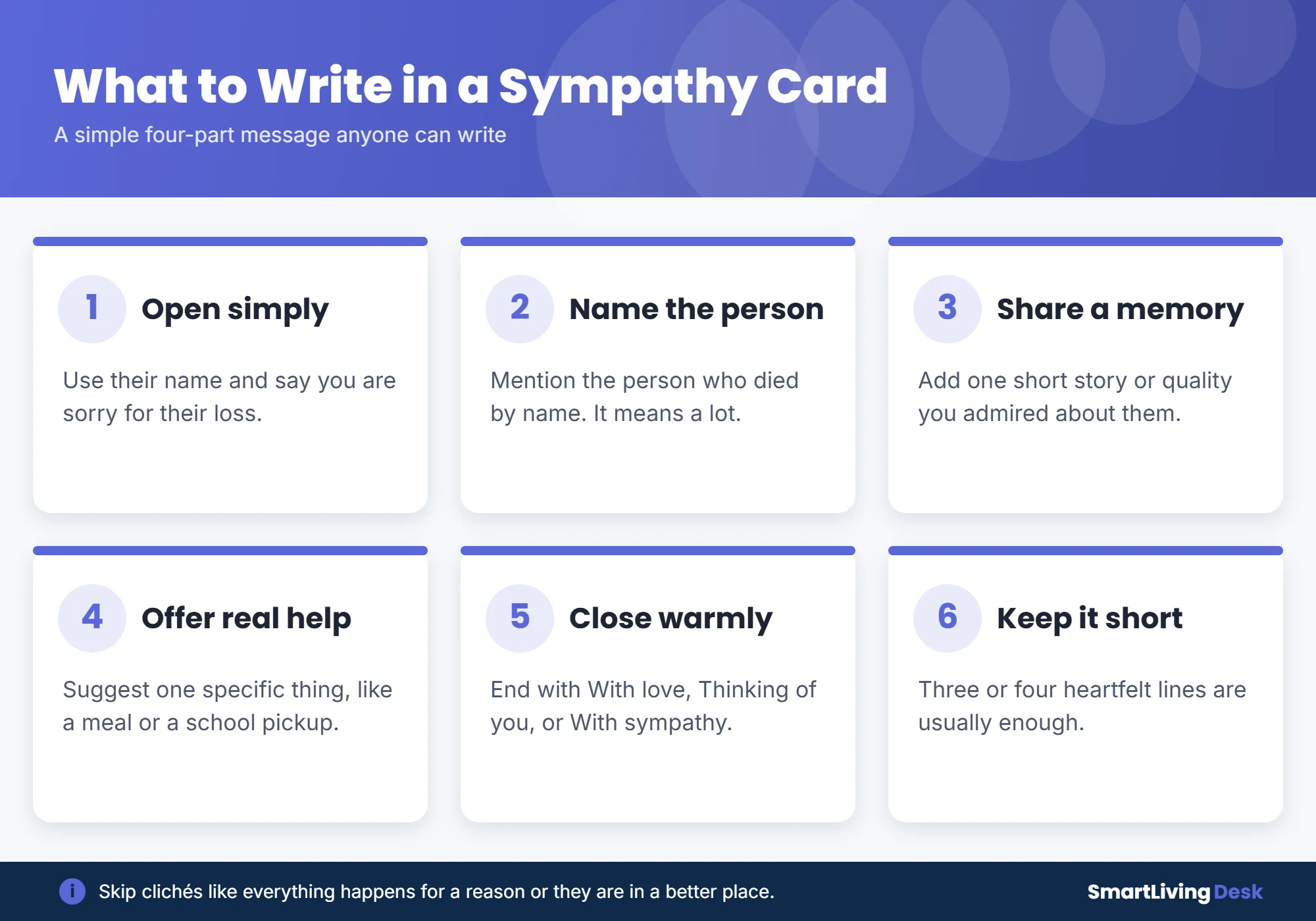
What’s Your Grief suggests a simple four-part structure: offer condolences, talk about the person who died, offer something specific, and close. AARP adds that three or four lines are usually all you need.
- Open: “I am so sorry for your loss.” or “I was heartbroken to hear about David.”
- Remember: “He always had a kind word for everyone at the office.”
- Offer: “I will drop off dinner on Thursday.” or “I am happy to walk the dog any day this week.”
- Close: “Thinking of you,” “With love,” or “With deepest sympathy.”

Short Sympathy Card Messages
When you do not know the family well, a short message is perfectly fine:
I am so sorry for your loss. Thinking of you and your family.
With deepest sympathy as you remember Linda.
Holding you close in my thoughts during this difficult time.
Wishing you peace and comfort in the days ahead.
What to Write in a Sympathy Card to a Friend
I am so sorry about your dad. I know how close you were. I keep thinking about the stories you told me about his fishing trips. I am here for whatever you need, and I will call you this weekend.
There are no words that can make this easier, but I want you to know I love you and I am here. Let me take the kids on Saturday so you can rest.
What to Write in a Sympathy Card for Loss of a Father or Mother
Your mom was one of the warmest people I have ever met. I will always remember how she made everyone feel welcome. Sending you so much love.
I am so sorry about your father. He was proud of you, and it showed every time he talked about you. Thinking of you and your family.
What to Write in a Sympathy Card for a Coworker
I was so sorry to hear about the loss of your husband. Please take all the time you need. We are thinking of you, and the team is covering your projects.
With sincere sympathy from all of us at the office. We are here if you need anything.
Religious Sympathy Messages
If you know the family shares your faith, it can be comforting to include it:
Praying for you and your family as you grieve. May God give you strength and peace.
Keeping you in my prayers. May your faith bring you comfort in the days ahead.
If you are not sure of their beliefs, it is safer to keep the message non-religious.

What Not to Write in a Sympathy Card
Well-meaning phrases can sometimes hurt. Both AARP and What’s Your Grief advise avoiding:
- “Everything happens for a reason.”
- “They are in a better place.”
- “Time heals all wounds.”
- “I know exactly how you feel.” Grief is personal, even if you have had a similar loss.
- Details about how the person died.
- Stories about your own losses, which shift the focus to you.
- Offers of help you cannot really follow through on.
How to Sign a Sympathy Card
- With love,
- Thinking of you,
- With deepest sympathy,
- Holding you in my heart,
- With heartfelt condolences,
- Warmly,
When to Send a Sympathy Card
AARP suggests sending a card within a week or two of the death, but a late card is still better than none. Grief does not end after the funeral. What’s Your Grief also suggests sending a note around the one-year anniversary, when support often fades and a kind word means a lot.
Writing other heartfelt notes? See our guide on how to write a thank you note, which can help when you need to thank people for their support after a loss.
Frequently Asked Questions
How long should a sympathy card message be?
Three or four sentences is plenty. A short, sincere note means more than a long one.
Is it okay to just sign my name?
A signature alone can feel distant. Add at least one line, like “Thinking of you and your family.”
Should I write “passed away” or “died”?
Either is fine. AARP notes that “died” is clear and appropriate, but use whatever feels natural and respectful for the family.
Can I send a sympathy message by text or email?
A quick text is fine right away, but a handwritten card still means a lot and is more likely to be kept.
What if I did not know the person who died?
Focus on the person who is grieving: “I am so sorry for your loss. I am thinking of you and here if you need anything.”
The Bottom Line
Knowing what to write in a sympathy card is less about finding perfect words and more about showing up. Say you are sorry, mention the person by name, share a small memory, offer a specific kind of help and close with warmth. A few honest lines will mean more than you might think.