
How to Clean a Washing Machine (Front Load and Top Load)
If your towels come out smelling a little sour, or you open the washer door and get hit with a musty smell, the machine needs a clean. It sounds strange since a washer is full of soap and water every week, but detergent residue, fabric softener, lint and body oils build up in places you never see. Add warm, damp air and you get the perfect spot for mildew.
Here is how to clean a washing machine properly, with steps for front-load and top-load models, plus how to deal with the door seal, the detergent drawer and the drain filter that most people forget about.
Quick answer: To clean a washing machine, run an empty cycle on the hottest setting with a washer cleaner tablet, about 2 cups of white vinegar, or 1 cup of chlorine bleach (never mix bleach and vinegar). Then wipe the rubber door seal, rinse the detergent dispenser, clean the drain pump filter on front loaders, and wipe the outside. Leave the door open afterward so the drum can dry. Do this about once a month.
How Often Should You Clean a Washing Machine?
Lowe’s recommends cleaning your washer about once a month, or every season if you live alone and do fewer loads. Clean it more often if you wash mostly in cold water, run a lot of heavy loads, or notice a smell. Cold washes and low-sudsing detergent save energy, but they do less to break down the grime that collects inside the machine.
What You Need
- Washing machine cleaner tablets, or white vinegar, or regular chlorine bleach
- Baking soda (optional, for top loaders)
- An old toothbrush or soft scrub brush
- Microfiber cloths or a sponge
- Rubber gloves
- A shallow pan and old towel (for the front-load drain filter)
How to Clean a Front-Load Washing Machine
Front loaders are the ones most likely to smell, because the rubber door seal holds water and the door stays shut between loads. Work through these steps in order.
1. Clean the rubber door seal (gasket)
Pull back the folds of the rubber seal all the way around the opening. You will probably find hair, lint, a stray sock, coins and some black or gray spots. That dark stuff is mildew. Wipe the folds with a cloth and warm soapy water and use a toothbrush on stubborn spots.
For heavy mildew, Sears Home Services suggests mixing 3/4 cup of liquid chlorine bleach into 1 gallon of warm water. Wear gloves, wipe the seal and every fold, let it sit for 5 minutes, then rinse with plain water. Dry the seal with a towel when you finish.

2. Rinse the detergent dispenser drawer
Most dispenser drawers slide out when you press a small release tab. Rinse the drawer and any inserts under hot water and scrub the corners where softener turns into a sticky gunk. Wipe the empty slot inside the machine too, since mildew often grows on the ceiling of that opening. Let everything dry and slide it back in.
3. Run a hot cleaning cycle
Make sure the drum is empty. Then choose one of these options:
- Washer cleaner tablet: Drop one in the drum and run the Clean Washer or Tub Clean cycle. If your machine has no clean cycle, use the hottest, longest normal cycle.
- Vinegar: Pour 2 cups of white vinegar into the empty drum and run a hot cycle.
- Bleach: Add 1 cup of chlorine bleach and run a hot cycle, then run a second empty cycle with nothing added to rinse it out.
Pick one method per cleaning. Do not use bleach and vinegar together, because mixing them can release chlorine gas.
4. Clean the drain pump filter
This is the step that fixes a lot of mystery smells and slow-draining loads. Many front loaders have a small hinged door at the bottom front corner. Behind it is a filter that catches coins, hair pins and lint. Put a shallow pan and a towel down first, because water will come out. Open the small drain hose if there is one, let the water run out, then unscrew the filter slowly. Rinse it, clear the opening, and screw it back in firmly. Check your manual for the exact steps on your model.
5. Wipe the outside and dry the inside
Wipe the door glass, the buttons and the top of the machine with a damp cloth and a little mild soap. When the cleaning cycle is done, dry the door seal and leave the door open for a few hours.
How to Clean a Top-Load Washing Machine
Top loaders have less trouble with mildew, but residue still builds up under the rim and around the agitator.
- Set the washer to the largest load size and hottest water setting and let the tub fill.
- Add about 4 cups of white vinegar to the water (or use a washer cleaner, following the package).
- Let the machine agitate for a minute, then pause it and let the hot vinegar water sit for about an hour.
- While it soaks, dip a cloth in the water and wipe under the lid, the rim of the tub and the fabric softener and bleach cups.
- Finish the cycle, then run one more short rinse with plain water.
- Sprinkle about half a cup of baking soda in the empty tub and run a short hot cycle if a smell remains.
If your top loader has a removable agitator or impeller, Lowe’s notes you can take it out and soak it, but check your owner’s manual first.
How to Clean a Washing Machine With Vinegar and Baking Soda
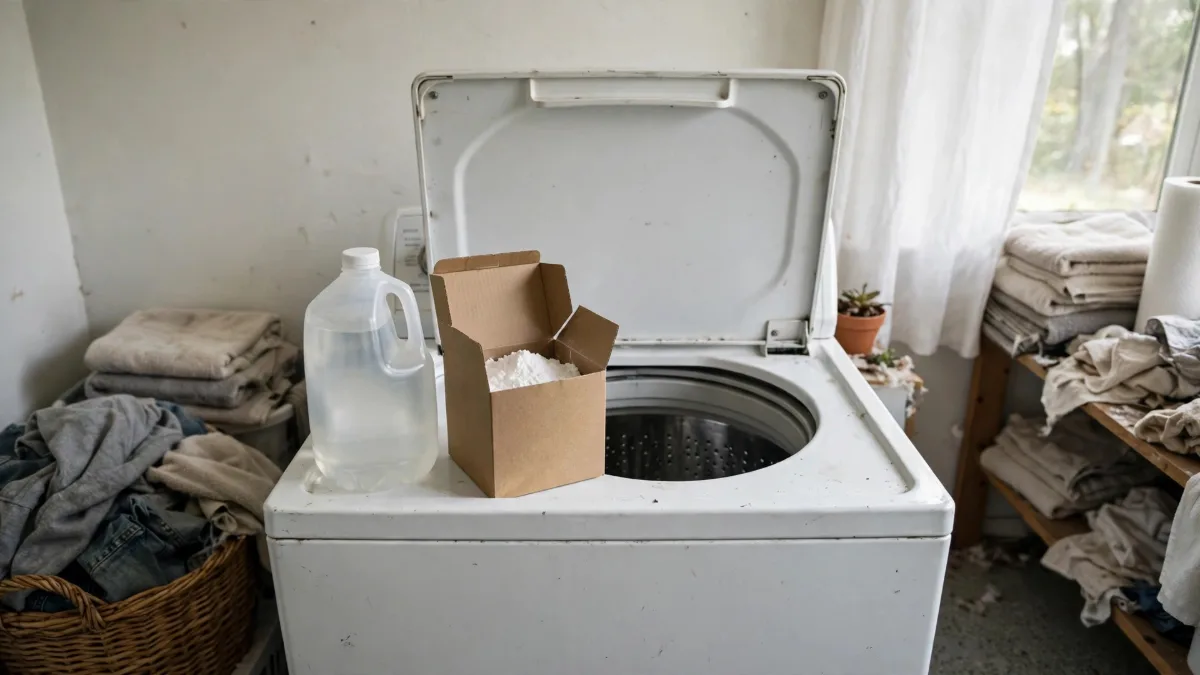
Vinegar and baking soda are a cheap, mild way to freshen a washer. The trick is to use them in separate cycles, not in one big fizzing mix. Run a hot cycle with vinegar first. Then run a second short cycle with about half a cup of baking soda to help lift leftover film and smells.
One caution: Lowe’s points out that using too much vinegar too often can wear on rubber seals and hoses. Once a month is plenty, and some manufacturers prefer their own cleaner tablets, so check your manual.
How to Clean a Washing Machine Door Seal With Mold
If the black spots on your seal do not wipe off, the mold has stained the rubber. The bleach solution above usually lightens it. Let it sit the full 5 minutes before rinsing. If the stain still stays, the seal may be permanently marked, which is mostly a cosmetic issue as long as it is clean and does not smell. A seal that is torn, cracked or leaking should be replaced.

How to Keep Your Washer From Smelling
- Leave the door or lid open between loads so the drum can dry out.
- Take wet clothes out right away. A load left sitting overnight is a fast way to get that sour smell.
- Use the right detergent. High-efficiency machines need HE detergent, and less is usually better. Extra soap leaves residue.
- Go easy on fabric softener. Liquid softener is one of the biggest causes of sticky buildup in dispensers.
- Wipe the door seal with a dry towel after the last load of the day.
- Run a hot wash now and then. If you always wash in cold, a monthly hot cleaning cycle helps.
Washing Machine Cleaning Schedule
| Task | How often |
|---|---|
| Leave door open to dry | After every wash |
| Wipe the door seal | Weekly |
| Hot cleaning cycle | Monthly |
| Rinse dispenser drawer | Monthly or when you see buildup |
| Clean drain pump filter | Every few months, or when it drains slowly |
| Check hoses for cracks | Once or twice a year |
Your laundry room has a couple of other spots worth a look while you are at it. Lint buildup in a dryer vent is a fire risk, so see our guide on how to clean a dryer vent. If your kitchen dishwasher has the same musty smell, the steps in how to clean a dishwasher work in a similar way.
Frequently Asked Questions
Can I use bleach and vinegar to clean my washing machine?
Yes, but never at the same time. Use one per cleaning, or run a full rinse cycle in between. Mixing bleach and vinegar can release toxic chlorine gas.
Where do I put vinegar to clean my washer?
In a front loader, pour it straight into the empty drum or into the detergent dispenser up to the fill line. In a top loader, add it to the tub once it has filled with hot water.
Why does my washing machine smell like mildew?
Usually it is a mix of moisture and buildup. The most common causes are a dirty door seal, a clogged drain pump filter, too much detergent or softener, and keeping the door shut between loads.
Do washing machine cleaner tablets work?
Yes. They are made to break down residue and odor-causing buildup, and many manufacturers recommend them. Use them with the clean cycle if your machine has one.
How do I clean a washing machine without a clean cycle?
Use the hottest and longest normal wash setting with the drum empty. Add your cleaner of choice, then run an extra rinse at the end.
The Bottom Line
Cleaning a washing machine takes less than an hour of hands-on time once a month. Run a hot cycle with a cleaner, vinegar or bleach, wipe the door seal, rinse the dispenser, and empty the drain filter on a front loader. Then leave the door open. Your clothes will come out smelling the way they should.
This guide gives general cleaning advice. Washer designs vary, so check your owner’s manual before using bleach or vinegar or removing parts, especially if your machine is under warranty.