How to Clean a Dishwasher (Filter, Vinegar and Deep Clean Guide)
A dishwasher washes itself every time it runs, so it is easy to assume it stays clean. It doesn’t. Grease, bits of food, soap film and hard-water minerals slowly build up in the filter, the spray arms and the rubber seal. One day you open the door and catch a sour smell, or your glasses come out cloudy and plates have grit on them. That is usually the machine asking for a proper clean.
The good news is that learning how to clean a dishwasher takes about 30 minutes of actual work and costs almost nothing. You need white vinegar, baking soda, dish soap, an old toothbrush and a cloth. Below is the full routine we use, plus a closer look at the dishwasher filter, which is the part most people skip and the part that makes the biggest difference.
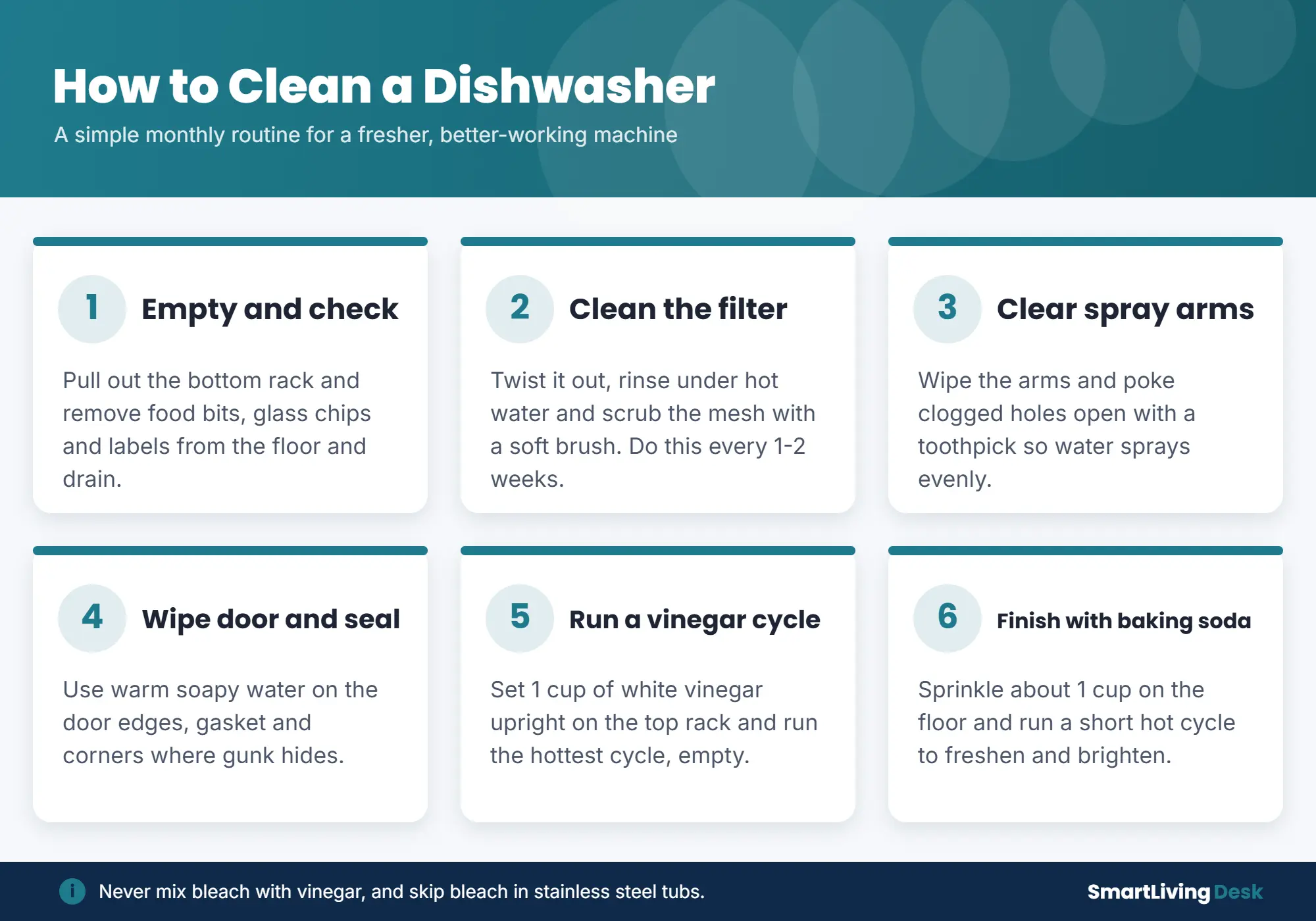
Quick answer: To clean a dishwasher, empty it and pull out the bottom rack, then remove and rinse the filter under hot water, scrubbing the mesh with a soft brush. Clear any clogged spray arm holes with a toothpick and wipe the door edges and gasket with warm soapy water. Next, place 1 cup of white vinegar in an upright dishwasher-safe cup on the top rack and run the hottest cycle with the machine empty. Finish by sprinkling baking soda on the floor and running a short hot cycle.
What You Need
- White distilled vinegar (about 1 cup)
- Baking soda (about 1 cup)
- Mild dish soap and warm water
- A soft brush or old toothbrush
- A toothpick or wooden skewer
- A microfiber cloth or sponge
- Rubber gloves (the filter area is not pretty)
You do not need a special cleaner for a routine clean. Store-bought dishwasher cleaners work well too, especially for heavy limescale, but vinegar and baking soda handle most homes just fine.
How to Clean a Dishwasher Step by Step
1. Empty the machine and check the floor
Take out all dishes and slide the bottom rack out completely. Shine a phone light around the floor of the tub and the drain area. You will often find things like lemon seeds, pieces of glass, bottle labels or a stray bread tie. Pick them out by hand while wearing gloves. Anything stuck here can block water flow or scratch the pump.
2. Remove and clean the dishwasher filter
The filter usually sits in the floor of the tub, under or near the bottom spray arm. Most twist a quarter turn to unlock and then lift out. Rinse it under hot running water and gently scrub the mesh with a soft brush. There is a full walkthrough in the next section, because this step matters more than any other.
3. Clean the spray arms
Spin each spray arm by hand. It should turn freely. Look at the small holes along the arms; if any are packed with food or white mineral crust, poke them clear with a toothpick. Tom’s Guide also suggests removing the lower arm if your model allows it, so you can rinse it under the tap and shake water through it. Clear arms mean water reaches every plate instead of only some of them.
4. Wipe the door, gasket and edges
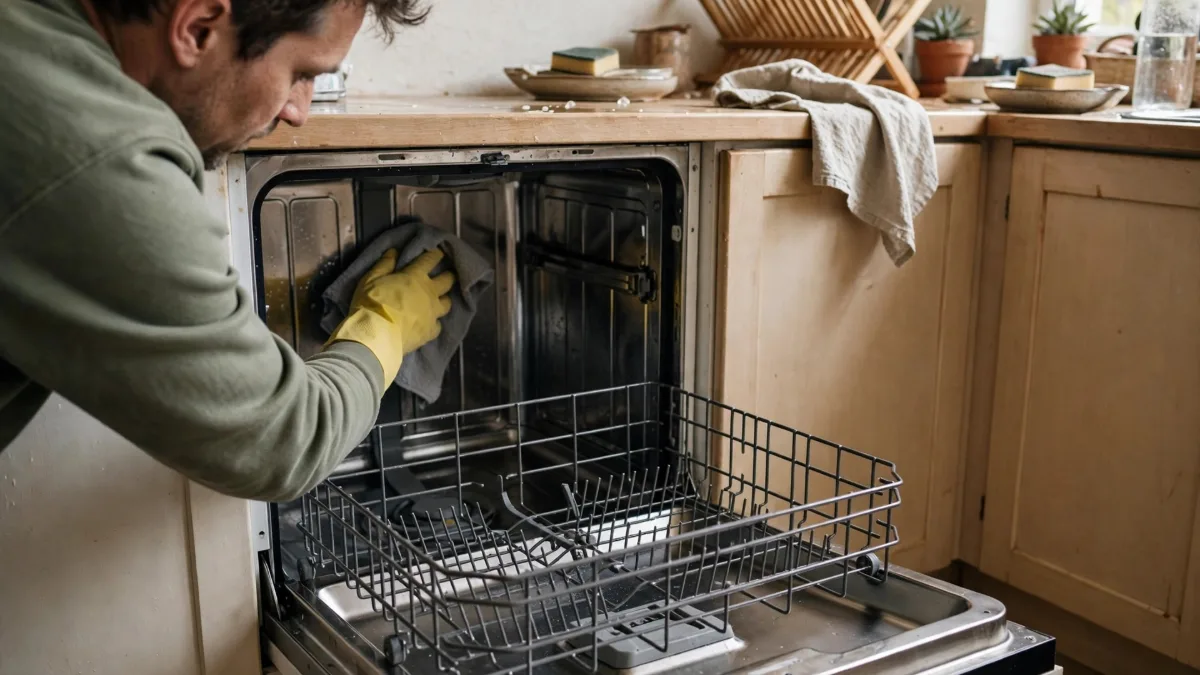
Dip a cloth in warm water with a few drops of dish soap and wipe the inside of the door, the rubber seal around the opening, and the bottom edge of the door where drips collect. Use the toothbrush on the folds of the gasket and around the detergent dispenser. This is where the musty smell often hides, so do not rush it. Rinse the cloth and wipe away the soap.
5. Run a hot vinegar cycle
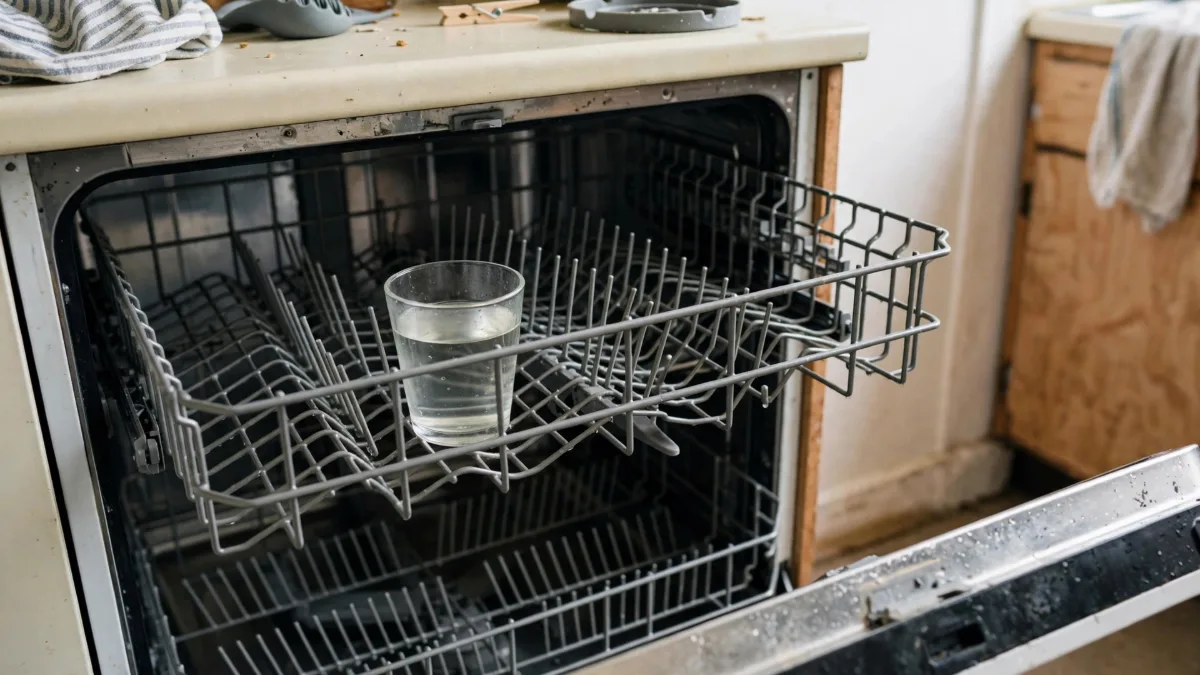
Put the filter and racks back. Fill a dishwasher-safe cup or bowl with 1 cup of white vinegar and set it upright on the top rack. Run the hottest cycle with the dishwasher otherwise empty and no detergent. AAA recommends this exact setup for a deep clean. The vinegar slowly spills out as the water sprays, cutting through grease and loosening mineral deposits.
6. Finish with baking soda
When the vinegar cycle ends, sprinkle about a cup of baking soda across the floor of the tub. Run a short hot cycle. This helps lift leftover stains and freshens the smell. After you finish, leave the door open for a while so the inside air-dries.
How to Clean a Dishwasher Filter
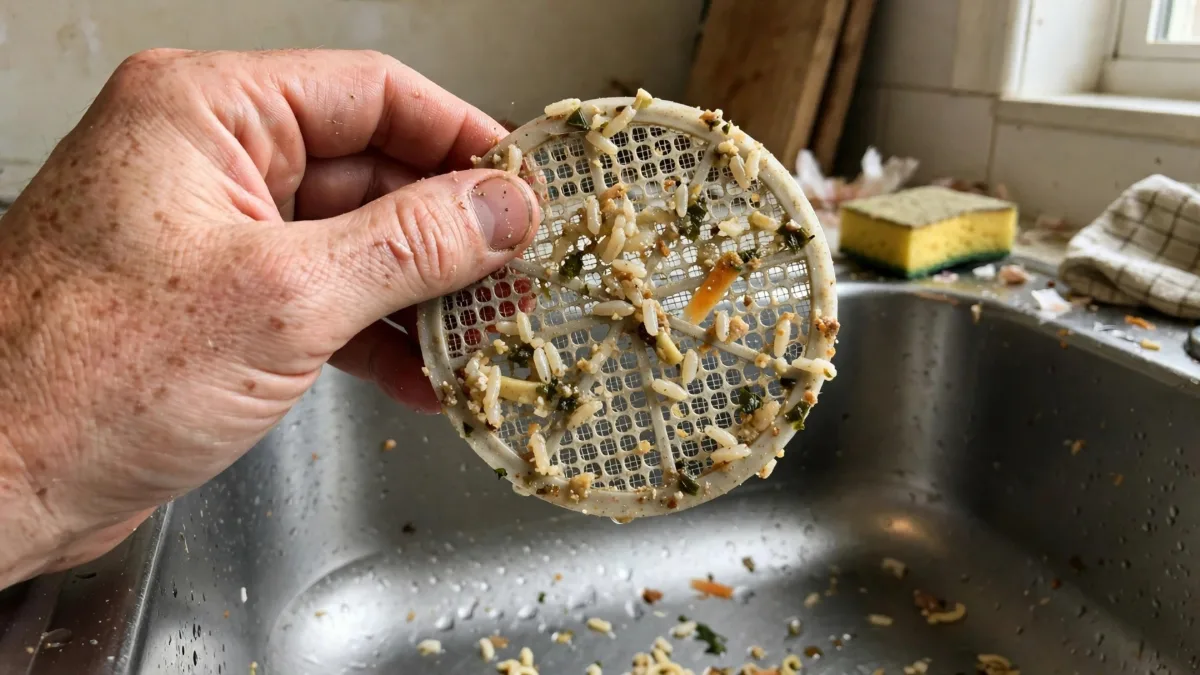
If you only do one thing from this guide, clean the filter. It catches food particles so they do not get sprayed back onto your dishes. When it clogs, water drains slowly, dishes come out with a gritty film and the machine starts to smell. It is also the part people do not know exists, which is why “how to clean dishwasher filter” is searched about as often as the main question.
Manual filter or self-cleaning filter?
Many dishwashers made in the last ten years or so use a manual filter that you remove and rinse yourself. Some older models use a self-cleaning setup with a small hard food disposer (a grinder) that chops up scraps and sends them down the drain. Check your owner’s manual if you are not sure. If you can twist something out of the floor of the tub, you have a manual filter and it needs regular attention.
Steps to clean it
- Pull out the bottom rack so you can reach the floor of the tub.
- Find the filter, usually a round cylinder in a back corner or the center of the floor.
- Twist it counterclockwise (most models) and lift it out. Some have a flat mesh screen underneath that lifts out too.
- Rinse both parts under hot running water.
- Scrub the mesh gently with a soft toothbrush and a little dish soap. Do not use a wire brush or scouring pad, since the mesh tears easily.
- For greasy buildup, soak the parts in hot soapy water for 10 to 15 minutes, then scrub again.
- Wipe out the filter housing with a damp cloth before putting the filter back.
- Twist it back until it locks. A loose filter can let debris into the pump.
How often to clean the filter
It depends on how much you use the machine and how well you scrape plates. AAA suggests cleaning the filter weekly, while Tom’s Guide says every one to two weeks for most homes. A family running the dishwasher every day should lean toward weekly. A couple who runs it twice a week can usually get away with every two to four weeks.
How to Clean a Dishwasher With Vinegar and Baking Soda
Vinegar and baking soda are the most popular home method, but they work best in two separate cycles, not mixed together. Pour them together and they fizz up and neutralize each other, which looks impressive and does very little. Run the vinegar cycle first (cup upright on the top rack, hottest setting), then the baking soda cycle (sprinkled on the floor, short hot setting).
For a slow or smelly drain, Angi suggests a separate fix: warm 1 cup of vinegar, mix in 2 to 3 tablespoons of baking soda, pour it into the bottom near the drain, wait 10 to 15 minutes, then run a short rinse cycle.
How to Deep Clean a Dishwasher (Smells, Mold and Buildup)
If your dishwasher smells bad even after a vinegar cycle, go a step further:
- Soak the racks and removable parts. Put the utensil basket and any removable trays in a sink of warm water with 1 to 2 cups of vinegar for 15 to 20 minutes, then scrub.
- Check the drain hose connection. If water sits in the bottom after a cycle, the filter or drain may be clogged. Clean the filter first; if water still pools, a kinked hose or a blocked garbage disposal connection could be the cause.
- Clean the dispenser and the vent. Old detergent can cake around the soap cup. Scrub it with a toothbrush.
- Look for black spots. Mold likes the gasket and the bottom of the door. Scrub these with warm soapy water or vinegar, and keep the door slightly open after cycles so the tub can dry.
- Use a commercial cleaner for heavy limescale. If you have hard water and white crust everywhere, a dishwasher cleaner made for limescale will often do better than vinegar.
The Best Way to Clean a Dishwasher: Cleaning Schedule
| Task | How often |
|---|---|
| Scrape plates and check filter for large debris | After most loads |
| Remove and rinse the filter | Every 1-2 weeks |
| Wipe door edges and gasket | Weekly |
| Vinegar and baking soda deep clean | Monthly |
| Clear spray arm holes | Monthly, or when dishes come out dirty |
| Longest gap between cleanings | No more than 6 months |
The six-month limit comes from AAA, which recommends a monthly deep clean for regular users and never going longer than six months, even if you rarely use the dishwasher.
What Not to Do
- Do not mix bleach with vinegar. The combination releases chlorine gas, which is dangerous to breathe.
- Do not use bleach in a stainless steel tub. Angi notes that bleach can stain and damage stainless steel, and AAA warns it can harm internal parts.
- Do not use dish soap as detergent. Regular dish soap foams up and can leak suds all over your floor.
- Do not scrub the filter with steel wool. The fine mesh tears, and a torn filter lets food reach the pump.
- Do not run the heated dry after a cleaning cycle. AAA suggests skipping the drying cycle and leaving the door open to air-dry instead.
Signs Your Dishwasher Needs Cleaning
- A sour, musty or rotten-egg smell when you open the door
- Dishes with gritty bits or a greasy film after a full cycle
- Water left standing in the bottom of the tub
- Cloudy glasses or white spots (often hard-water buildup or low rinse aid)
- Visible black spots on the gasket or door
If the smell is coming from the kitchen sink instead, the drain may be the problem; our guide on cleaning a slow drain covers methods that also work for sinks. While you are in a cleaning mood, you might also want to clean your oven or descale your Keurig.
Frequently Asked Questions
How often should you clean your dishwasher?
Rinse the filter every one to two weeks and do a full deep clean with vinegar and baking soda about once a month. If you use the dishwasher only now and then, every few months is fine, but do not go longer than six months.
Can I put vinegar directly in the bottom of the dishwasher?
You can, but it drains away in the first minute of the cycle. Setting it in an upright cup on the top rack releases it slowly through the wash, so it has more time to work.
Why does my dishwasher smell even after cleaning?
The usual causes are a filter that was not fully cleaned, food trapped under the filter housing, a dirty door gasket, or a drain hose that lets dirty water flow back in. Clean the filter area again, scrub the seal, and leave the door open after cycles.
Is it safe to use vinegar in my dishwasher?
An occasional vinegar cycle is common advice from cleaning experts. Some manufacturers prefer their own cleaners, so if your machine is under warranty, check the manual. Never combine vinegar with bleach.
Do dishwasher cleaning tablets work?
Yes. Commercial cleaners are made to dissolve grease and limescale and are a good choice for hard water. Follow the package directions and run them in an empty machine.
The Bottom Line
Knowing how to clean a dishwasher saves you from rewashing dishes and can help the machine last longer. Rinse the filter every week or two, clear the spray arms, wipe the seal, and run a vinegar cycle followed by a baking soda cycle once a month. It is half an hour of work for a dishwasher that smells clean and actually gets your plates clean.
This guide is general home care advice. Dishwasher designs vary, so always check your owner’s manual before removing parts or using cleaners, especially if your appliance is under warranty.