How to Clean Grout (Floors, Showers and Tough Stains)
Tile can look spotless while the grout between it slowly turns gray, brown or even black. Grout is porous, so it soaks up dirt, grease, soap scum and moisture. In a shower, that often means mildew. On a kitchen floor, it is mostly grime and spills.
Here is how to clean grout using simple methods, starting with the gentlest and moving up to stronger options for stubborn stains. You will also learn what not to use and how to keep grout clean longer.
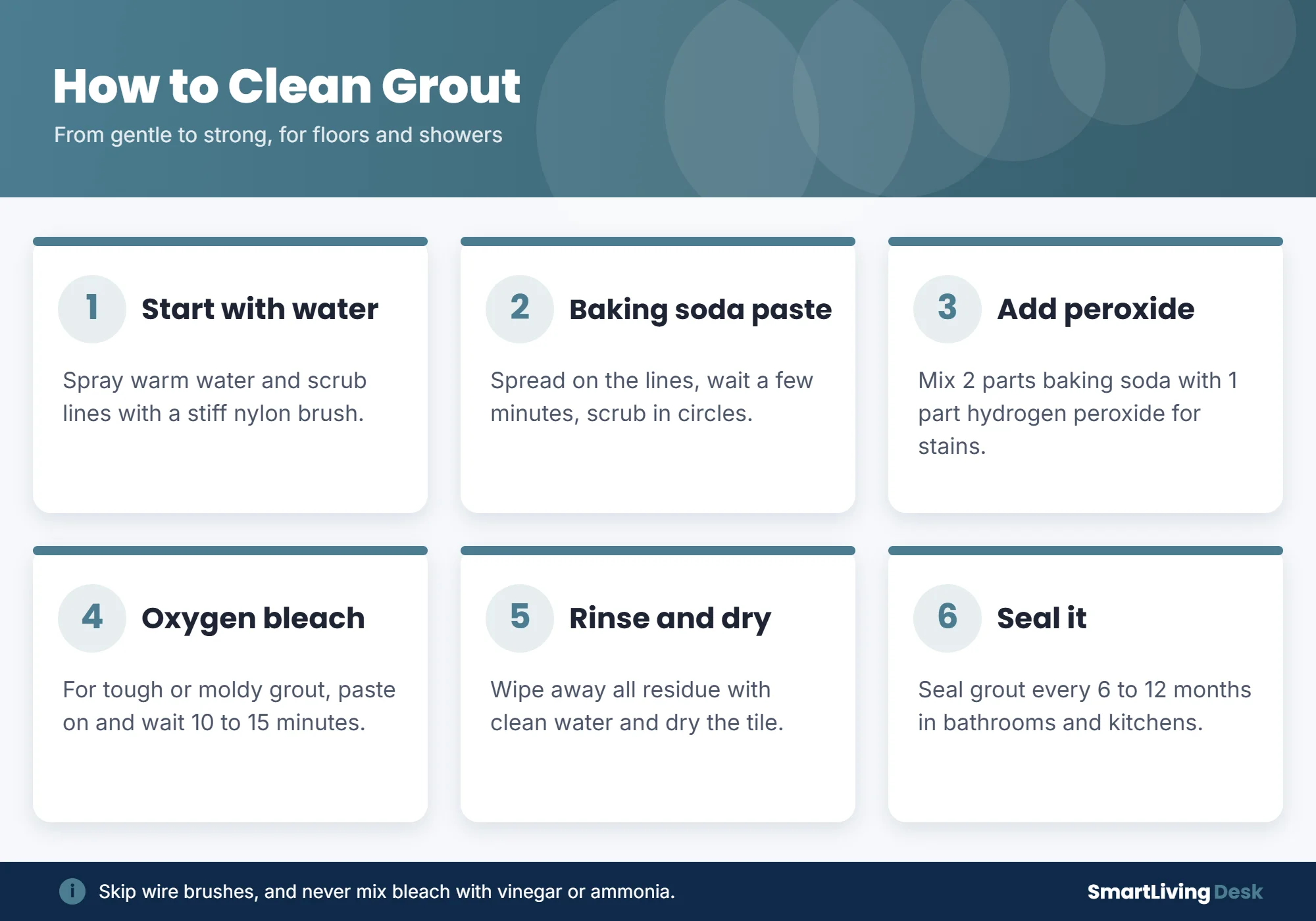
Quick answer: To clean grout, start by scrubbing with warm water and a stiff nylon brush. For dirtier grout, spread a paste of baking soda and water on the lines, wait a few minutes, and scrub in small circles. For stains or mildew, use a paste of 2 parts baking soda to 1 part hydrogen peroxide, or an oxygen bleach paste left on for 10 to 15 minutes. Rinse well, dry the tile, and seal the grout once it is clean.
What You Need
- Stiff nylon grout brush or old toothbrush
- Spray bottle with warm water
- Baking soda
- Hydrogen peroxide (3%)
- Oxygen bleach powder (for tough stains)
- Rubber gloves
- Microfiber cloths
- Grout sealer (for afterward)
Method 1: Warm Water and a Brush
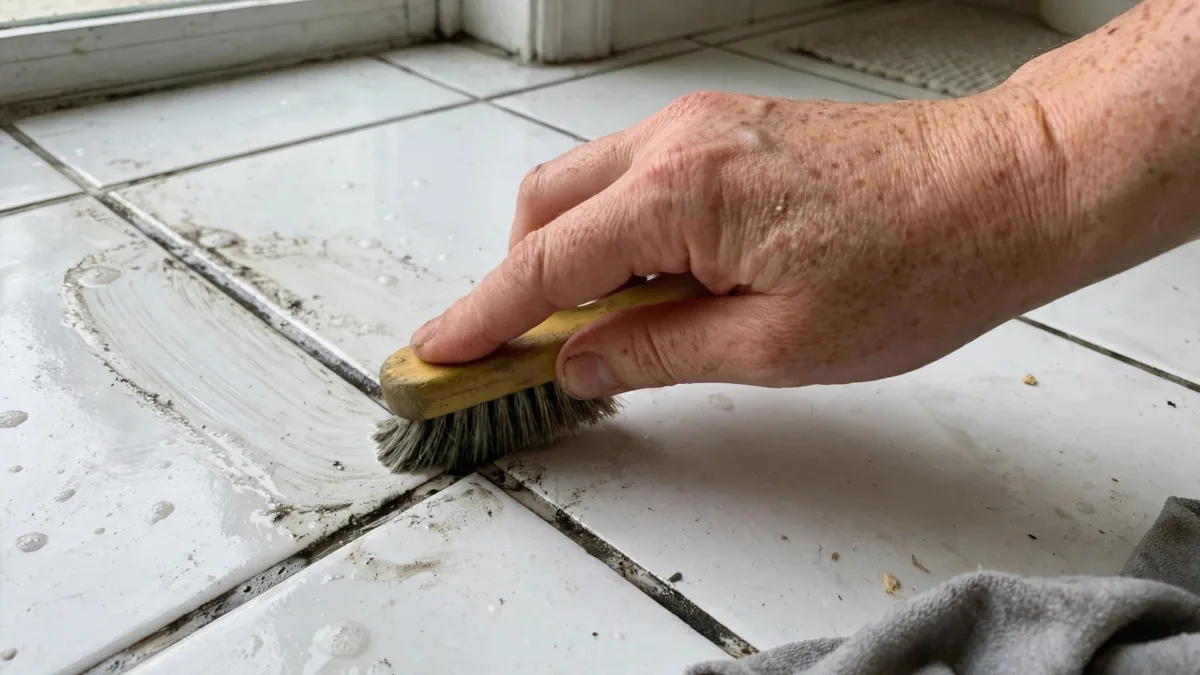
For lightly dirty grout, this may be all you need. Spray warm water on the grout lines, then scrub in small circles with a stiff nylon brush. Bob Vila recommends this as the first step because it is safe for every type of grout. Wipe dry afterward so water does not sit in the grout.
Method 2: Baking Soda Paste
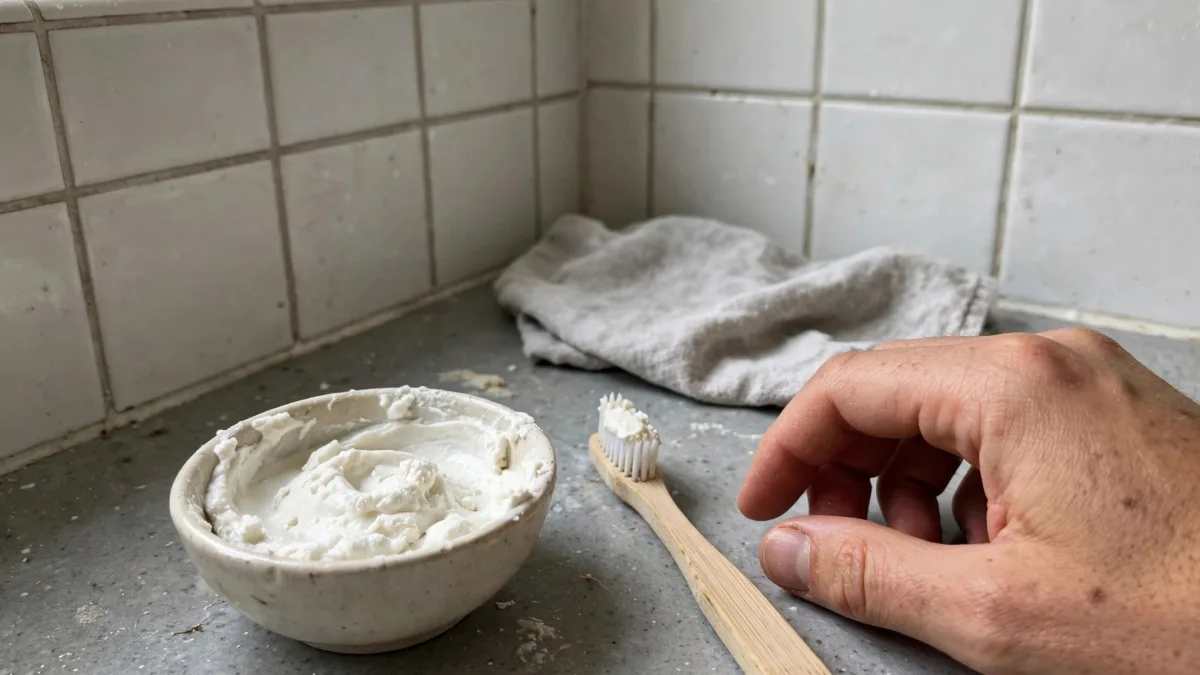
Mix baking soda with a little water until it is about as thick as toothpaste. Spread it along the grout lines with your finger or a brush, wait 5 to 10 minutes, then scrub. Baking soda is mildly abrasive and safe on both sealed and unsealed grout.
Method 3: Baking Soda and Hydrogen Peroxide
This is the go-to method for stained grout. Tom’s Guide suggests mixing about 2 parts baking soda with 1 part hydrogen peroxide, adding a drop of dish soap for kitchen grease. Spread the paste on, let it sit 10 to 15 minutes (or up to 30 for very neglected grout), then scrub in circles and rinse thoroughly. Hydrogen peroxide is also effective on mildew in showers.
Method 4: Oxygen Bleach
For deep stains and mold, mix oxygen bleach powder with warm water into a paste, following the package directions. Apply it to the grout, leave it for about 10 to 15 minutes, then scrub and rinse. Open a window and wear gloves. Oxygen bleach is gentler on grout and colored grout than chlorine bleach.
How to Clean Grout in a Shower
null- Run hot water for a few minutes to loosen soap scum.
- Spray the grout with hydrogen peroxide or apply the baking soda and peroxide paste.
- Let it sit 10 to 15 minutes, then scrub with a grout brush.
- Rinse the walls well.
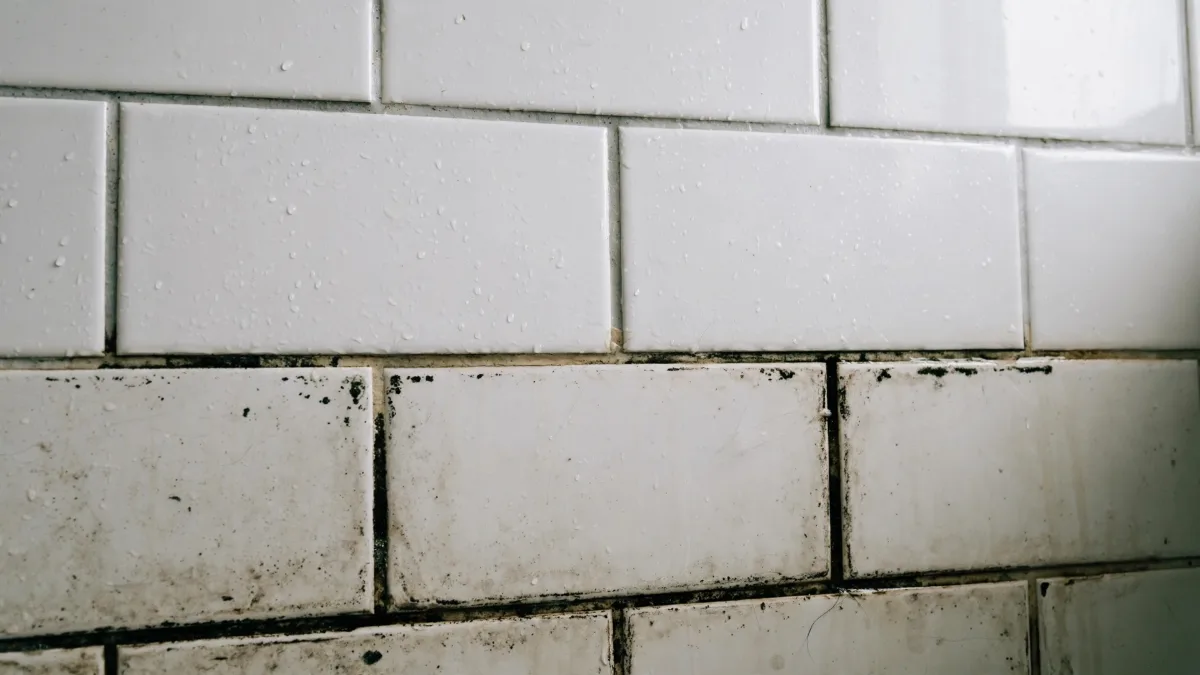
- After every shower, run the exhaust fan for at least 20 minutes and squeegee the walls, as Tom’s Guide recommends, to keep mildew from coming back.
What Not to Use on Grout
- Wire brushes and steel wool: They scratch tile and wear down grout. Use nylon bristles.
- Chlorine bleach on a regular basis: It can break down sealer and fade colored grout. Keep it as a last resort.
- Frequent vinegar: Vinegar is acidic. Tom’s Guide notes it can wear down cement-based grout over time and etch natural stone like marble. Bob Vila says to avoid it on unsealed grout.
- Mixing cleaners: Never mix bleach with vinegar or ammonia. It creates toxic gas.
How to Seal Grout
Once the grout is clean and completely dry (usually after 24 to 48 hours), apply a penetrating grout sealer with a small brush or applicator bottle, following the label. Wipe off any sealer that gets on the tile. Tom’s Guide recommends resealing every 6 to 12 months in busy or humid areas like showers, backsplashes and kitchen floors. Sealed grout resists stains and is much easier to clean.
How to Keep Grout Clean
- Wipe or mop tile floors weekly with a pH-neutral cleaner.
- Clean up spills, especially grease, coffee and tomato sauce, right away.
- Ventilate bathrooms and squeegee shower walls.
- Reseal grout on schedule.
Cleaning the rest of the house? See our guides on how to clean hardwood floors and how to clean a shower drain.
Frequently Asked Questions
What is the best homemade grout cleaner?
A paste of baking soda and hydrogen peroxide works on most stains and is safe for sealed and unsealed grout.
Can I use a steam cleaner on grout?
Yes, a steam cleaner with a grout attachment can lift grime without chemicals. Check that your tile and grout can handle the heat first.
How do I get black mold out of grout?
Use hydrogen peroxide or an oxygen bleach paste, let it sit 10 to 15 minutes, scrub and rinse. If mold keeps coming back, the grout may need to be replaced.
How often should grout be cleaned?
Wipe tile weekly and give grout a deeper scrub every month or two, more often in showers.
Why is my grout still dark after cleaning?
Stains may be deep in old, unsealed grout. A grout colorant or regrouting can restore the look.
The Bottom Line
To clean grout, start gentle with warm water and a nylon brush, then step up to baking soda, hydrogen peroxide or oxygen bleach for tougher stains. Rinse well, let it dry and seal it. A little weekly upkeep keeps grout looking fresh.
Test any cleaner on a hidden area first, wear gloves, and ventilate the room. Follow the directions on commercial products and never mix cleaning chemicals.