
7 Best Hip Flexor Stretches for Tight Hips (Step-by-Step)
If you sit for most of the day, your hips probably feel it. Tight hip flexors can cause a stiff, achy feeling at the front of your hips, make it harder to stand up straight and even contribute to lower back discomfort. The good news is that a few minutes of the right hip flexor stretch each day can make a real difference. Below are seven of the best stretches, how to do each one with good form, and how long and how often to hold them.
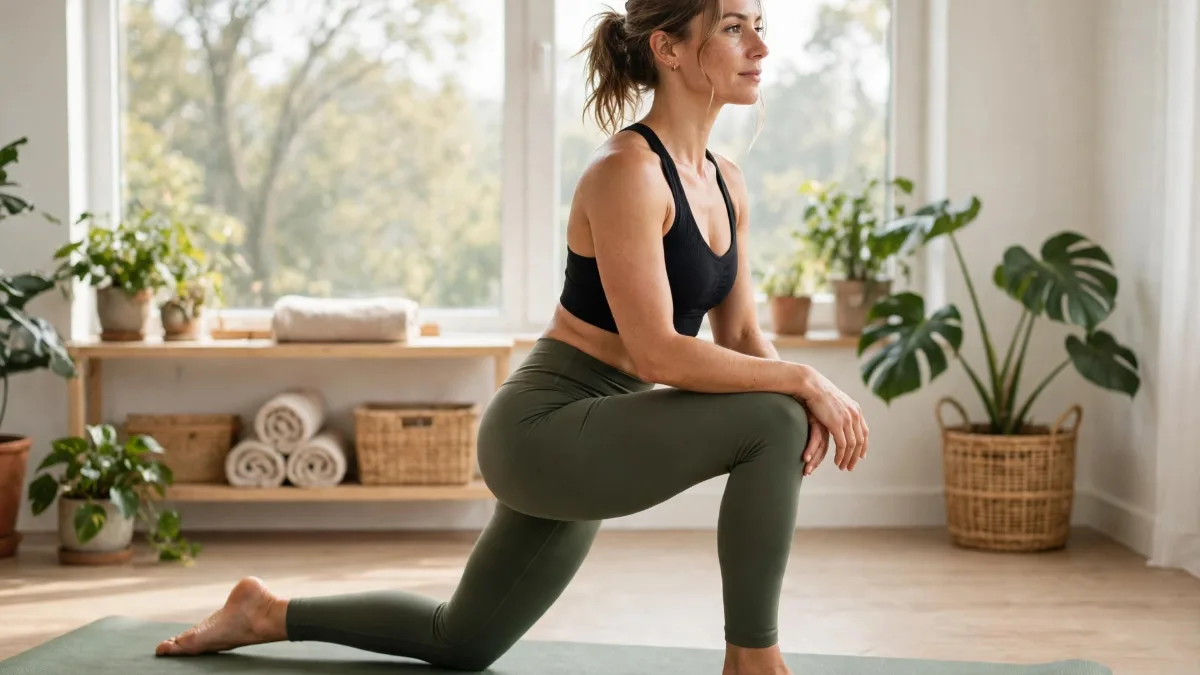
Quick answer: The best hip flexor stretch for most people is the half-kneeling hip flexor stretch. Kneel on one knee with the other foot flat in front of you, tuck your pelvis, squeeze the glute of the back leg and gently shift your hips forward until you feel a stretch at the front of the back hip. Hold for about 30 seconds, repeat 2 to 3 times per side, and do it daily, especially if you sit a lot.
What Are the Hip Flexors?
Your hip flexors are a group of muscles at the front of your hip that lift your knee toward your chest and help you bend at the waist. According to the Hospital for Special Surgery, the main ones are:
- Iliopsoas (the psoas major and iliacus): the primary hip flexors, connecting your lower spine and pelvis to your thigh bone
- Rectus femoris: one of the quadriceps, which crosses both the hip and the knee
- Sartorius: a long, thin muscle that runs diagonally across the thigh
Signs and Causes of Tight Hip Flexors
Common signs include a tight or achy feeling at the front of the hip, stiffness when you stand up after sitting, a shorter stride when walking or running, and sometimes lower back discomfort. The most common causes are:
- Sitting for long periods at a desk, in the car or on the couch, which keeps the hip flexors in a shortened position
- Repetitive hip movements in activities like running and cycling
- Weak glutes and core muscles, which can make the hip flexors work harder to stabilize your pelvis

7 Best Hip Flexor Stretches
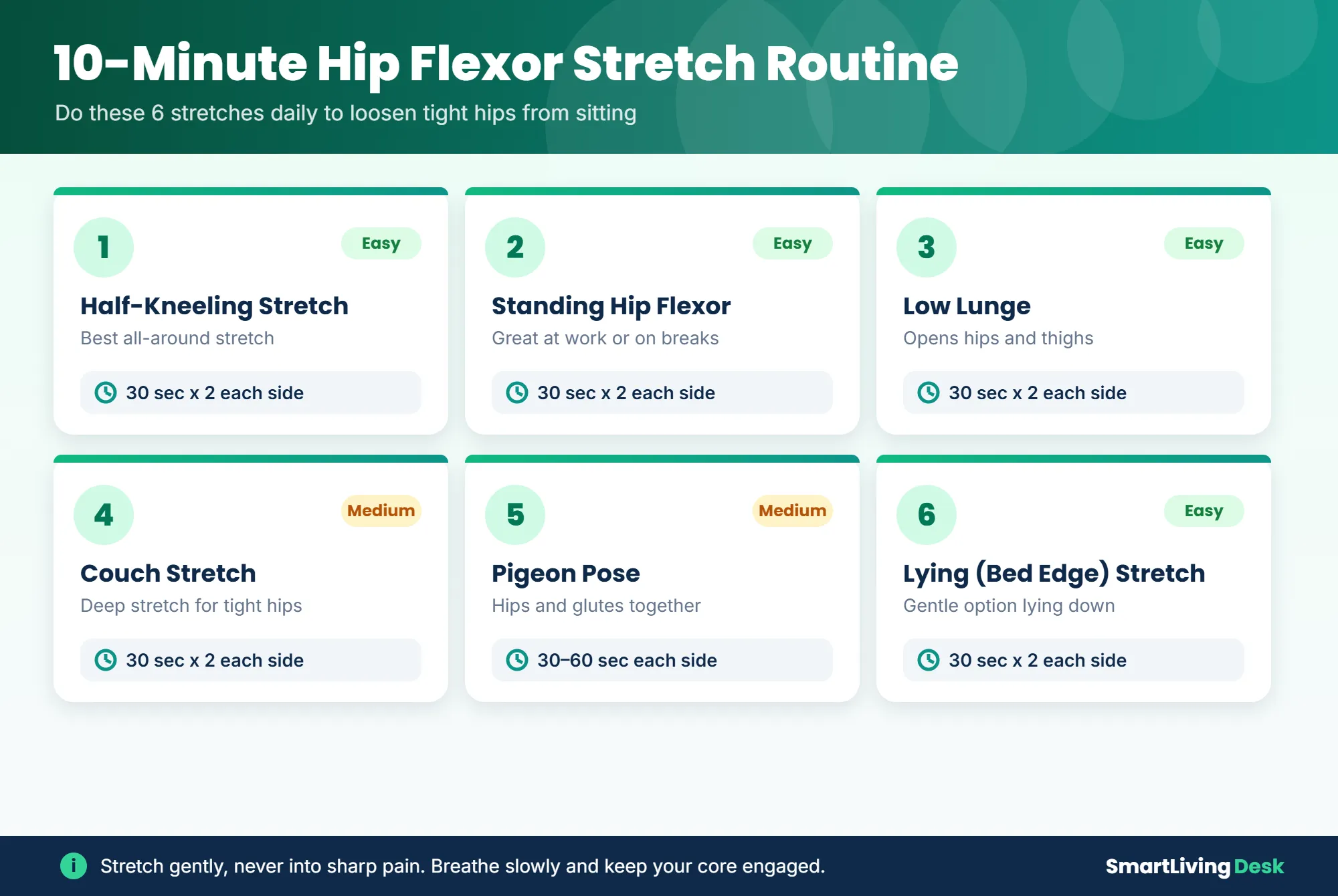
1. Half-kneeling hip flexor stretch
This is the go-to stretch recommended by many physical therapists, and the one most people search for as the “kneeling hip flexor stretch.”
- Kneel on your right knee on a mat or folded towel. Place your left foot flat in front of you with the knee bent at about 90 degrees.
- Tuck your pelvis under slightly, as if pulling your belt buckle up toward your ribs, and squeeze your right glute.
- Keeping your back straight and chest tall, gently shift your hips forward until you feel a stretch at the front of the right hip.
- For a deeper stretch, reach your right arm overhead and lean slightly to the left.
- Hold for 30 seconds, then switch sides.
Form tip: do not arch your lower back or lunge too far forward. The pelvic tuck is what makes this stretch work.
2. Standing hip flexor stretch
Perfect for the office or when kneeling is uncomfortable. Stand tall and take a big step forward with your left foot into a short split stance, both feet pointing forward. Lift your right heel, tuck your pelvis and squeeze your right glute. Bend your front knee slightly and shift your hips forward until you feel the stretch in the front of your right hip. Hold onto a wall or chair for balance if needed.
3. Low lunge stretch
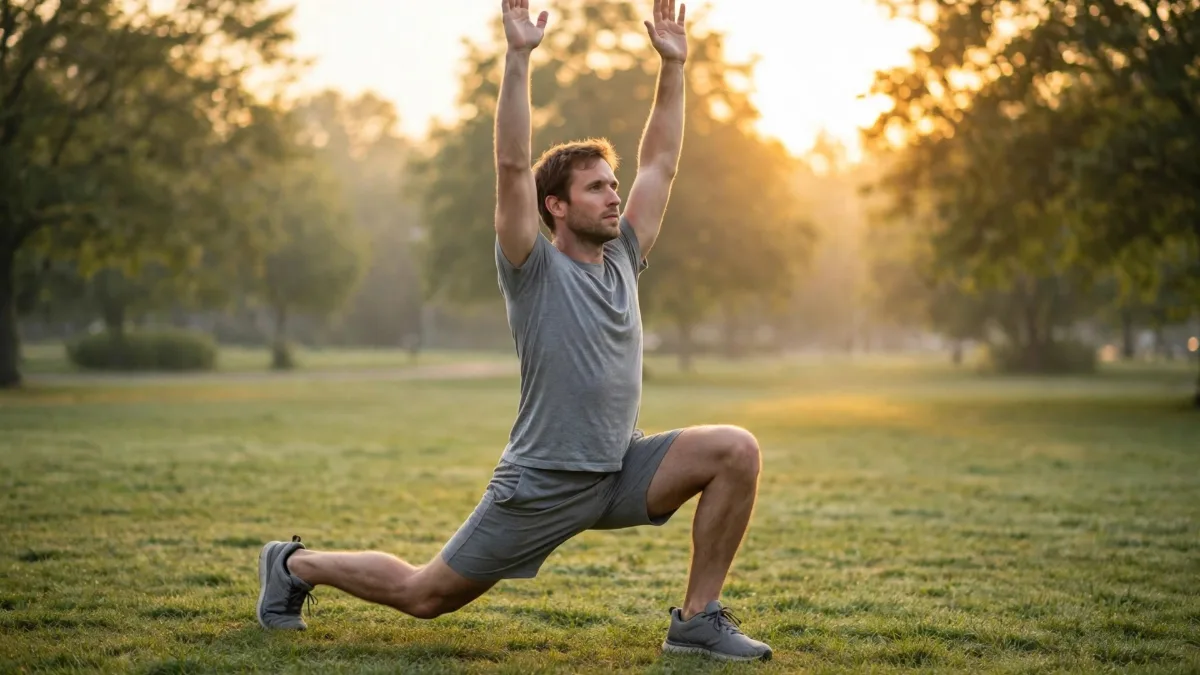
From a lunge position, lower your back knee to the floor and slide your back leg further behind you. Keep your front knee over your ankle and sink your hips down and forward. Raise both arms overhead to add a stretch through the side of your body. This version is popular with runners because it also opens up the thighs.
4. Couch stretch
This is a deeper stretch that targets both the hip flexors and the quads. Kneel in front of a couch or wall and slide your right knee back so it rests near the base of the couch, with your shin and foot up against it. Step your left foot forward into a lunge. Keep your torso upright, tuck your pelvis and squeeze your right glute. Start with just a few breaths, since this one can feel intense, and work up to 30 seconds.
5. Pigeon pose
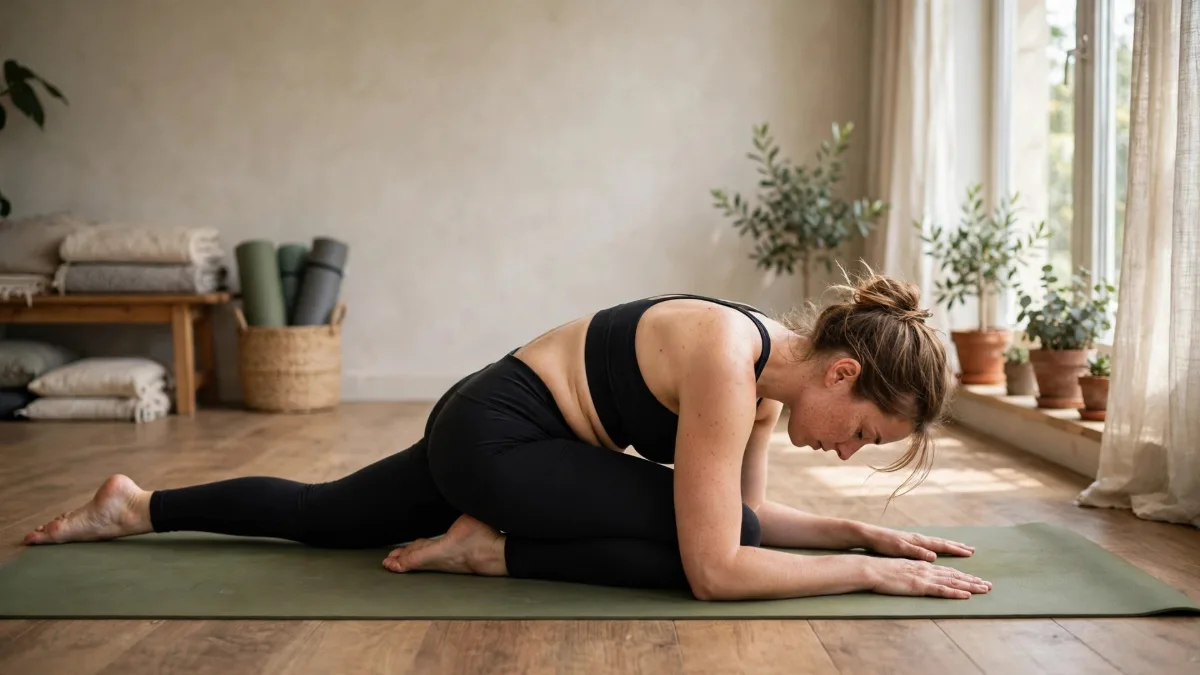
A favorite in yoga classes, pigeon pose stretches the hip flexors of the back leg along with the glutes of the front leg. From a plank or tabletop position, bring your right knee forward behind your right wrist and angle your right shin across the mat. Slide your left leg straight back and lower your hips toward the floor. Stay upright on your hands or fold forward over your front leg. Place a pillow under your hip if it does not reach the floor.
6. Lying (supine) hip flexor stretch
A gentle option you can do in bed. Lie on your back near the edge of a bed with one leg hanging off the side. Pull your other knee toward your chest to keep your lower back flat. Let gravity pull the hanging leg down to stretch the front of the hip. For more stretch, bend the hanging knee.
7. Dynamic leg swings
Dynamic stretches are great as a warm-up before running or workouts. Hold onto a wall or chair and swing one leg forward and back in a controlled motion, gradually increasing the range. Do 10 to 15 swings per leg.
How Long and How Often Should You Stretch?
| Recommendation | |
|---|---|
| Hold time | About 30 seconds per stretch |
| Repetitions | 2 to 3 times per side |
| How often | Daily, or even twice a day if you sit a lot |
| Breaks from sitting | Stand up and move every 30 to 45 minutes |
| Static vs. dynamic | Dynamic before workouts, static after workouts or anytime |
Most people notice their hips feel looser within a couple of weeks of consistent stretching. Pair your stretches with strengthening moves like glute bridges, clamshells and planks, since a strong core and glutes take pressure off the hip flexors.
Safety Tips
- Move slowly and never bounce into a static stretch.
- Stretch to the point of gentle tension, not pain.
- Keep breathing and relax into each hold.
- Use a mat, towel or pillow under your knee for kneeling stretches.
- Stop and talk to a doctor or physical therapist if you have sharp pain, pain that lasts more than a few weeks, numbness, a recent hip injury or hip surgery.
Frequently Asked Questions
How do you stretch your hip flexors without kneeling?
Try the standing hip flexor stretch or the lying stretch at the edge of a bed. Both target the same muscles without pressure on your knees.
How long does it take to loosen tight hip flexors?
Many people feel some relief right away, with lasting improvement after 2 to 6 weeks of regular stretching and less sitting. It depends on how tight you are and how consistent you stay.
Can tight hip flexors cause lower back pain?
They can contribute to it. Tight hip flexors can pull on the pelvis and lower spine, which may increase strain on the lower back. Ongoing back pain should always be checked by a healthcare professional.
Should I stretch my hip flexors every day?
Yes. Gentle daily stretching is safe for most people and is especially helpful if you sit for long hours.
The Bottom Line
Tight hips are one of the most common side effects of modern, desk-bound life, but they are also one of the easiest problems to improve. Start with the half-kneeling hip flexor stretch, add two or three others from this list, and spend just 5 to 10 minutes a day on them. Combine that with regular movement breaks and a little glute and core strengthening, and your hips will thank you.
This article is for general information and is not medical advice. If you have hip pain, an injury or a medical condition, talk to a doctor or physical therapist before starting a new stretching routine.