

How to Stop Snoring: 8 Tips That Actually Help
Snoring might be a running joke in some households, but for the person lying awake next to it, it is no laughing matter. It can also leave the snorer feeling tired, and sometimes it points to a bigger health issue.
The good news is that many people can reduce or stop snoring with a few simple changes. This guide explains what causes snoring, how to stop snoring naturally, what to try if your partner snores, and when snoring is a sign you should see a doctor. It also answers common questions from Reddit and Google.
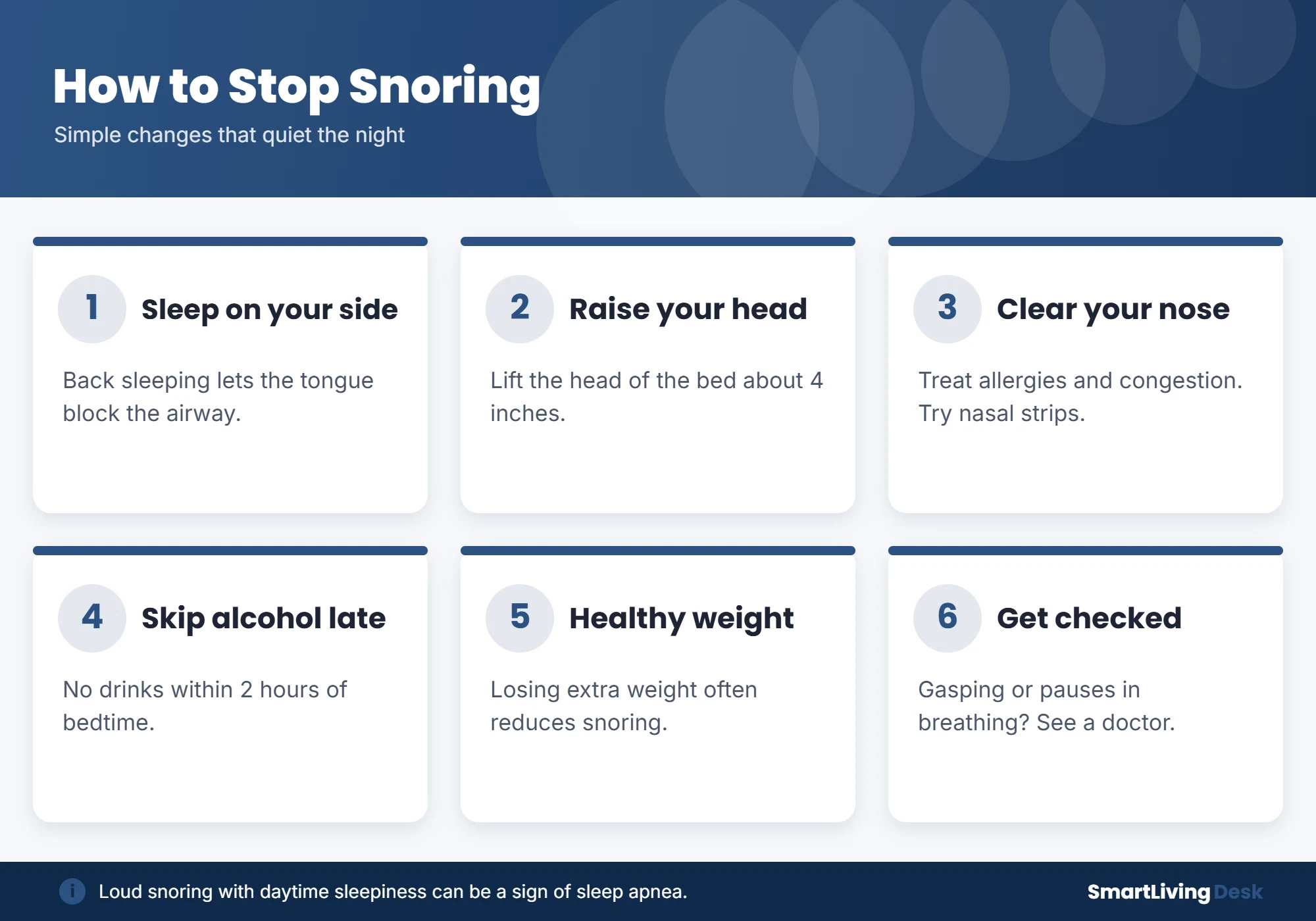
Quick answer: To stop snoring, sleep on your side instead of your back, raise the head of your bed by about 4 inches, and treat nasal congestion with allergy care or nasal strips. Avoid alcohol and sedatives within two hours of bedtime, keep a healthy weight, quit smoking and get at least seven hours of sleep. If you snore loudly and also gasp, choke or stop breathing during sleep, or feel very sleepy during the day, see a doctor to check for obstructive sleep apnea.
What Causes Snoring?
Snoring happens when air cannot flow freely through your nose and throat while you sleep. The relaxed tissues in your throat vibrate, creating the familiar sound. Common causes include sleeping on your back, nasal congestion, alcohol, extra weight around the neck, lack of sleep, and the shape of your mouth, nose or throat.

How to Stop Snoring: 8 Tips That Help
Most of these come from Mayo Clinic’s self-care advice for snoring.
1. Sleep on your side
Lying on your back lets your tongue fall backward and narrow your airway. Side sleeping often makes a big difference. If you keep rolling onto your back, a body pillow or the old trick of sewing a tennis ball into the back of a pajama top can help.
2. Raise the head of your bed
Lifting the head of the bed by about 4 inches may keep your airway more open. Use bed risers or a wedge pillow rather than stacking regular pillows, which can bend your neck.
3. Clear your nose
Allergies, colds or a deviated septum force you to breathe through your mouth, making snoring more likely. Nasal strips or external nasal dilators can open your nasal passages. A humidifier and a warm shower before bed may also help. Talk to your doctor about ongoing congestion.
4. Avoid alcohol and sedatives before bed
Alcohol and sedatives relax the throat muscles. Mayo Clinic suggests avoiding alcohol for at least two hours before bedtime.
5. Keep a healthy weight
Extra tissue around the throat can narrow the airway. Losing weight often reduces snoring for people who are overweight.
6. Quit smoking
Smoking irritates and inflames the airways. Quitting may reduce snoring along with many other health benefits.
7. Get enough sleep
Being overtired can make snoring worse. Adults should aim for at least seven hours of sleep a night.
8. Stay hydrated
Dehydration can make nasal and throat secretions stickier. See how much water to drink a day.
Is Snoring a Sign of Sleep Apnea?
Sometimes. Obstructive sleep apnea (OSA) causes repeated pauses in breathing during sleep. See a doctor if snoring comes with:
- Gasping, choking or pauses in breathing that a partner notices
- Waking up with a dry mouth or headache
- Feeling very sleepy or unfocused during the day
- High blood pressure
- Snoring loud enough to be heard through walls
A doctor may recommend a sleep study. Treatments for sleep apnea include CPAP machines, custom oral appliances from a dentist and, in some cases, surgery.

How to Stop Someone Else From Snoring
- Gently encourage them to roll onto their side.
- Share these tips with them during the day, not at 2 a.m.
- Use earplugs, a white noise machine or a fan to mask the sound.
- Suggest a doctor visit if snoring is loud or comes with breathing pauses.
Do Anti-Snoring Products Work?
Nasal strips and dilators help some people with nasal snoring, but not people with sleep apnea. Mayo Clinic notes that many over-the-counter anti-snoring products have not been proven effective in clinical trials. Custom mouthpieces fitted by a dentist are more reliable than one-size-fits-all versions.
Frequently Asked Questions
How can I stop snoring immediately?
Change to side sleeping, clear your nose, and skip alcohol before bed. These are the fastest changes most people can make.
Why do I snore more when I am tired?
Exhaustion makes throat muscles relax more deeply, which can increase snoring.
Can kids snore?
Yes. Regular loud snoring in children is worth mentioning to a pediatrician, since it can be linked to enlarged tonsils or sleep apnea.
The Bottom Line
To stop snoring, sleep on your side, raise your head, keep your nose clear, avoid alcohol late at night, maintain a healthy weight and get enough sleep. If snoring comes with gasping, breathing pauses or daytime sleepiness, see a doctor to check for sleep apnea. For more calm-mind tips before bed, read how to stop overthinking.
This article is for general information and is not medical advice. See a doctor if you think you or someone you love has sleep apnea.