
Is Oatmeal Good for You? Benefits, Types and Tips
Oatmeal has a reputation as one of the healthiest breakfasts you can eat. It is cheap, filling and endlessly customizable. But between sugary instant packets, overnight oats trends and online debates about carbs, many people wonder: is oatmeal actually good for you?
For most people, the answer is yes, with a few smart choices. This guide covers oatmeal’s nutrition, its proven health benefits, which type of oats is best, possible downsides and how to make a healthier bowl. It also answers the questions people ask most on Reddit and Google.
Quick answer: Yes, oatmeal is good for you for most people. Oats are a whole grain rich in fiber, especially a soluble fiber called beta-glucan, which research shows can help lower LDL cholesterol and improve blood sugar control. Oatmeal also provides protein, manganese and other minerals and keeps you full for hours. Choose steel-cut or rolled oats over sugary flavored instant packets, top with fruit, nuts or yogurt instead of lots of sugar, and pick certified gluten-free oats if you have celiac disease.
Oatmeal Nutrition
Oats are a whole grain, meaning they keep the bran, germ and endosperm. A typical half-cup of dry rolled oats (about one cup cooked) provides roughly 150 calories, about 5 grams of protein and 4 grams of fiber, plus manganese, phosphorus, magnesium, zinc and B vitamins.

Health Benefits of Oatmeal
1. It can help lower cholesterol
Oats contain beta-glucan, a soluble fiber that forms a gel in your gut and helps remove cholesterol. A health article reviewed by medical experts at SingleCare cites a meta-analysis finding that oat beta-glucan significantly lowered total and LDL cholesterol in people with high cholesterol. In the U.S., the FDA allows foods with enough oat beta-glucan to carry a heart health claim.
2. It supports blood sugar control
Research has found oats can help lower fasting blood sugar and improve post-meal blood sugar in adults with type 2 diabetes. Less processed oats work better here than instant.
3. It keeps you full
The fiber and slow-digesting carbs in oatmeal help you feel satisfied longer, which can make it easier to manage your weight.
4. It is good for your gut
Fiber supports regular digestion, and beta-glucan feeds beneficial gut bacteria. For more fiber ideas, see our chart of foods high in fiber.
5. It contains antioxidants
Oats contain avenanthramides, antioxidants found almost only in oats, which may help reduce inflammation.

Steel-Cut vs. Rolled vs. Instant Oats
| Type | How it is made | Cook time | Best for |
|---|---|---|---|
| Steel-cut | Whole oat groats chopped | 20 to 30 minutes | Chewy texture, slowest digestion |
| Rolled (old-fashioned) | Steamed and flattened | About 5 minutes | Everyday oatmeal, baking, overnight oats |
| Quick or instant | Rolled thinner and pre-cooked | 1 to 2 minutes | Convenience; choose plain |
All three have similar nutrients per serving. Steel-cut and rolled oats digest more slowly and have a gentler effect on blood sugar. The bigger issue with instant oatmeal is that flavored packets often contain a lot of added sugar.

Possible Downsides of Oatmeal
- Added sugar: Flavored packets and heavy toppings can turn a healthy breakfast into a sugary one.
- Gluten cross-contact: Oats are naturally gluten-free but often processed with wheat. People with celiac disease should buy certified gluten-free oats.
- Bloating: If you are new to high-fiber foods, start with smaller portions.
- Not much protein alone: Pair oats with protein to stay full longer.
How to Make Oatmeal Healthier
- Cook with milk or add Greek yogurt for protein.
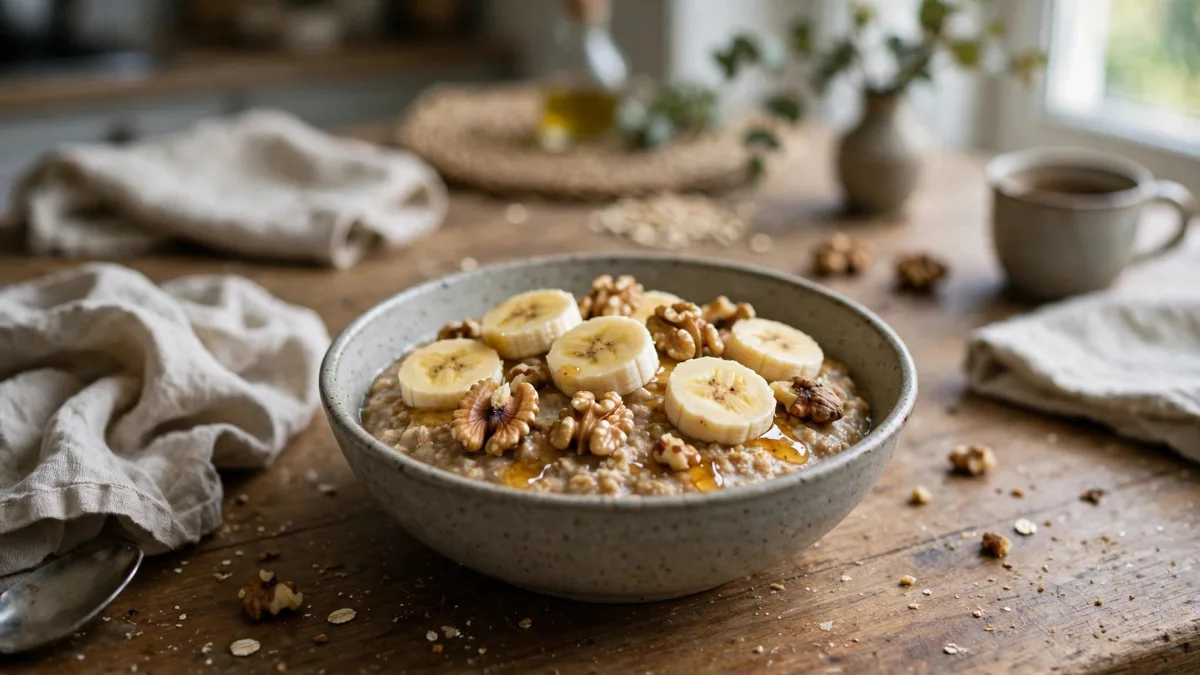
- Top with berries, banana or apple instead of brown sugar.
- Add nuts, nut butter, chia or ground flax seeds.
- Season with cinnamon or vanilla for sweetness without sugar.
- Try savory oats with an egg and vegetables.
- Make overnight oats for an easy grab-and-go breakfast.
Frequently Asked Questions
Is it OK to eat oatmeal every day?
For most people, yes. A daily bowl of plain oats with healthy toppings fits well into a balanced diet.
Is oatmeal good for weight loss?
It can help because it is filling. Portion size and toppings matter most.
Is instant oatmeal bad for you?
Plain instant oats are fine. Flavored packets are often high in sugar, so check the label.
Is oatmeal good for people with diabetes?
Steel-cut or rolled oats in sensible portions can fit a diabetes-friendly diet, but check with your doctor or dietitian.
The Bottom Line
Oatmeal is a healthy, fiber-rich whole grain that can support heart health, steady blood sugar and fullness. Choose steel-cut or rolled oats, limit added sugar and add protein and fruit for a balanced breakfast. Remember to drink enough fluids too; see how much water to drink a day.
This article is for general information and is not medical or nutrition advice. Talk to your doctor or a registered dietitian about your individual needs.