How to Unclog a Toilet (With or Without a Plunger)
A clogged toilet always seems to happen at the worst time, usually when you have guests over or you are already running late. The good news is that most clogs are close to the surface and come loose with a plunger and a bit of patience. You rarely need a plumber.
This guide walks you through how to unclog a toilet step by step, starting with the quickest fix and moving to stronger methods. It also covers what to do if you do not have a plunger and how to keep it from happening again.
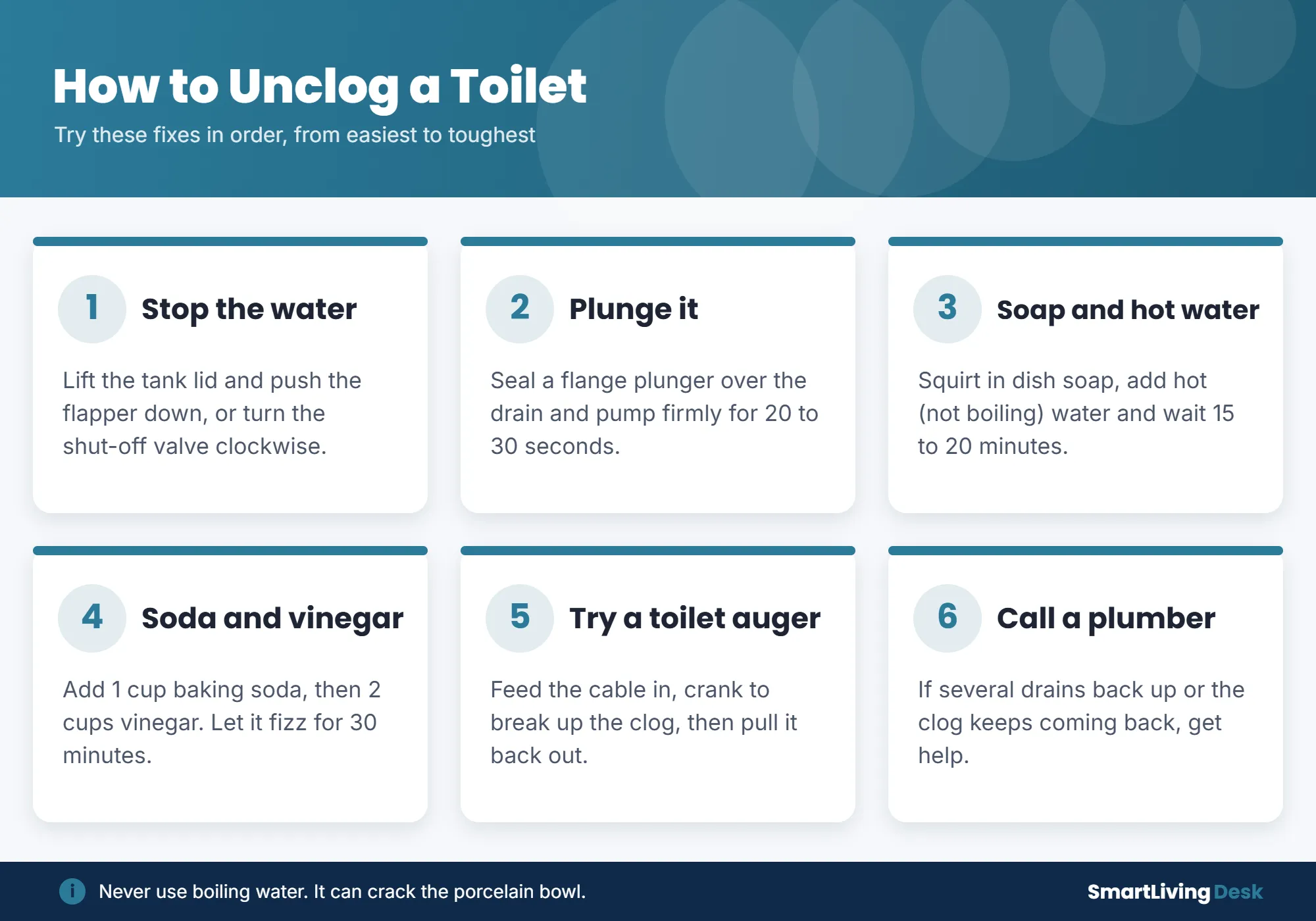
Quick answer: To unclog a toilet, first stop the water from rising by pushing the flapper down inside the tank or turning off the shut-off valve. Then use a flange plunger: seal it over the drain hole and pump firmly for 20 to 30 seconds before flushing. If that does not work, add dish soap and a bucket of hot (not boiling) water and wait 15 to 20 minutes. For a stubborn clog, use a toilet auger.
First, Stop the Toilet From Overflowing
If the water is rising after a flush, act fast. Take the lid off the tank and push down on the rubber flapper at the bottom. That stops more water from going into the bowl. You can also turn the shut-off valve behind the toilet clockwise until it stops. Do not flush again until the clog is cleared.
Before you start, lay some old towels around the base of the toilet and put on rubber gloves. Plunging can splash.
Method 1: How to Unclog a Toilet With a Plunger
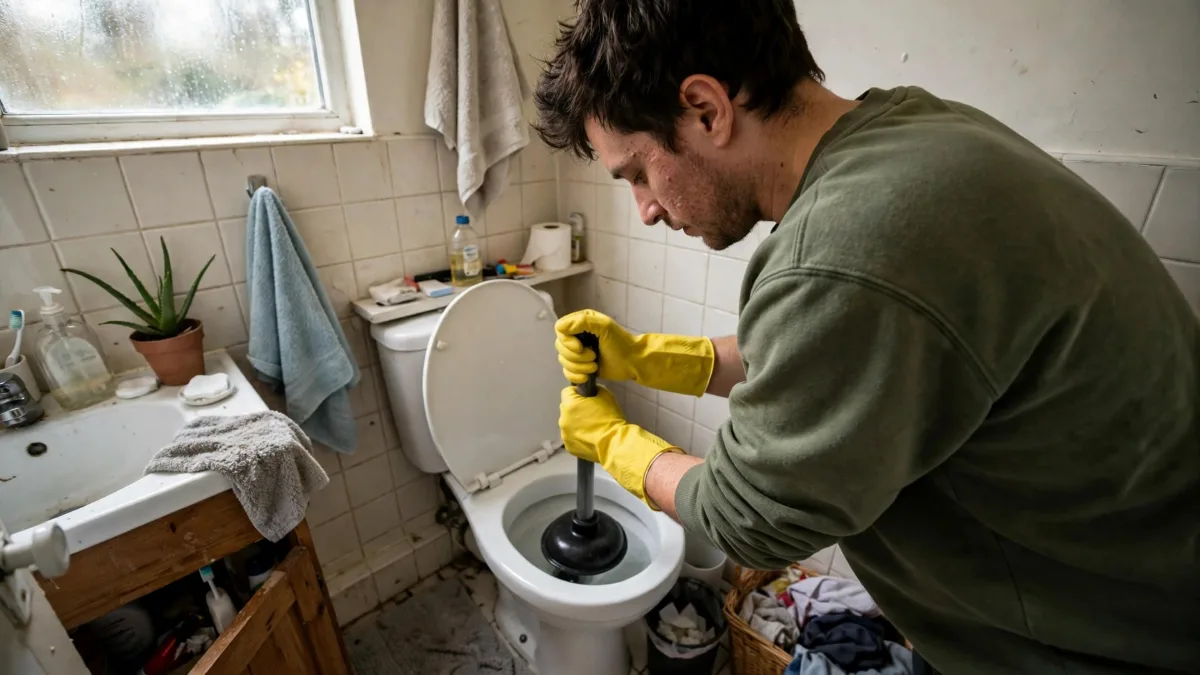
A plunger fixes most toilet clogs, but the type matters. A flat cup plunger is made for sinks. For a toilet you want a flange plunger, which has an extra rubber sleeve that fits into the drain opening and makes a tight seal.
- Make sure there is enough water in the bowl to cover the plunger cup. Add some from a bucket if needed.
- Put the plunger in at an angle so it fills with water instead of air.
- Fit the flange into the drain hole and press down gently to make a seal.
- Push and pull with quick, firm strokes, keeping the seal. This Old House suggests focusing on the pull, since pushing too hard can pack the clog deeper.
- Keep going for 20 to 30 seconds, then lift the plunger and flush.
- Repeat a few times if the water starts to drain slowly. That means the clog is moving.

Method 2: How to Unclog a Toilet Without a Plunger
“How to unclog a toilet without a plunger” is one of the most searched versions of this question, and there are a few good options.
Dish soap and hot water
Squirt a generous amount of dish soap into the bowl, about half a cup. Let it sit for a few minutes so it can slide down to the clog. Then pour in a bucket of hot tap water from waist height. The water should be hot but not boiling, because boiling water can crack porcelain. Wait 15 to 20 minutes and flush. The soap lubricates the clog and the weight of the water helps push it through.
Baking soda and vinegar
Pour 1 cup of baking soda into the bowl, then slowly add 2 cups of white vinegar. It will fizz. Leave it for about 30 minutes, then add a bucket of hot water and flush. This works best on soft clogs made of waste and toilet paper.
Wire coat hanger
Straighten a wire hanger, wrap the end in a rag and tape it so it will not scratch the bowl. Gently push it into the drain and twist to break up a clog close to the opening. This only reaches a few inches, so it is best for clogs you can almost see.
Method 3: Use a Toilet Auger
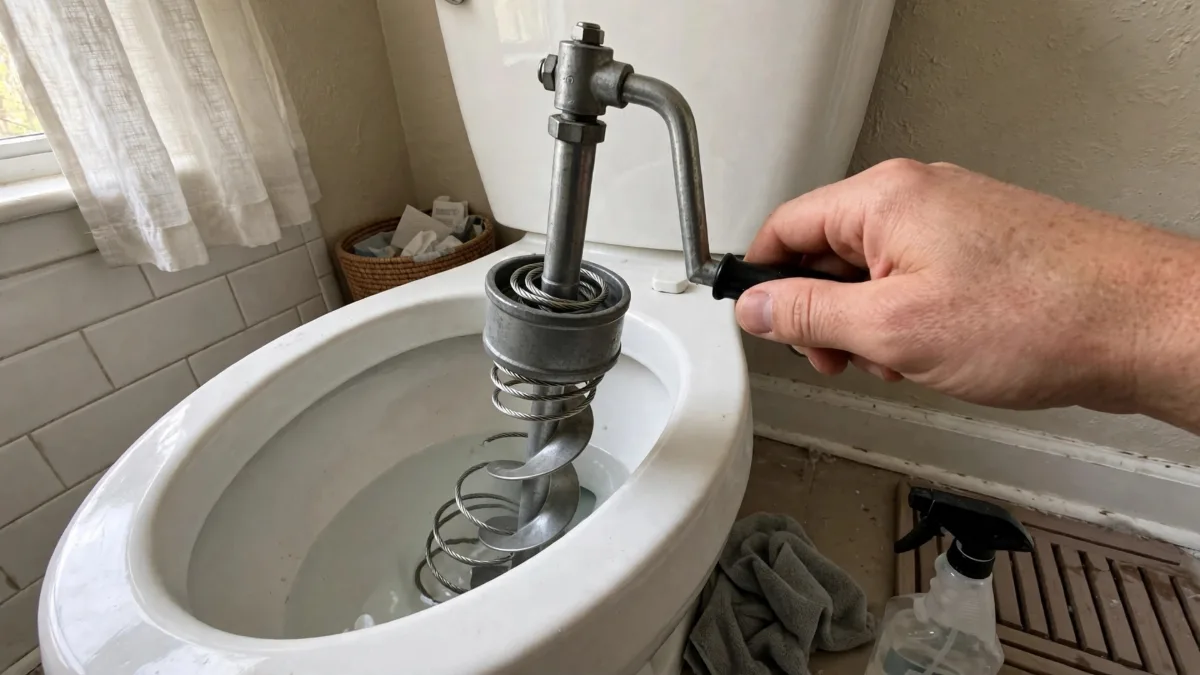
If plunging fails, a toilet auger (also called a closet auger) is the next step. It is a crank with a long flexible cable inside a protective sleeve that keeps it from scratching the bowl. You can buy one for about the price of a nice plunger.
- Put the curved end of the auger into the bottom of the bowl, pointing into the drain.
- Turn the handle slowly to feed the cable in.
- When you feel resistance, keep turning to hook or break up the clog.
- Crank it back out slowly. You may pull the clog out with it.
- Flush to test, and clean and disinfect the auger afterward.
Should You Use Chemical Drain Cleaner on a Toilet?
It is best to avoid harsh chemical drain cleaners in a toilet. Many are made for sink drains, and they can damage older pipes, heat up inside the trap, and leave caustic water sitting in the bowl that splashes when you plunge afterward. If you want a product, choose an enzyme cleaner labeled safe for toilets and follow the directions. Never mix different drain cleaners.
When to Call a Plumber
Call a professional if:
- Plunging and an auger have not worked.
- The clog keeps coming back every week or two.
- Other drains, like the shower or tub, back up when you flush.
- You hear gurgling from other drains or smell sewage.
- Something hard like a toy, phone or bottle cap went down the toilet.
Several drains acting up at once usually points to a clog in the main sewer line, which needs professional tools. A slow shower drain on its own is a different problem, covered in our guide on how to clean a shower drain.
How to Prevent Toilet Clogs
- Only flush toilet paper and human waste.
- Do not flush “flushable” wipes, paper towels, cotton balls, dental floss or feminine products.
- Use less toilet paper per flush, or flush twice for big loads.
- Keep a flange plunger next to every toilet so you can act fast.
- If you have kids, keep the lid closed so toys do not end up in the bowl.
- Older low-flow toilets clog more easily; a newer high-efficiency model may help.
Frequently Asked Questions
How do you unclog a toilet fast?
A good flange plunger is the fastest fix. Most clogs clear in under a minute of firm plunging.
How do you unclog a toilet when the water is high?
Do not flush. Push down the flapper in the tank to stop more water, then scoop some water out of the bowl into a bucket so you can plunge without splashing.
Will a toilet unclog itself?
Sometimes a clog of toilet paper softens and clears on its own after a few hours. Clogs from wipes or solid objects will not, so it is better to plunge.
Can I use boiling water to unclog a toilet?
No. Boiling water can crack the porcelain bowl or damage the wax seal. Use hot tap water instead.
Why does my toilet keep clogging?
Common reasons are too much toilet paper, flushing wipes, a partial blockage in the trap, an older low-flow toilet, or a problem in the main line. If it happens often, have a plumber take a look.
The Bottom Line
To unclog a toilet, stop the water first, then reach for a flange plunger and give it 20 to 30 seconds of firm strokes. No plunger? Try dish soap and hot water or baking soda and vinegar. A toilet auger handles the stubborn ones, and if several drains are backing up, call a plumber.
This article is for general home maintenance information. If you are unsure about your plumbing, or the problem involves your main sewer line, contact a licensed plumber.