

How to Quit a Job the Right Way (Step-by-Step Guide)
Quitting a job is a big step, whether you are leaving for a better offer, a career change or simply your peace of mind. Done well, it protects your reputation, your references and your paycheck. Done badly, it can burn bridges you may need later. This guide explains how to quit a job the right way, step by step, with a sample resignation letter and answers to the questions people ask most.
Quick answer: To quit a job professionally, make sure of your decision, check your contract, tell your manager privately first, give at least two weeks’ notice if you can, follow up with a short written resignation letter, sort out your final pay and benefits, and help hand off your work before your last day.
Signs It May Be Time to Quit
Everyone has bad weeks. But some signs suggest it is time to move on for good:
- You dread work almost every day, and it is affecting your health or sleep.
- You have stopped learning and see no path to grow or get promoted.
- Your pay is well below what similar roles earn, and raises are not coming.
- The workplace is toxic, unsafe or does not respect your boundaries.
- Your values no longer match the company’s direction.
- You already have a better offer in hand.
If you are unsure, try a frank talk with your manager or HR first. Sometimes a schedule change, new project or raise solves the problem.

How to Quit a Job in 8 Steps
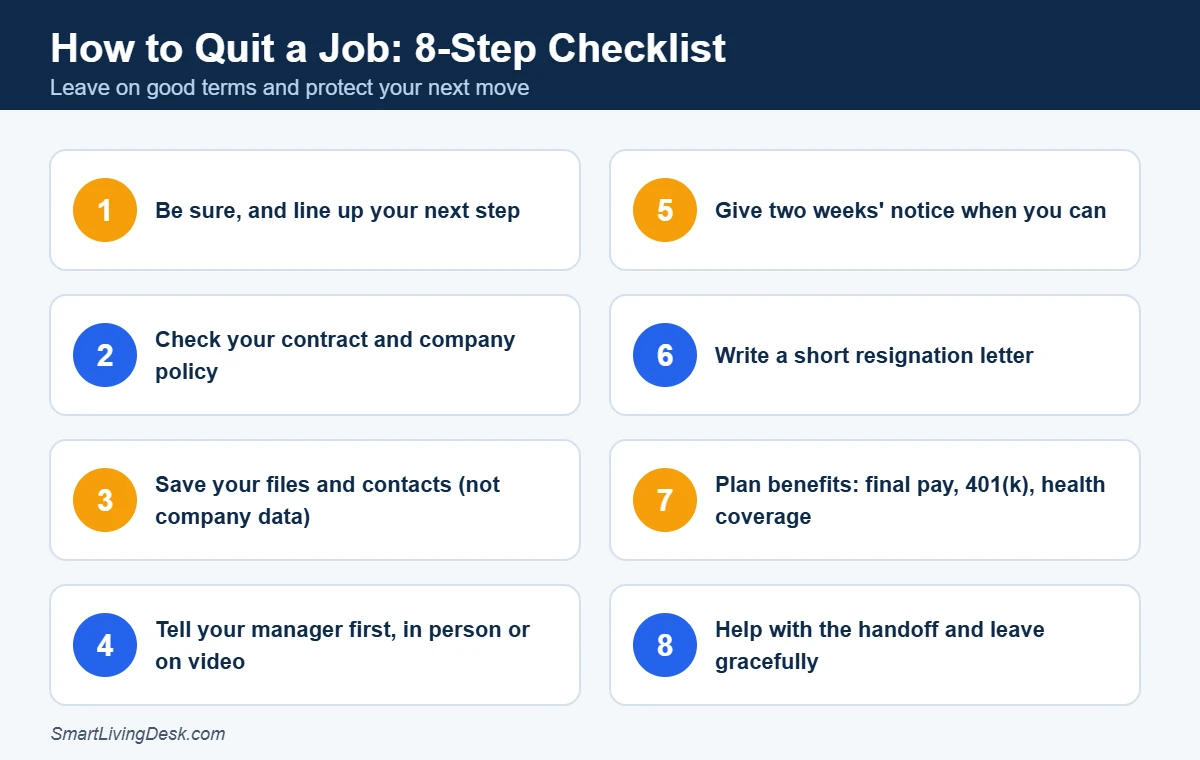
1. Be sure, and line up your next step
Ideally, sign a new job offer before you resign. If you plan to quit without another job, build an emergency fund that covers at least three to six months of expenses first. Remember that people who quit voluntarily usually do not qualify for unemployment benefits, although rules vary by state.
2. Check your contract and company policy
Look at your offer letter, employee handbook and any agreements you signed. Check the required notice period, whether unused vacation is paid out, and any non-compete, non-solicitation or confidentiality terms. Most US jobs are “at-will,” which means you can legally leave at any time, but your contract may still ask for notice.
3. Save your personal files and contacts
Some companies end access the same day you resign. Before you announce it, quietly save personal files, pay stubs, performance reviews and contact details of colleagues you want to keep in touch with. Never copy company data, client lists or confidential files. That can lead to legal trouble.
4. Tell your manager first
Your boss should hear the news from you, not from a coworker. Ask for a short private meeting in person or on video. Keep it calm and simple: thank them, say you are leaving, share your last day and offer to help with the transition. You do not have to explain every reason.

5. Give two weeks’ notice when you can
Two weeks is the common standard in the US. Senior roles may call for three to four weeks. Be ready for your employer to accept your resignation right away and ask you to leave sooner. That is legal in at-will states, so have your finances ready just in case.
6. Write a short resignation letter
After the conversation, send a brief written letter or email to your manager and HR. It creates a clear record of your notice and last day. Keep it positive and short. This is not the place for complaints.
7. Plan your final pay and benefits
- Final paycheck: state laws set when you must receive it, and some states require unused vacation to be paid out.
- Health insurance: coverage often ends on your last day or at the end of the month. Ask about COBRA, or compare plans on HealthCare.gov, since leaving a job usually qualifies you for a special enrollment period.
- 401(k): your own contributions are always yours. Check whether employer matches are vested, then decide whether to leave the money, roll it into an IRA or move it to your new employer’s plan.
- Other perks: use remaining FSA funds, and return company laptops, badges and equipment.
8. Hand off your work and leave gracefully
Write clear notes on your projects, passwords you are allowed to share and key contacts. Finish what you can and train your replacement if asked. If there is an exit interview, give honest but polite, constructive feedback. Say goodbye to coworkers and connect on LinkedIn. People remember how you leave.
Sample Resignation Letter
Dear [Manager’s Name],
Please accept this letter as formal notice of my resignation from my position as [Job Title] at [Company Name]. My last day will be [Date], two weeks from today.
Thank you for the opportunities I have had during my time here. I have learned a great deal and truly appreciate your support. I will do everything I can to make the transition smooth, including documenting my projects and helping train my replacement.
Sincerely,
[Your Name]
What Not to Do When You Quit
- Do not tell coworkers before your manager.
- Do not post about quitting on social media until you have left.
- Do not badmouth your boss or company, even in the exit interview.
- Do not slack off during your notice period.
- Do not just stop showing up. “Ghosting” a job can cost you references and rehire eligibility.
Should You Accept a Counteroffer?
Your employer may offer more money to keep you. Think carefully. If you were leaving only because of pay, it might be worth considering. But if the real reasons are your manager, culture or growth, extra money rarely fixes them, and your loyalty may be questioned later. Go back to your original reasons for leaving before you decide.

Frequently Asked Questions
Can I quit a job without giving two weeks’ notice?
In most US states, yes, because employment is usually at-will. However, leaving without notice can hurt references and may break the terms of a contract. If you are in an unsafe or abusive situation, your safety comes first.
Can I quit a job over email?
It is best to tell your manager in a conversation first and then follow up in writing. Email alone is fine when you work remotely and cannot meet, or when a face-to-face talk is not possible.
Do I have to give a reason for quitting?
No. A simple line such as “I have accepted a new opportunity” or “I have decided it is time for a change” is enough.
How do I quit a job I just started?
Be honest and brief, give as much notice as you can and thank them for the opportunity. Short stints happen. Leaving politely makes them much less of a problem later.
The Bottom Line
Learning how to quit a job the right way is a career skill. Plan ahead, tell your manager first, give proper notice, put it in writing and leave your work in good shape. You will walk away with your reputation, references and relationships intact, which is exactly what you want for your next step.
This article is for general information only and is not legal advice. Employment laws differ by state and contract, so check your agreement or speak with an employment attorney or HR for your situation.


