

Blue Collar Jobs: Types, Pay and How to Get Started
Not every good career starts with a four-year degree. Across the United States, skilled trades are short on workers, wages are rising, and many people are choosing to build, fix and maintain the things the rest of us rely on every day. If you are wondering what blue collar jobs are, which ones pay best and how to get started, this guide covers it all in plain English.
Quick answer: Blue collar jobs are hands-on jobs that involve physical or technical work, usually in construction, manufacturing, repair, transportation or maintenance. Examples include electricians, plumbers, HVAC technicians, welders and truck drivers. Many pay well, need only a high school diploma plus training or an apprenticeship, and are in steady demand.
What Are Blue Collar Jobs?
Blue collar jobs are roles where most of the work is done with your hands, tools and machines rather than at a desk. The name comes from the early 1900s, when factory and outdoor workers often wore durable blue denim or chambray shirts that hid dirt, while office workers wore white dress shirts. That is where the term “white collar” comes from.
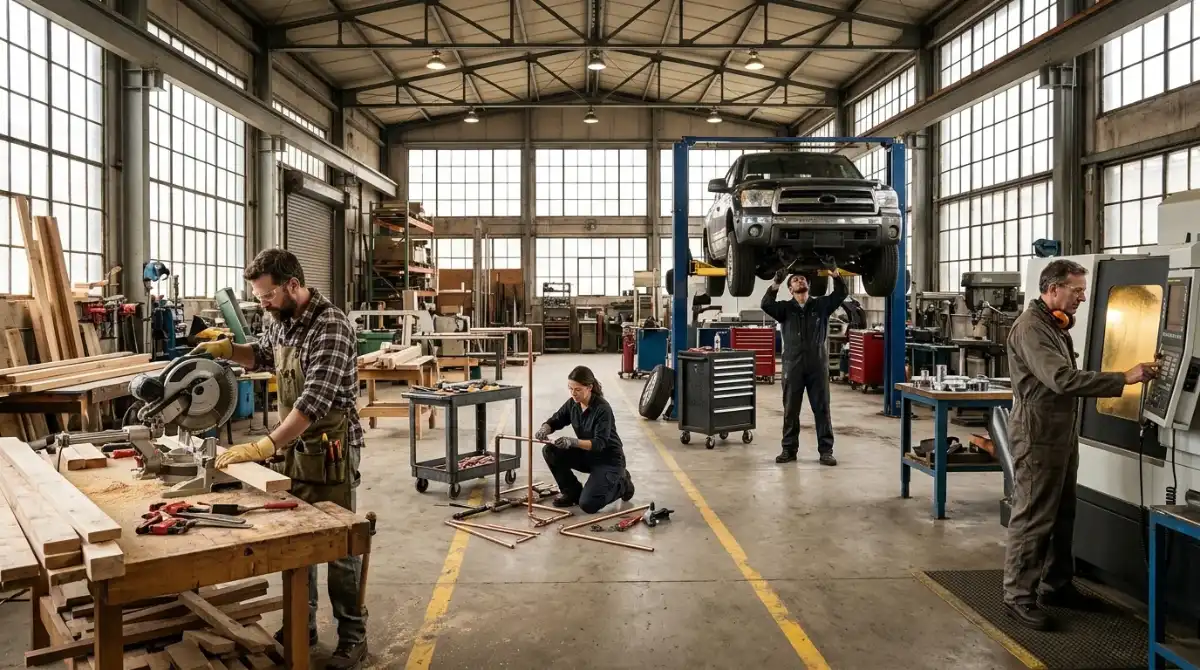
Today, this kind of work covers a huge range of careers, from installing solar panels and repairing aircraft to running heavy equipment and keeping hospitals’ power systems working. Many of these jobs are highly technical and well paid.
Blue Collar vs. White Collar Jobs
| Blue collar | White collar | |
|---|---|---|
| Type of work | Hands-on, physical or technical | Office, desk or professional |
| Typical setting | Job sites, plants, workshops, vehicles | Offices, remote, corporate settings |
| Usual training | Apprenticeship, trade school, on-the-job training | College degree |
| Pay structure | Often hourly, with overtime | Often salaried |
| Student debt | Usually low or none | Often higher |
You may also hear about “pink collar” jobs, a term for service and care roles such as nursing assistants and hairstylists, and “green collar” jobs in renewable energy and environmental work.
Common Types of Blue Collar Jobs
- Construction trades: electricians, plumbers, carpenters, ironworkers, roofers, masons
- Installation and repair: HVAC technicians, elevator mechanics, appliance repairers, line workers
- Manufacturing: welders, machinists, CNC operators, assemblers
- Transportation: truck drivers, delivery drivers, heavy equipment operators
- Automotive and aviation: diesel mechanics, auto technicians, aircraft mechanics
- Energy: wind turbine technicians, solar installers, power plant operators
How Much Do Blue Collar Jobs Pay?
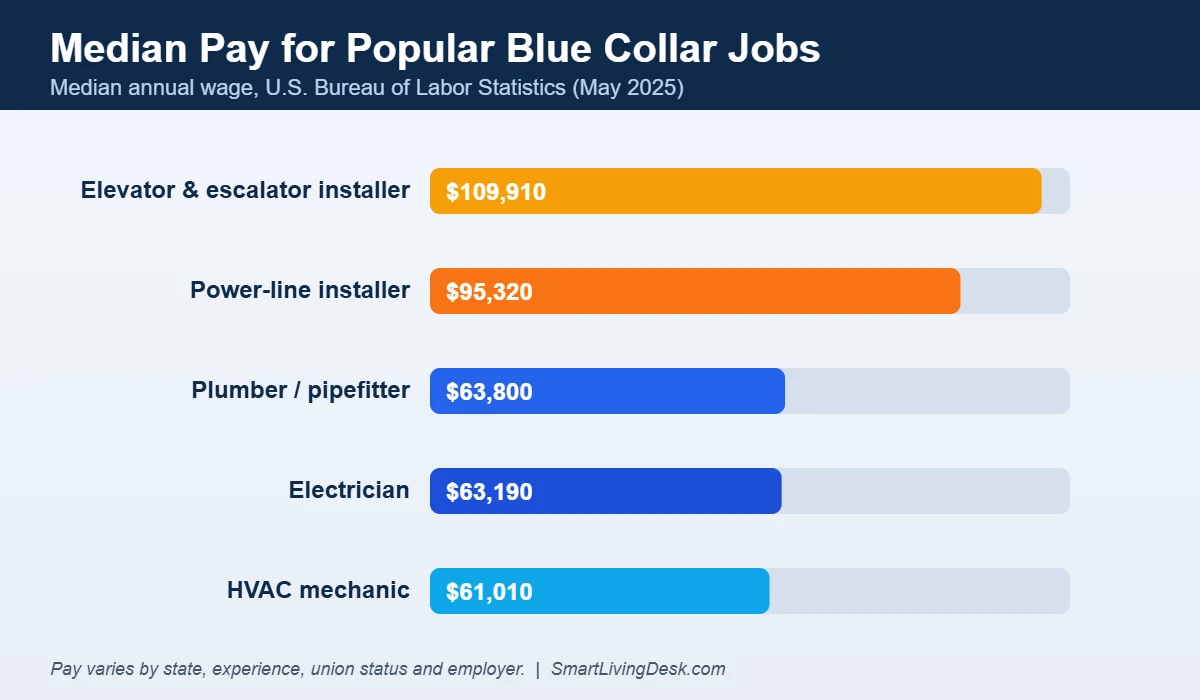
Pay depends on the trade, your experience, your state and whether you work union or non-union. Here are median annual wages for several popular skilled trades, based on May 2025 data from the U.S. Bureau of Labor Statistics (BLS):
| Job | Median annual pay | Typical path in |
|---|---|---|
| Elevator and escalator installer and repairer | $109,910 | Apprenticeship |
| Electrical power-line installer and repairer | $95,320 | Long-term on-the-job training |
| Plumber, pipefitter and steamfitter | $63,800 | Apprenticeship |
| Electrician | $63,190 | Apprenticeship |
| HVAC mechanic and installer | $61,010 | Trade school or apprenticeship |
Median means half of workers earn more and half earn less. Experienced, licensed workers, especially those who start their own businesses, can earn well above these numbers. Overtime, travel work and specialized certifications also boost pay.
Benefits of Working in the Trades
- Earn while you learn: apprentices are paid from day one, and their pay rises as they progress.
- Little or no student debt: trade programs cost far less than a four-year degree.
- Strong demand: many experienced tradespeople are retiring, and employers struggle to fill openings.
- Hard to outsource or automate: you cannot fix a leaking pipe or rewire a house from overseas.
- Clear path to running your own business: licensed contractors can become their own bosses.
- Visible results: at the end of the day, you can see exactly what you built or fixed.
Downsides to Consider
Hands-on work is not for everyone. Many jobs are physically demanding, involve working outdoors in heat or cold, and carry a higher risk of injury, so safety training and gear matter. Some trades have early start times, on-call shifts or travel to job sites. Pay can also depend on the economy, since construction slows when fewer buildings are going up. Knowing these trade-offs up front helps you choose a field that fits your body, schedule and goals.
How to Get Started in a Skilled Trade
- Explore your options. Shadow a worker, watch day-in-the-life videos and read the BLS Occupational Outlook Handbook to compare pay and growth.
- Finish high school or a GED. Most apprenticeships require it, and solid math skills help a lot.
- Choose a training route. Options include registered apprenticeships, community college certificates, trade schools and union training programs. You can search apprenticeships on the U.S. Department of Labor’s Apprenticeship.gov site.
- Get licensed or certified. Electricians and plumbers usually need a state license. Welders, HVAC techs and truck drivers often need certifications such as EPA 608 or a commercial driver’s license (CDL).
- Keep learning. New skills like solar, EV charging and smart building systems can raise your pay.

Frequently Asked Questions
Do blue collar jobs require a college degree?
Most do not. A high school diploma plus an apprenticeship, trade school program or on-the-job training is the usual path. Some technical roles, such as aircraft mechanics, require specific certifications instead of a degree.
Are blue collar jobs in demand?
Yes. Many trades face worker shortages as older workers retire, and BLS projects steady growth for jobs such as electricians. Demand is especially strong in construction, energy and repair.
Is a nurse a blue collar job?
Not usually. Registered nursing requires a degree and a license, so it is typically grouped with professional or “pink collar” care jobs, even though the work is very hands-on.
What is the highest paying blue collar job?
Among common trades, elevator and escalator installers and repairers top the list, with a median salary of around $110,000 a year. Power-line workers are close behind.
The Bottom Line
Blue collar jobs offer a practical, well-paid path for people who like working with their hands and solving real-world problems. With apprenticeships that pay you to learn, strong demand and little student debt, the skilled trades are worth a serious look whether you are just finishing school or thinking about a career change.
Salary figures are national medians from the U.S. Bureau of Labor Statistics (May 2025) and will vary by location, experience and employer.


