

Can Dogs Eat Bananas? Benefits, Risks and How Much to Give
Bananas are one of the most popular snacks in American homes, so it is no surprise that dogs often beg for a bite. But before you share, you probably want to know if it is safe. The short answer is good news, but there are a few important rules about how much to give and how to serve it. Here is everything you need to know about whether dogs can eat bananas.
Quick answer: Yes, dogs can eat bananas in moderation. Plain, peeled banana is non-toxic and offers potassium, fiber and vitamins. Because bananas are high in natural sugar, treat them as an occasional snack, not a daily food. Always remove the peel, cut the fruit into small pieces and skip banana chips, banana bread and other sweetened banana products.
Are Bananas Good for Dogs?
Dogs do not need fruit in their diet if they eat a complete and balanced dog food. Still, a few slices of banana can be a healthier choice than many store-bought treats, which are often high in fat and salt. Bananas contain:
- Potassium: supports healthy muscles, nerves and heart function.
- Vitamin B6: plays a role in energy use and brain health.
- Vitamin C: an antioxidant that supports overall health.
- Fiber: can help support digestion in small amounts.
- Magnesium: helps the body absorb other nutrients.
Bananas are also naturally low in fat and sodium, soft enough for older dogs to chew, and easy to mash or freeze.

How Much Banana Can a Dog Eat?
The biggest concern with bananas is sugar. A medium banana has about 105 calories and around 14 grams of sugar, which adds up fast for a small dog. Vets often recommend the 10% rule, meaning treats should make up no more than 10% of your dog’s daily calories. Use this rough guide for healthy adult dogs:
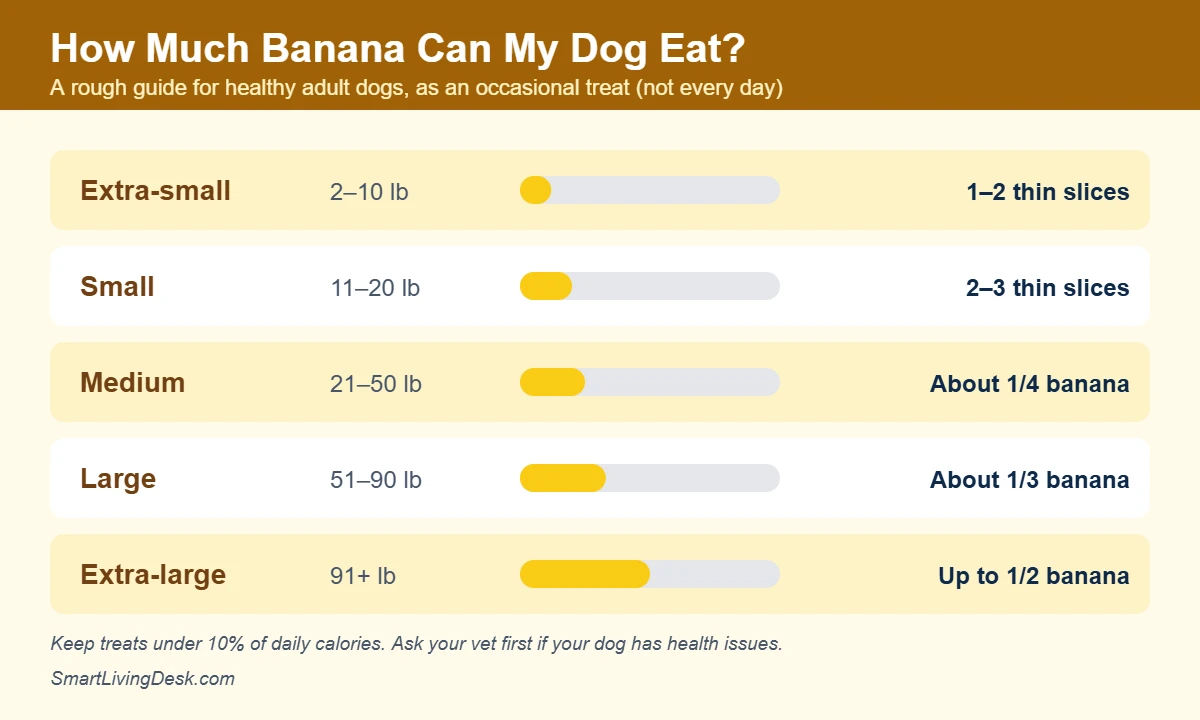
| Dog size | Weight | Banana per serving (max) |
|---|---|---|
| Extra-small | 2–10 lb | 1–2 thin slices |
| Small | 11–20 lb | 2–3 thin slices |
| Medium | 21–50 lb | About 1/4 banana |
| Large | 51–90 lb | About 1/3 banana |
| Extra-large | 91+ lb | Up to 1/2 banana |
Offer banana a few times a week at most rather than every day. If your dog has never tried it, start with one small piece and watch for any stomach upset.
How to Safely Feed Bananas to Your Dog
- Peel it. Always remove the whole peel first.
- Slice or mash it. Cut into thin coins or small cubes, especially for small dogs and puppies, to prevent choking.
- Keep it plain. No sugar, honey, chocolate or spreads with xylitol.
- Start small and stick to the portions above.
Easy ways to serve bananas
- Frozen banana bites: freeze thin slices for a cool summer snack.
- Stuffed chew toy: mash banana with a little plain, unsweetened yogurt and stuff it into a rubber chew toy, then freeze.
- Food topper: mash a slice or two into your dog’s regular meal.
- Training treats: tiny banana pieces work well as low-fat rewards.
- With peanut butter: a thin smear of plain, xylitol-free peanut butter on a banana slice makes a special treat.

Can Dogs Eat Banana Peels?
No. Banana peels are not toxic, but they are tough and very hard for dogs to digest. A dog that eats a peel may vomit or have diarrhea, and a large piece can even cause a blockage in the intestines. Keep peels in a covered trash can. If your dog swallows a whole peel and shows vomiting, belly pain or loss of appetite, call your vet.
Banana Products Dogs Should Avoid
- Banana chips: often fried and coated in sugar or honey.
- Banana bread and muffins: high in sugar and fat, and may contain raisins, nutmeg or xylitol, which are dangerous for dogs.
- Banana pudding, ice cream and smoothies: too much sugar and dairy.
- Sugar-free banana products: may contain xylitol, which is highly toxic to dogs.
- Chocolate-covered banana: chocolate is toxic to dogs.
Risks of Feeding Too Much Banana
- Upset stomach: too much fiber and sugar can cause gas, diarrhea or constipation.
- Weight gain: frequent sugary snacks add extra calories.
- Blood sugar spikes: dogs with diabetes should only have banana with vet approval.
- Potassium concerns: dogs with kidney disease may need to limit potassium, so ask your vet first.
- Allergies: rare, but watch for itching, swelling or hives after a first taste.
Can Puppies Eat Bananas?
Yes, in very small amounts once they are eating solid food. Puppies have sensitive stomachs and need their calories to come mainly from a complete puppy food, so offer just a tiny mashed piece now and then.
Frequently Asked Questions
Can dogs eat bananas every day?
It is better not to. Because of the natural sugar, banana works best as an occasional treat a few times a week, in small portions.
Do bananas help a dog’s upset stomach?
Some owners offer a little plain banana to dogs with mild tummy troubles, since it is bland and contains fiber. However, too much can make diarrhea or constipation worse. For ongoing stomach problems, talk to your vet.
Can dogs eat dried bananas?
Plain, unsweetened dehydrated banana is fine in small amounts, but the sugar is more concentrated, so give less. Avoid store-bought banana chips, which are usually fried and sweetened.
What fruits are bad for dogs?
Grapes and raisins are the most dangerous, as they can cause kidney failure. Also avoid cherry pits, avocado and any fruit products with xylitol or chocolate. For another safe, low-calorie option, see our guide on whether dogs can eat strawberries.
The Bottom Line
So, can dogs eat bananas? Yes, as long as you peel them, cut them up and keep portions small. Bananas offer potassium, vitamins and fiber, but their sugar means they are best saved for an occasional treat. Skip the peels and sweetened banana snacks, and check with your vet if your dog has diabetes, kidney disease or another health condition.
This article is for general information and does not replace advice from your veterinarian. Every dog is different, so check with your vet before adding new foods, especially if your dog has health conditions.


