How to Clean Hardwood Floors (Without Damaging Them)
Hardwood floors make a home feel warm, but they show every crumb, footprint and pet hair. They are also easy to damage with the wrong cleaning habits. Too much water, the wrong cleaner or a steam mop can dull the finish, warp boards and leave a cloudy film.
This guide covers how to clean hardwood floors the right way, from daily dusting to a proper mop, plus how to deep clean, what to avoid and how to keep them looking good for years.
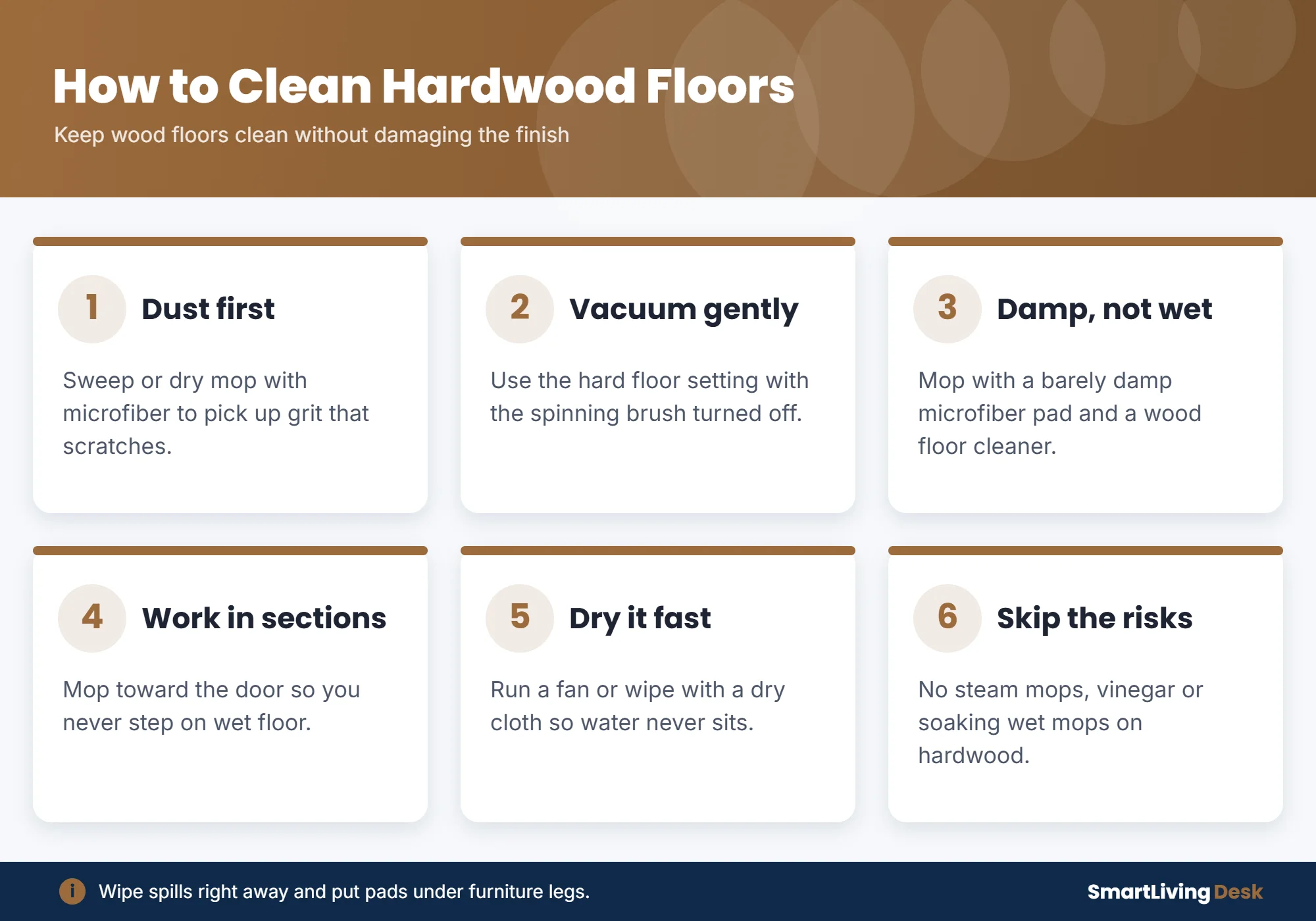
Quick answer: To clean hardwood floors, sweep or dry mop with microfiber to remove grit, then vacuum with the hard floor setting and the brush roll off. Mop with a barely damp microfiber pad and a cleaner made for wood floors, working in small sections toward the door. Dry the floor quickly with a fan or a dry cloth. Avoid steam mops, vinegar and soaking wet mops, which can damage the finish.
What You Need
- Microfiber dust mop or soft broom
- Vacuum with a hard floor setting
- Flat microfiber mop with washable pads
- Hardwood floor cleaner (or a few drops of dish soap in warm water)
- Dry microfiber cloths
How to Clean Hardwood Floors Step by Step
1. Clear the room and dust
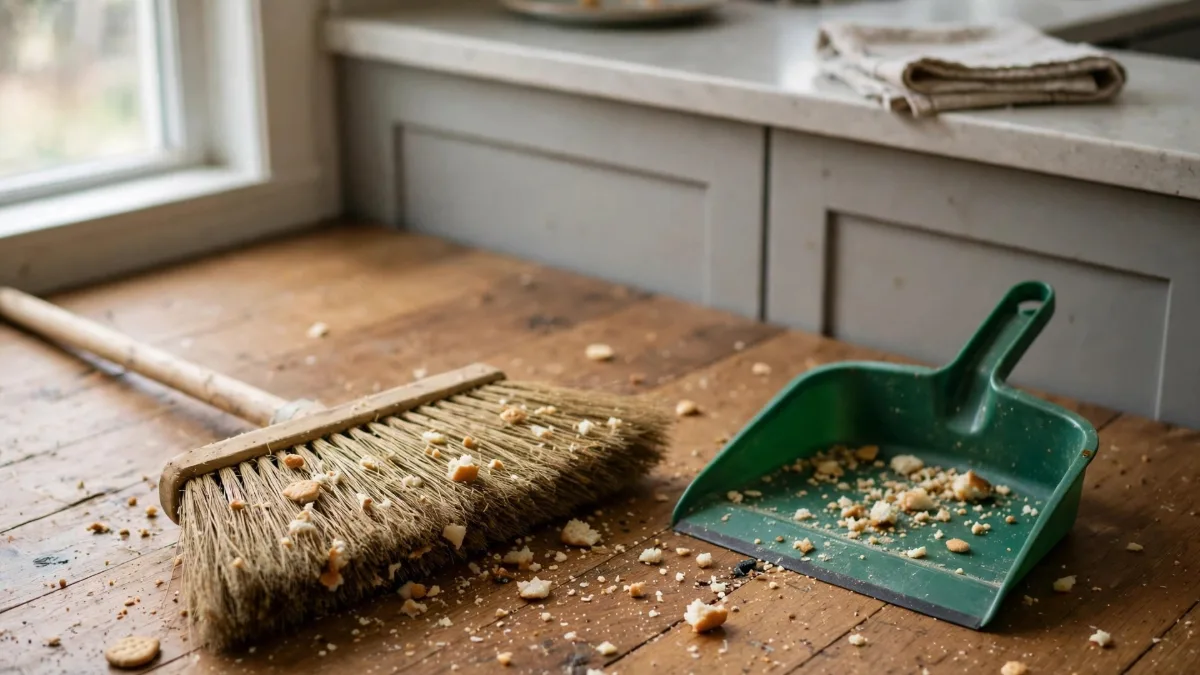
Move chairs, rugs and anything else on the floor. Then go over the whole floor with a microfiber dust mop or a soft broom, including corners and under furniture. Home Depot recommends doing this daily in busy rooms because grit acts like sandpaper on the finish.
2. Vacuum the gaps
Vacuum to pick up anything the mop missed, especially along baseboards and between boards. Use the hard floor setting and turn off the spinning brush bar, which can scratch wood. Tom’s Guide also notes that vacuums with rubber wheels are gentler on floors than hard plastic ones.
3. Mop with a barely damp pad
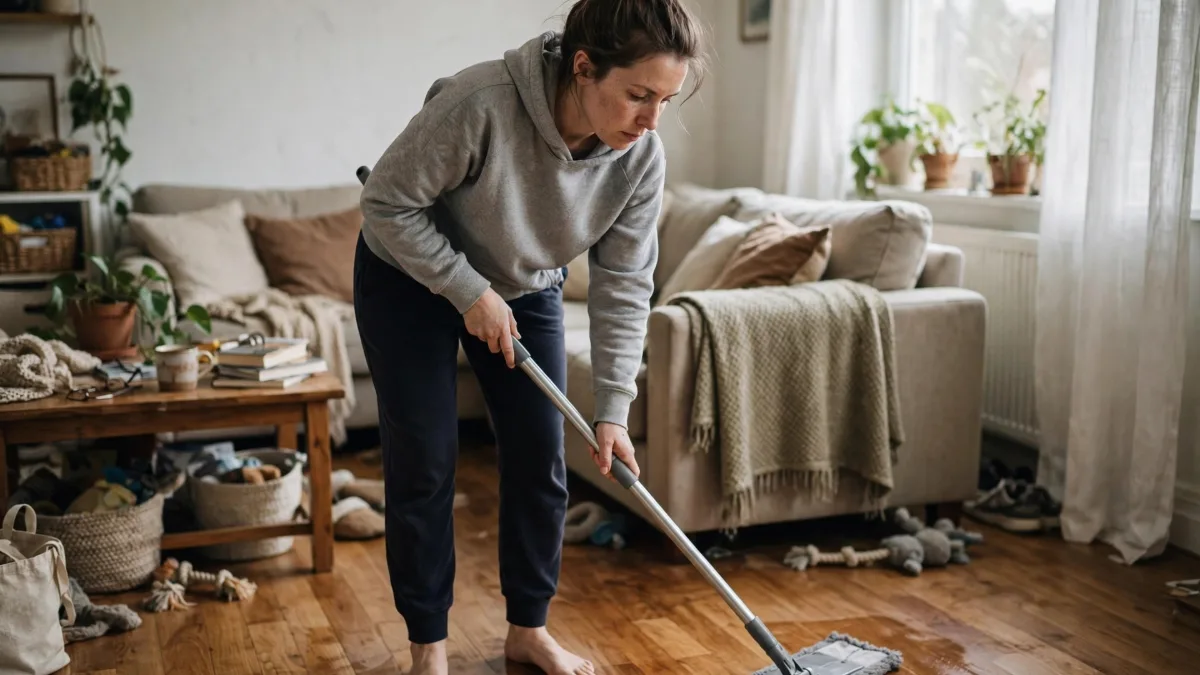
Spray a wood floor cleaner directly on the floor or on the mop pad, or mix a few drops of dish soap into a bucket of warm water. Wring the mop until it is only slightly damp. Water is the enemy of hardwood: standing water seeps between boards and can cause swelling, cupping and dark stains.
4. Work in sections
Start at the far side of the room and work toward the door so you never walk on the wet floor. Rinse or swap the mop pad as it gets dirty so you are not just spreading grime around.
5. Dry the floor
Turn on a ceiling fan, open a window, or go over the floor with a dry microfiber cloth. The floor should be dry within a few minutes.
What Not to Use on Hardwood Floors
- Steam mops: Heat and moisture can damage the finish and the wood, unless your floor maker says otherwise.
- Vinegar: Both Home Depot and Tom’s Guide warn that vinegar solutions can dull the finish over time.
- Soaking wet mops or buckets of water: Too much water causes warping.
- Oil soaps and furniture polish: They leave a slippery residue that attracts dirt and makes refinishing harder.
- Tile and vinyl cleaners or harsh detergents: These are not made for wood finishes.
- Abrasive scrubbers or steel wool: They scratch the surface.
How to Know What Finish Your Floor Has
Most modern hardwood has a polyurethane finish, which is durable and handles a damp mop and water-based cleaners well. Older floors may have a wax or oil finish, which needs gentler care and usually no water at all. A simple test: drop a little water in a hidden spot. If it beads up, the floor is sealed. If it soaks in and darkens the wood, the finish is worn or the floor is unsealed, so use as little water as possible and consider refinishing.
How to Deep Clean Hardwood Floors
- Dust and vacuum thoroughly.
- Use a cleaner made for hardwood and follow the label.
- Clean small sections and dry each one right away.
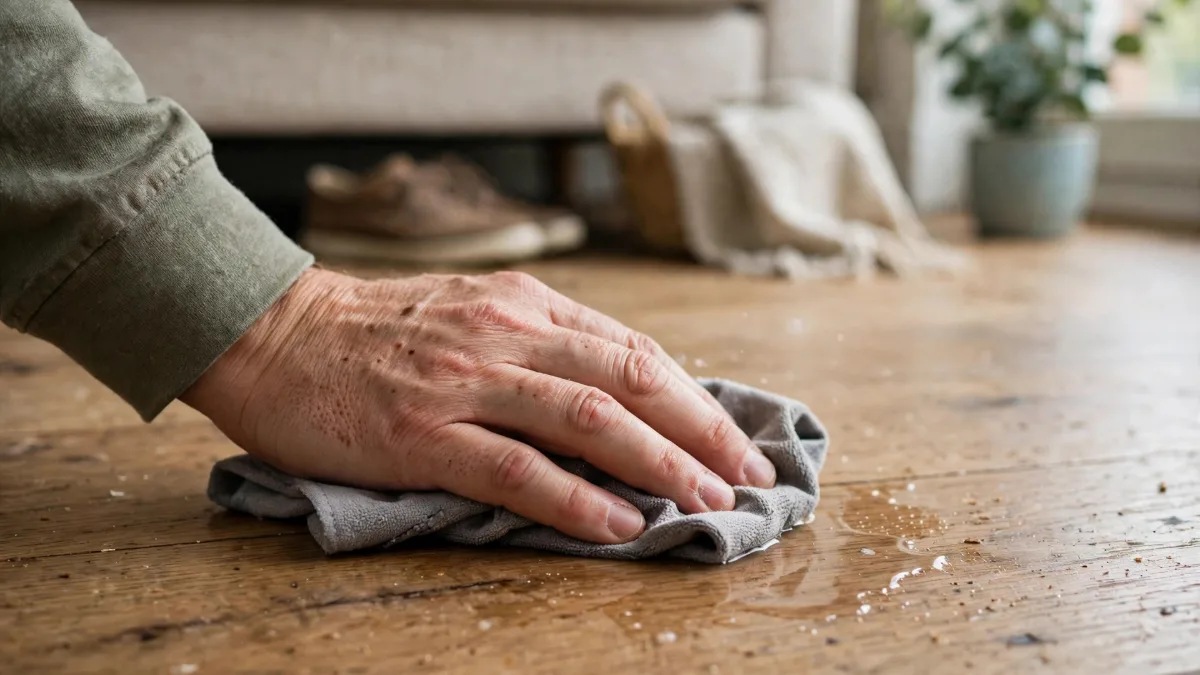
- For stuck-on spots, rub gently with a soft cloth and a little cleaner.
- For scuffs, a clean tennis ball or a dry microfiber cloth often rubs them off.
- Every few years, Home Depot suggests a fresh topcoat to renew the finish. Every 10 years or so, worn floors may need a full sand and refinish.
How Often to Clean Hardwood Floors
| Task | How often |
|---|---|
| Dust or dry mop high-traffic areas | Daily or every few days |
| Vacuum the whole floor | Weekly |
| Damp mop | Every 1 to 4 weeks, depending on traffic |
| Recoat the finish | Every 3 to 5 years |
| Sand and refinish | About every 10 years |
Tips to Protect Hardwood Floors
- Put doormats at every entrance and ask people to take shoes off.
- Add felt pads under chair and table legs.
- Use rugs in hallways and under desk chairs.
- Keep pets’ nails trimmed.
- Wipe up spills immediately.
- Close blinds during the brightest part of the day to reduce fading.
Have tile floors too? See our guide on how to clean grout. And if you are putting in new floors, read how to install vinyl plank flooring.
Frequently Asked Questions
What is the best thing to clean hardwood floors with?
A pH-neutral cleaner made for hardwood and a microfiber mop. A few drops of dish soap in warm water works too.
Can I use a Swiffer on hardwood floors?
Dry dusting pads are fine. For wet pads, choose ones labeled safe for wood and avoid leaving the floor wet.
Is vinegar safe for hardwood floors?
It is best avoided. Vinegar is acidic and can dull the finish over time.
How do I make hardwood floors shine?
Clean them well and dry thoroughly. For more shine, use a polish made for your floor type, but only every few months at most, and never on unsealed floors.
The Bottom Line
To clean hardwood floors, keep grit off with regular dusting and vacuuming, then mop with a barely damp microfiber pad and a wood-safe cleaner. Dry the floor quickly, skip steam and vinegar, and protect it with mats and furniture pads. A little gentle care keeps wood floors looking good for decades.
Floors and finishes vary. Always follow your flooring manufacturer’s care instructions and test new cleaners in a hidden area first.