Can Dogs Eat Peanut Butter? Safe Brands, Xylitol and How Much
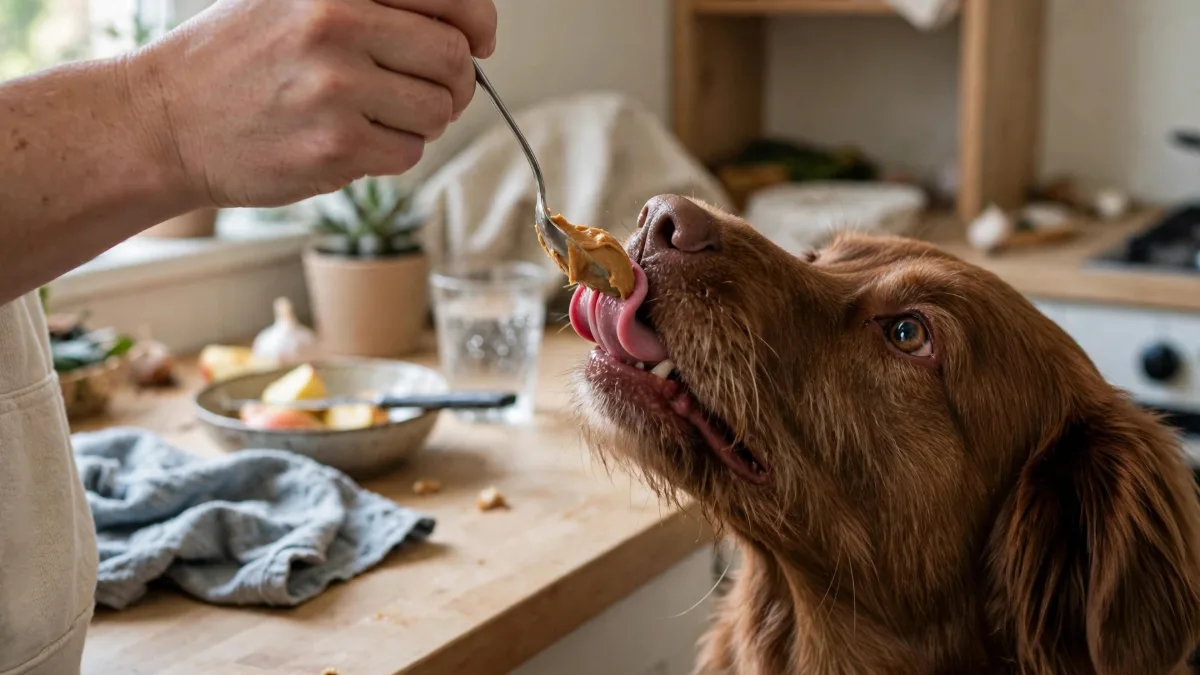
Peanut butter might be the most popular dog treat that never came from a pet store. People smear it inside chew toys, use it to sneak in pills, and spread it on lick mats to keep dogs busy during baths. Most dogs will do almost anything for it.
For the most part, that is fine. But one ingredient found in some peanut butters is genuinely dangerous for dogs, and the fat and calories add up quickly. Here is what you need to know before you grab the spoon.
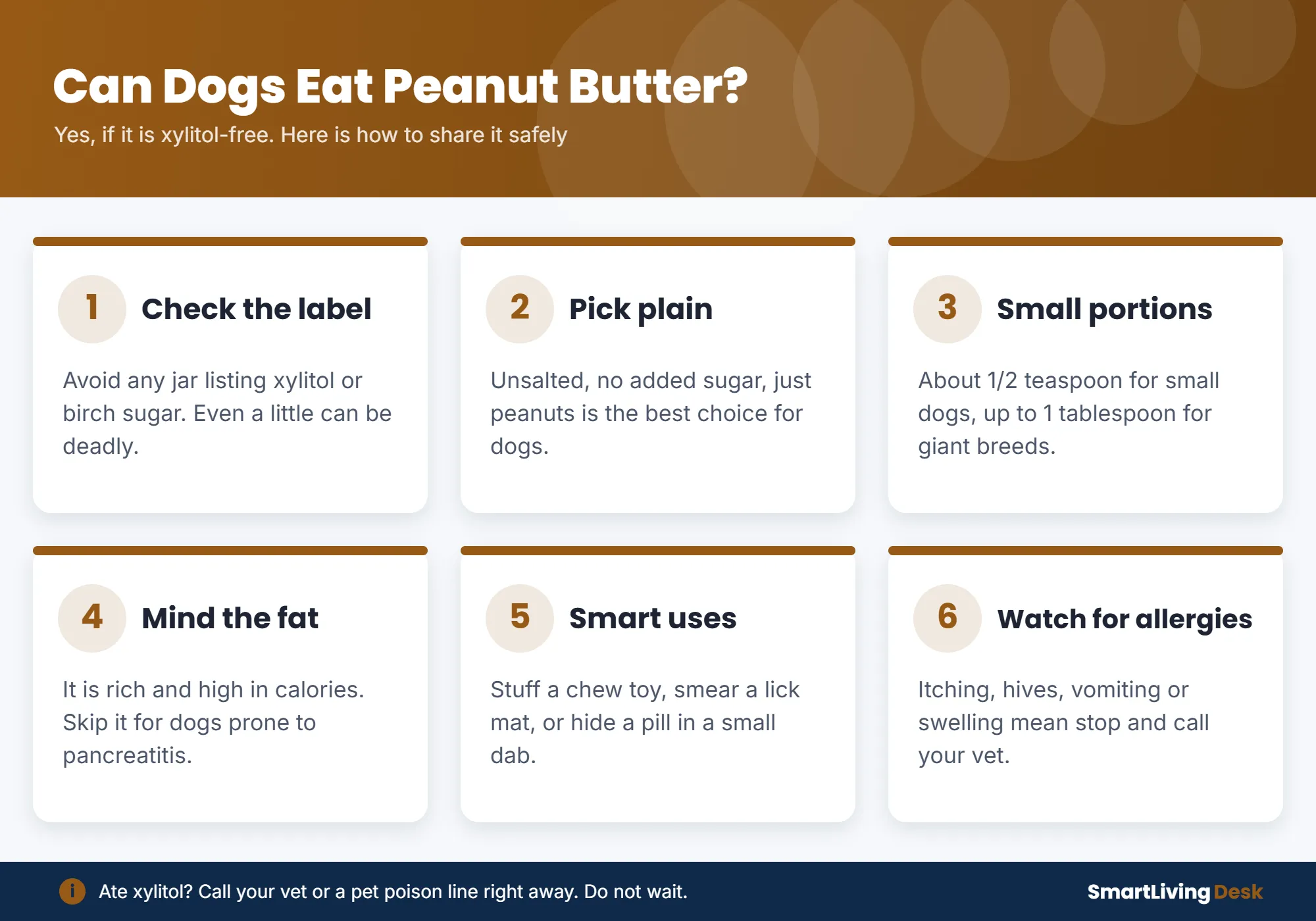
Quick answer: Yes, dogs can eat peanut butter as long as it does not contain xylitol (also sold as birch sugar), which is highly toxic to dogs. Choose plain, unsalted peanut butter with no added sugar and give it in small amounts, from about 1/2 teaspoon for small dogs to 1 tablespoon for very large dogs. Because it is high in fat and calories, keep it as an occasional treat.
Is Peanut Butter Good for Dogs?
Plain peanut butter has protein, healthy fats, vitamin E and niacin. It is not something your dog needs, since a complete dog food already covers their nutrition, but in small amounts it is a safe and useful treat. The bigger benefit is practical: it is sticky and smelly in a way dogs love, which makes it great for enrichment toys, training and hiding medicine.
The Big Danger: Xylitol
Xylitol is a sugar substitute used in sugar-free gum, candy, some baked goods and a small number of peanut and nut butters. It is safe for people but not for dogs. According to the FDA, xylitol can cause a dangerous drop in blood sugar within 10 to 60 minutes of being eaten, and some serious effects may not show up for 12 to 24 hours. It can also damage the liver.
Signs of xylitol poisoning include:
- Vomiting
- Weakness or low energy
- Staggering or trouble walking
- Collapse
- Seizures
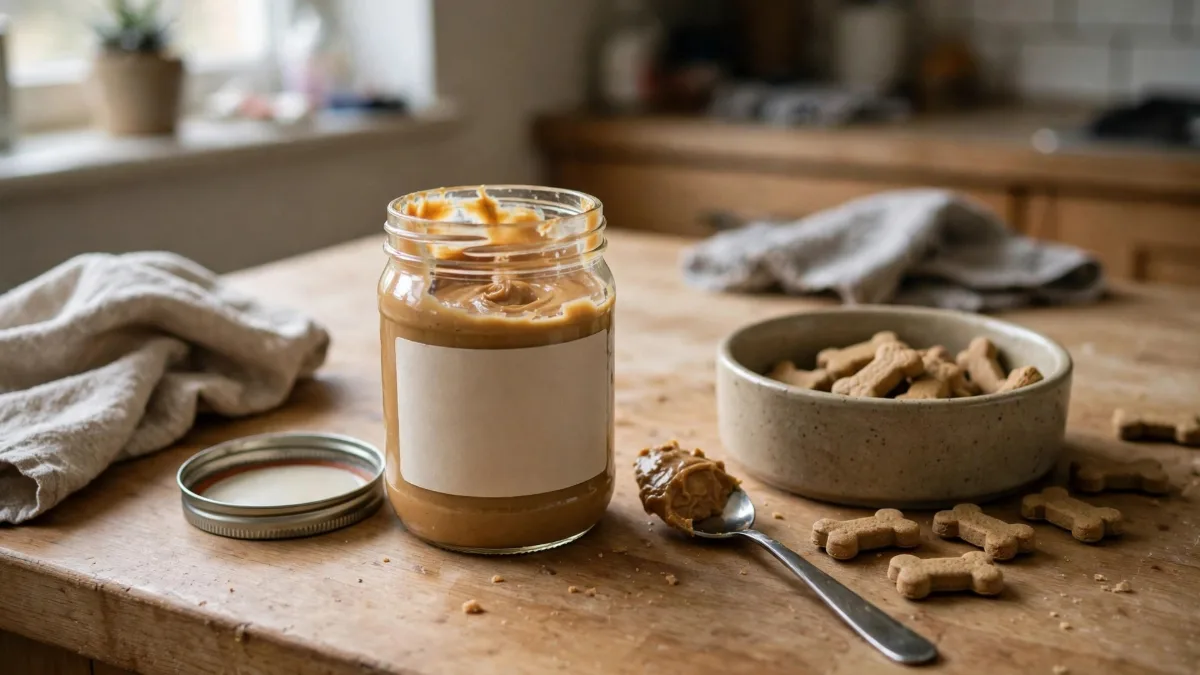
Xylitol may be listed as “birch sugar” or “wood sugar” on the label, and it often shows up in products marked “sugar-free,” “no sugar added” or “keto.” Always read the ingredient list, every time, because recipes can change.
How to Choose a Dog-Safe Peanut Butter
- No xylitol or birch sugar. This is the non-negotiable rule.
- Short ingredient list. Ideally just peanuts, or peanuts and a little salt.
- Unsalted if possible. Dogs do not need extra sodium.
- No added sugar or chocolate. Skip flavored spreads, honey-roasted and chocolate peanut butter.
- Natural or dog-specific peanut butter made for pets is an easy option if you are unsure.
Smooth and crunchy are both fine. PetMD notes both are generally safe in moderation, though smooth is easier for small dogs and works better in toys.
How Much Peanut Butter Can a Dog Have?
A tablespoon of peanut butter has around 90 to 100 calories, which is a lot for a small dog. Treats of all kinds should stay under 10 percent of your dog’s daily calories. PetMD offers this guide:
| Dog weight | Amount | How often |
|---|---|---|
| 2 to 10 lbs | 1/2 teaspoon | Once a day |
| 11 to 20 lbs | 1/2 teaspoon | Twice a day |
| 21 to 50 lbs | 1 teaspoon | Once a day |
| 51 to 90 lbs | 1 teaspoon | Twice a day |
| 91 lbs and up | 1 tablespoon | Once a day |
If you use peanut butter in toys every day, cut back a little on meals or other treats so your dog does not gain weight.
When Peanut Butter Is Not a Good Idea
- Pancreatitis or a low-fat diet: The fat can trigger a flare-up. Ask your vet first.
- Overweight dogs: The calories add up fast.
- Peanut allergies: Rare in dogs but possible. Watch for itching, hives, vomiting, diarrhea or facial swelling.
- Puppies: Fine in tiny amounts, but introduce it slowly.
Fun and Safe Ways to Use Peanut Butter
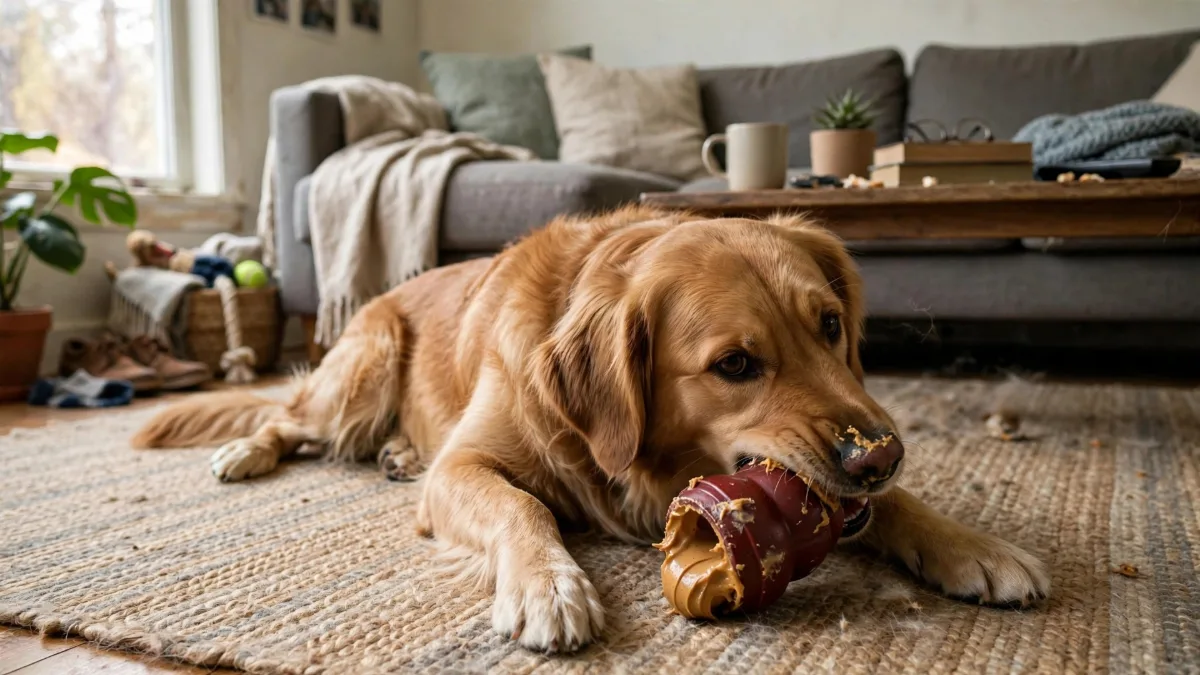
- Stuff a rubber chew toy and freeze it for a long-lasting treat.
- Spread a thin layer on a lick mat during baths, nail trims or vet visits.
- Wrap a small dab around a pill.
- Mix a little into homemade dog treats.
- Use a tiny lick as a high-value training reward.
What to Do If Your Dog Ate Peanut Butter With Xylitol
Treat it as an emergency. Call your vet, an emergency animal hospital, or the ASPCA Animal Poison Control Center at (888) 426-4435 right away, even if your dog seems fine. The FDA notes that dogs may need to be monitored in the hospital. Have the jar with you so you can read the ingredients and estimate how much was eaten. Do not try to make your dog vomit unless a vet tells you to.
What About Peanut Butter Snacks?
- Peanut butter and jelly: Not recommended. Jelly is high in sugar, and grape jelly is a concern because grapes are toxic to dogs.
- Peanut butter cookies: Too much sugar and fat, and some contain chocolate or xylitol.
- Plain peanuts: Unsalted, shelled peanuts are okay in small amounts. Avoid salted or flavored nuts.
Looking for lower-calorie treats? Carrots, cucumbers and blueberries are good options. Some foods look harmless but are risky, like avocado.
Frequently Asked Questions
Can dogs eat Jif peanut butter?
PetMD lists regular Jif among brands that typically do not contain xylitol, but recipes can change. Read the label every time, and avoid reduced-fat or flavored versions with extra sugar.
Can dogs eat crunchy peanut butter?
Yes, as long as it is xylitol-free. Smooth is a bit easier for small dogs to handle.
Can puppies have peanut butter?
Yes, a tiny amount of plain, xylitol-free peanut butter is fine for most puppies. Start small and watch for stomach upset.
Can dogs eat peanut butter every day?
A small daily amount is usually fine for a healthy dog if it fits within their treat calories. Use the portion table above.
Is peanut butter good for hiding pills?
Yes, it is one of the easiest ways. Use just enough to cover the pill. Check with your vet that the medicine can be given with food.
The Bottom Line
Can dogs eat peanut butter? Yes, if it is free of xylitol. Pick a plain, unsalted jar, keep portions small, and use it as an occasional treat or a toy filler. If your dog ever eats a peanut butter or snack that contains xylitol, call your vet right away.
This article is for general information and is not a substitute for veterinary advice. Contact your veterinarian or an animal poison control center if you think your dog ate something harmful.