

Can Dogs Eat Avocado? What Vets Say About the Flesh, Pit and Skin
You are making toast, slice an avocado, and a slice slips off the board. Your dog has it before you can bend down. Now you are wondering whether you need to call the vet. Avocado has a reputation as a “toxic” food for pets, but the real picture for dogs is more nuanced than that. Some parts are a genuine emergency risk, and some are mostly a stomach-upset risk.
Here is what the veterinary sources actually say about whether dogs can eat avocado, which parts matter most, and what to do if your dog already ate some.
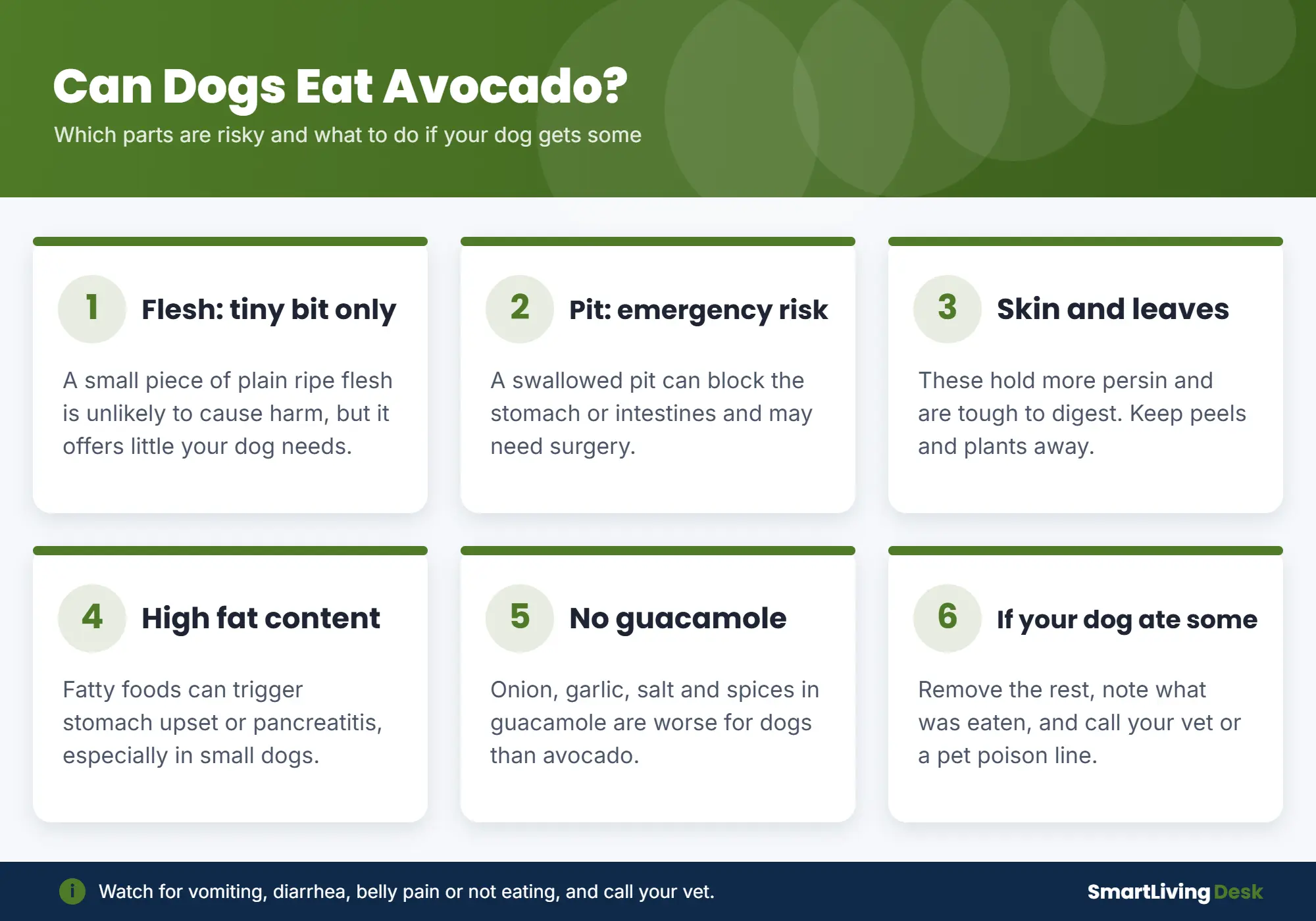
Quick answer: Dogs should not be fed avocado on purpose. A small bite of plain ripe flesh is unlikely to poison a dog, because dogs are relatively resistant to persin, the toxin in avocados. The bigger dangers are the pit, which can cause a choking hazard or intestinal blockage, the skin and leaves, and the high fat content, which can cause vomiting, diarrhea or pancreatitis. Guacamole is worse because it often contains onion and garlic. If your dog ate a pit, a large amount, or guacamole, call your vet.
Is Avocado Toxic to Dogs?
Avocados contain a natural fungicidal toxin called persin. According to the ASPCA, persin is found in the leaves, fruit, seeds and bark of the avocado plant. In dogs, it can cause vomiting and diarrhea.
The key point is that the most sensitive animals are not dogs. Birds, horses, rodents, rabbits, goats and sheep can get seriously ill or die from avocado. The Merck Veterinary Manual describes dogs as relatively resistant compared with other species, although it notes rare reports of heart damage in dogs. So avocado is not in the same league as grapes or chocolate for dogs, but that does not make it a good treat.
Which Parts of Avocado Are Dangerous for Dogs?
| Part | Risk level | Main problem |
|---|---|---|
| Flesh (ripe, plain) | Low in small amounts | High fat can upset the stomach |
| Pit (seed) | High | Choking, stomach or intestinal blockage |
| Skin (peel) | Moderate | More persin, hard to digest, can cause blockage in small dogs |
| Leaves, bark, stems | Moderate to high | Highest persin levels; keep dogs away from avocado trees |
| Guacamole | High | Onion, garlic, salt, lime and spices |
| Avocado oil | Low to moderate | Pure fat; too much can cause stomach upset |
Can dogs eat avocado flesh?
The green flesh contains the least persin. A small piece of plain, ripe avocado flesh is unlikely to cause more than mild stomach upset in a healthy dog. Still, avocado is very high in fat, so it is not a smart snack, particularly for small breeds or dogs with a history of pancreatitis.
What about the avocado pit?
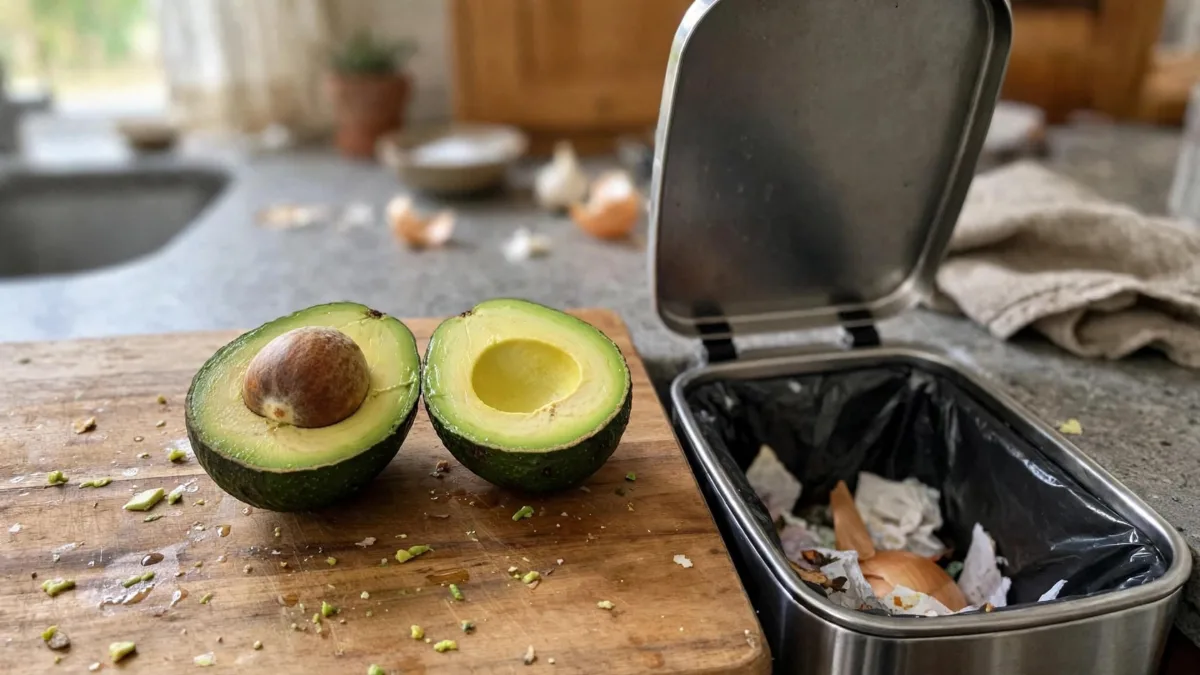
The pit is the part vets worry about most. It is large, hard and slippery, roughly the size that can lodge in a dog’s throat, stomach or intestines. FirstVet notes that a swallowed pit can cause a blockage that needs emergency surgery. The pit also contains persin.
Can dogs eat avocado skin?
The skin is tough, waxy and higher in persin than the flesh. Chewed-up skin is hard to digest and may cause vomiting or diarrhea, and a large piece can be an obstruction risk for a small dog. Throw peels straight into a bin with a lid.
Why the Fat in Avocado Matters
A medium avocado has a lot of fat for its size. Sudden rich, fatty food is one of the classic triggers for pancreatitis in dogs, a painful inflammation of the pancreas. FirstVet explains that pancreatitis can range from mild stomach upset to severe abdominal pain, vomiting, diarrhea and loss of appetite, and that severe cases may need several days in the hospital. Small dogs, overweight dogs and breeds prone to pancreatitis, like Miniature Schnauzers, are at higher risk.
Can Dogs Eat Guacamole?
No. Guacamole is a bigger concern than plain avocado because it is usually made with onion and garlic, both of which can damage a dog’s red blood cells. It also often contains salt, lime juice, jalapeño and other spices. If your dog licked a bowl of guacamole or ate chips dipped in it, call your vet and tell them exactly what was in the recipe.
Can Dogs Eat Avocado Oil?
Avocado oil is pressed from the flesh, and some commercial dog foods include avocado or avocado oil as an ingredient. A little oil that is part of a balanced dog food is not the same as letting your dog lick a pan. Plain oil is pure fat, so extra amounts can cause loose stools and, like any fatty food, could contribute to pancreatitis. There is no real need to add it to your dog’s bowl.
My Dog Ate Avocado: What Should I Do?
Stay calm and work out three things: what part was eaten, how much, and how big your dog is. Then follow these steps:
- Take away any leftovers so your dog cannot eat more.
- Check for the pit. If a pit, or a large piece of one, is missing, call your vet or an emergency clinic right away, even if your dog seems fine.
- Do not make your dog vomit at home unless a vet tells you to. A pit can get stuck on the way back up.
- Call for advice. Your vet or the ASPCA Animal Poison Control Center at (888) 426-4435 can tell you whether your dog needs to be seen. A consultation fee may apply.
- Watch for symptoms over the next 24 to 48 hours.

Symptoms to watch for
- Vomiting or retching
- Diarrhea
- Belly pain, hunching, or a “prayer” position (front down, rear up)
- Not wanting to eat
- Straining to poop or producing no stool (possible blockage)
- Lethargy or weakness
- Drooling or gagging (possible pit stuck in the throat)
If you see repeated vomiting, a swollen or painful belly, or your dog cannot keep water down, treat it as an emergency.
How Much Avocado Will Kill a Dog?
People search this question a lot, and the honest answer is that there is no established toxic dose of persin for dogs. Most dogs that eat a bite of avocado flesh have, at worst, an upset stomach. The situations that can turn serious are a swallowed pit, a large amount of fatty avocado that sets off pancreatitis, or guacamole made with onion and garlic. Rather than trying to calculate a “safe” amount, call your vet if your dog ate more than a small taste.
Safer Fruit and Veggie Treats for Dogs
If you want to share something healthy from your kitchen, there are better choices than avocado. Small amounts of blueberries, apple slices without seeds, seedless watermelon, banana and plain broccoli are popular options. You can also offer peeled mango with the pit removed. Keep treats to about 10 percent of your dog’s daily calories.
Frequently Asked Questions
Can a small amount of avocado hurt my dog?
A small piece of plain avocado flesh usually causes no problem or only mild stomach upset in a healthy dog. Dogs with sensitive stomachs or a history of pancreatitis should avoid it completely.
What if my dog ate an avocado pit?
Call your vet or an emergency clinic right away. A pit can get stuck in the esophagus, stomach or intestines, and a blockage may need surgery. Do not wait for symptoms.
Is avocado dog food safe?
Commercial dog foods that list avocado or avocado oil are formulated for dogs and are generally considered safe. That is different from feeding whole avocado, skin or pits at home.
Can puppies eat avocado?
It is best not to. Puppies have sensitive stomachs, and their small size makes the pit and skin a bigger choking and blockage risk.
Can dogs eat avocado every day?
No. Even plain flesh is too fatty to be a daily treat, and it adds calories without much benefit your dog cannot get from regular dog food.
The Bottom Line
Can dogs eat avocado? A tiny bit of plain flesh is unlikely to harm most dogs, but avocado is not a treat worth offering. The pit is a real emergency risk, the skin and leaves carry more persin, the fat can upset the stomach or trigger pancreatitis, and guacamole adds onion and garlic. Keep avocados, peels and pits out of reach, and if your dog gets into them, call your vet.
This article is for general information and is not a substitute for professional veterinary advice. If your dog has eaten something that worries you, contact your veterinarian or an animal poison control center right away.