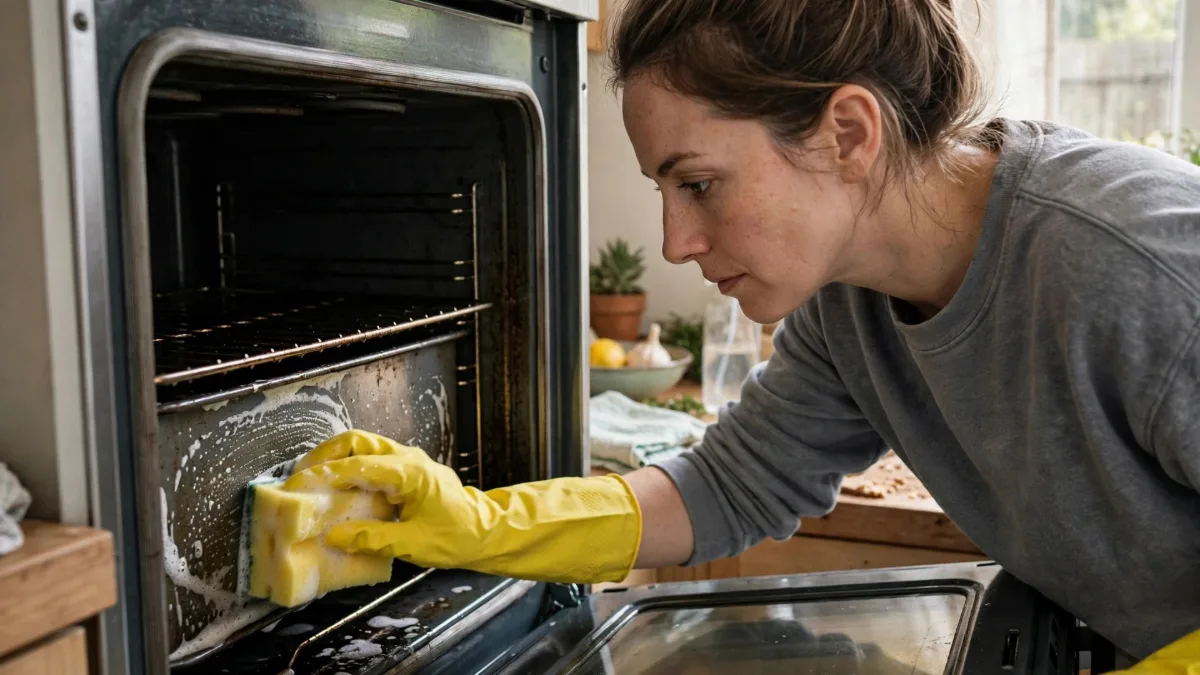
How to Clean an Oven: Baking Soda, Racks and Self-Clean Guide
A dirty oven does more than look bad. Burnt-on grease and food spills can smoke, make your kitchen smell and even affect the taste of what you bake. The good news is that you do not need harsh chemicals to get it clean. With baking soda, vinegar and a little patience, most ovens come out looking almost new. Here is exactly how to clean an oven, including the racks, the glass door and how to use the self-cleaning cycle safely.
Quick answer: To clean an oven, let it cool and remove the racks. Mix about 1/2 cup of baking soda with a few tablespoons of water into a spreadable paste, coat the inside of the oven (avoiding the heating elements), and leave it for about 12 hours or overnight. Wipe the paste away with a damp cloth, spray any leftover residue with a 1:1 mix of vinegar and water, and wipe again. Soak the racks separately in hot, soapy water.
What You Need
- Baking soda
- White vinegar and a spray bottle
- Water
- Rubber gloves
- A plastic spatula or scraper
- Microfiber cloths or a damp sponge
- Dish soap and a scrub brush (for the racks)
- A bathtub, large sink or garbage bag (for soaking racks)
How to Clean an Oven With Baking Soda and Vinegar

Step 1: Turn off the oven and let it cool
Make sure the oven is off and completely cool. If you have a gas oven, it is also a good idea to keep the paste away from the gas opening.
Step 2: Remove the racks and loose debris
Take out the racks, thermometer and any pans or foil. Brush or vacuum out crumbs and loose burnt pieces so the paste can reach the baked-on grime.
Step 3: Make a baking soda paste
In a bowl, mix about 1/2 cup of baking soda with a few tablespoons of water, adding water a little at a time until you have a thick, spreadable paste. Make a larger batch for a very dirty or large oven.
Step 4: Spread the paste inside the oven
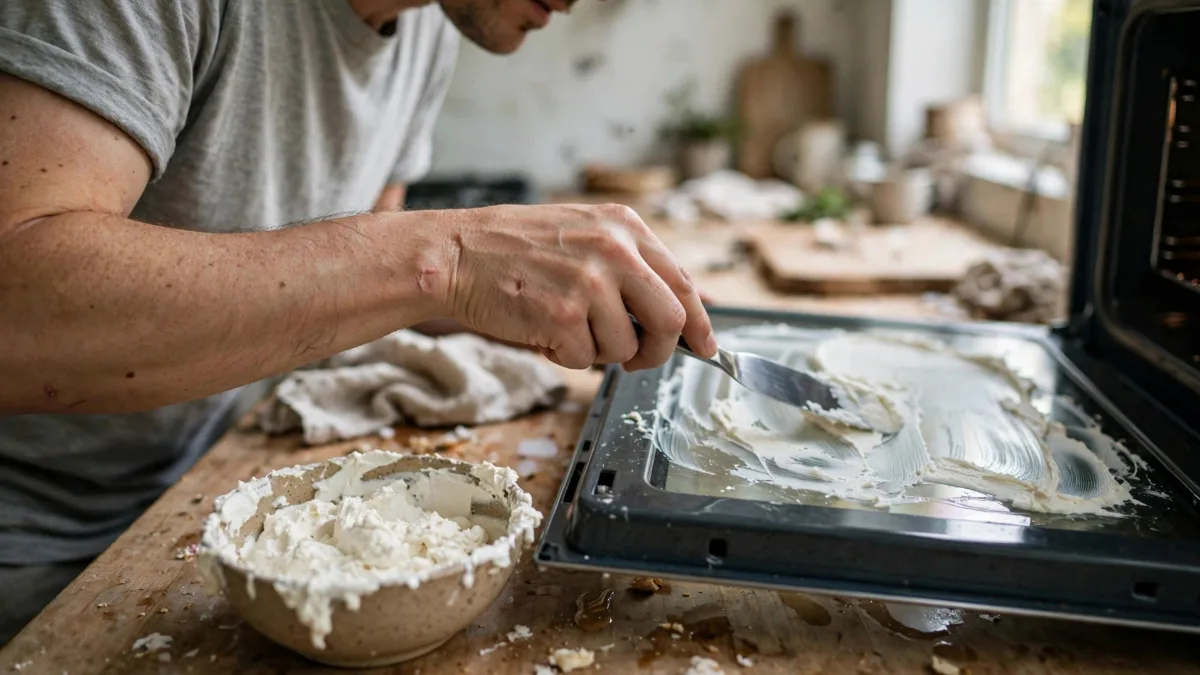
Wearing gloves, spread the paste over the bottom, sides, back and inside of the door. Use extra on greasy or burnt areas. Avoid the heating elements and, in a gas oven, the burner ports. The paste may turn brown as it loosens grease, which is normal.
Step 5: Let it sit
Leave the paste for about 12 hours or overnight. This gives the baking soda time to soften stuck-on grease so you can wipe it away with less scrubbing.
Step 6: Wipe out the paste
Use a damp cloth to wipe away as much paste and grime as possible. Use a plastic spatula to lift stubborn spots. Avoid steel wool and harsh scouring pads, which can scratch enamel and glass.
Step 7: Spray with vinegar and wipe again
Fill a spray bottle with equal parts white vinegar and water and mist any remaining baking soda residue. It will foam slightly. Wipe it clean with a damp cloth, then dry the oven with a clean towel.
Step 8: Put everything back
Once the racks and oven are dry, slide the racks back in. Run the oven empty for a few minutes if you want to make sure any moisture is gone.
How to Clean Oven Racks
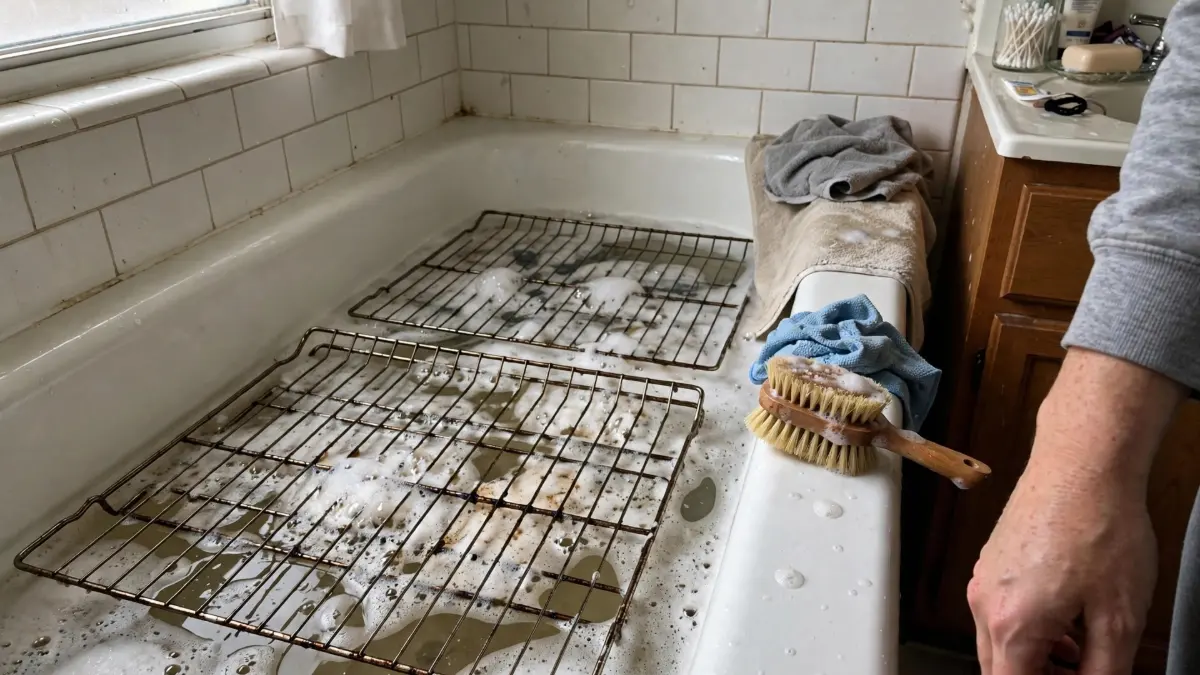
- Place a towel in the bottom of the bathtub to protect it, then lay the racks on top.
- Fill the tub with hot water to cover the racks and add a generous squirt of dish soap.
- Let them soak for at least 2 hours, or overnight for heavy grime.
- Scrub with a brush or non-scratch scrubber, rinse well and dry completely.
No bathtub? Put the racks in a large garbage bag with hot soapy water or a baking soda solution, tie it closed and let them soak in a utility sink or outdoors.
How to Clean the Oven Door Glass
Spread a thinner layer of baking soda paste on the inside of the glass and leave it for about 30 minutes. Wipe it off with a damp cloth, then polish with the vinegar spray and a dry microfiber cloth. Clean the outside of the door with warm soapy water, and use a stainless steel cleaner on stainless finishes.
How to Use the Self-Cleaning Feature Safely
Many ovens have a self-cleaning mode. There are two common types:
| Type | How it works | Typical time |
|---|---|---|
| High-heat self-clean | Heats the oven to roughly 800 to 1,000°F to burn grime to ash; the door locks automatically | About 2 to 6 hours, plus cooling time |
| Steam clean | Uses about 1 cup of water and low heat (around 250°F) to soften light messes | About 30 minutes to 1 hour |
According to Bob Vila’s guide to self-cleaning ovens, high-heat cycles produce more fumes than steam cycles. For safe use:
- Read your oven’s manual first, since instructions vary by brand and model
- Remove racks, pans and foil unless your manual says the racks can stay in
- Wipe out large spills first to reduce smoke
- Turn on the range hood and open windows
- Keep children and pets out of the kitchen; Merry Maids warns the fumes can be especially harmful to pet birds
- Never try to open the door until the cycle ends and the oven has cooled
- Wipe away the ash with a damp cloth once the oven is cool
How Often Should You Clean Your Oven?
| Task | How often |
|---|---|
| Wipe up fresh spills (once cool) | After each spill |
| Quick wipe of door and inside | Monthly |
| Deep clean with baking soda | About every 3 months, or more if you cook often |
| Clean the racks | Every deep clean |
Tips to Keep Your Oven Clean Longer
- Place a baking sheet on the rack below dishes that might bubble over
- Cover casseroles or roasts that tend to splatter
- Wipe spills as soon as the oven is cool, before they bake on
- Check your manual before using oven liners, since some can damage the oven floor or block vents
Common Mistakes to Avoid
- Cleaning a hot oven
- Getting paste or water on the heating elements or gas ports
- Using steel wool or metal scrapers on enamel or glass
- Mixing commercial oven cleaner with vinegar or other products
- Leaving racks in during a high-heat self-clean when your manual says to remove them
Frequently Asked Questions
How long should baking soda sit in the oven?
About 12 hours or overnight works best for heavy grime. For the glass door, about 30 minutes is usually enough.
How can I clean my oven fast?
For a quick clean, use your oven’s steam-clean setting if it has one, or apply a commercial oven cleaner following the label. Baking soda works best when it has time to sit.
Is it safe to use the self-cleaning cycle?
Generally yes, if you follow the manual, ventilate the kitchen, remove items from the oven and keep children and pets away. Some people avoid it because of the smoke and very high heat.
Can I use oven cleaner on a self-cleaning oven?
Many manufacturers advise against commercial oven cleaners in self-cleaning ovens because they can damage the special interior coating. Check your manual first.
The Bottom Line
Learning how to clean an oven is easier than it looks: let baking soda paste do the hard work overnight, wipe it away, finish with vinegar and soak the racks separately. Use the self-cleaning cycle carefully and wipe up spills as they happen to keep deep cleans rare. While you are cleaning the kitchen, see our guides on getting rid of fruit flies and cleaning drains.
Always follow your oven manufacturer’s instructions and safety warnings. Product labels and appliance manuals take priority over general tips.