Can Dogs Eat Carrots? Raw, Cooked and How Much Is Safe
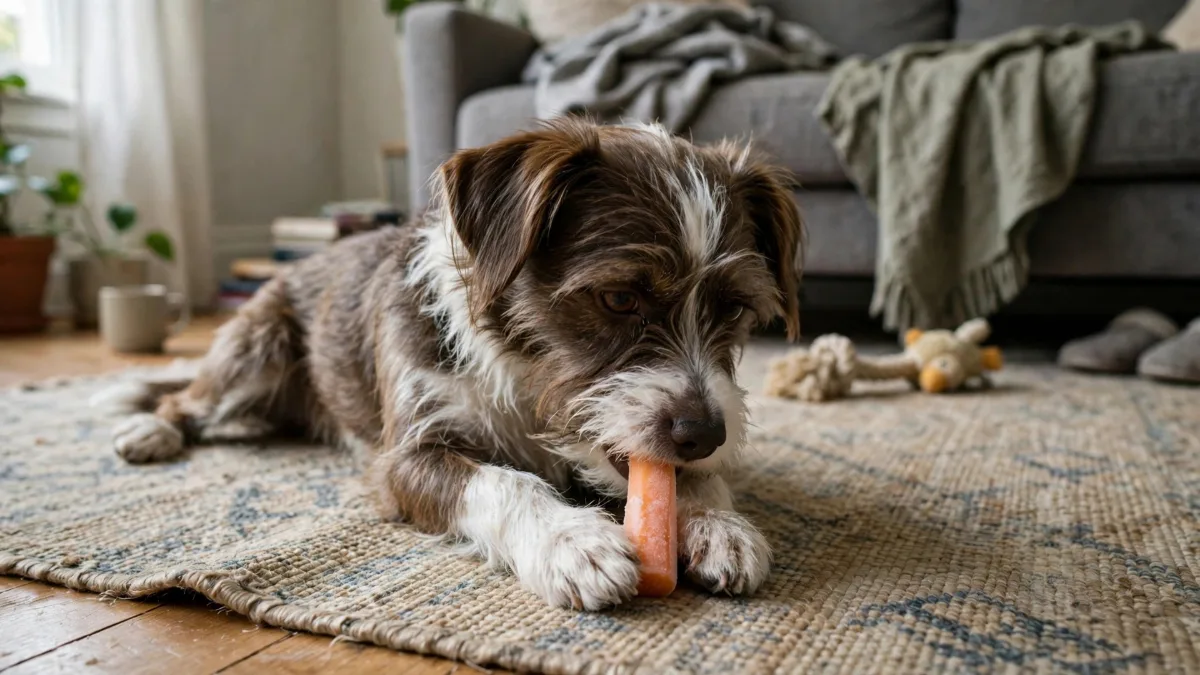
Carrots are one of the most common vegetables people share with their dogs, and for good reason. They are cheap, easy to keep in the fridge, and most dogs love the sweet crunch. Some trainers even use baby carrots as low-calorie rewards.
Still, there are a few things to know before you hand one over, like whether raw or cooked is better, how much is too much, and why a whole carrot is not always a good idea. Here is what vets say.
Quick answer: Yes, dogs can eat carrots. Plain carrots, raw or cooked, are a safe and healthy low-calorie treat for most dogs. They provide fiber and beta-carotene, which the body turns into vitamin A. Wash them, cut them into bite-size pieces to prevent choking, and serve them without butter, salt or seasoning. Keep carrots and other treats to about 10 percent of your dog’s daily calories.
Are Carrots Good for Dogs?
According to PetMD, carrots are low in calories and fat and high in fiber, which makes them a smart snack for dogs who need to watch their weight. A medium carrot has only around 25 calories. Here is what they offer:
- Beta-carotene: An antioxidant the body converts into vitamin A, which supports eyesight, skin, coat and the immune system.
- Fiber: Helps keep digestion regular. FirstVet notes that the soluble fiber in carrots may also help with blood sugar control.
- Low calories: A good replacement for high-calorie biscuits.
- Crunch: Chewing on raw carrots may help scrape off a little plaque, though it does not replace brushing.
Can Dogs Eat Raw Carrots?
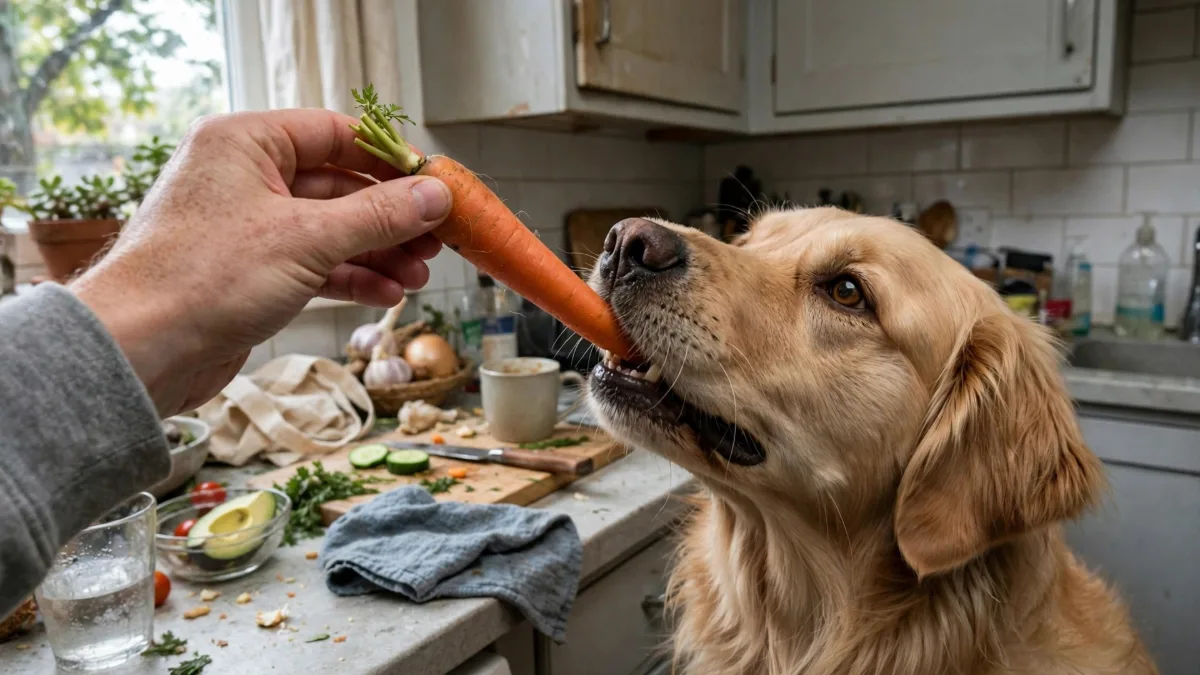
Yes. Raw carrots are safe and give your dog something satisfying to crunch on. The catch is that dogs do not digest raw carrot very well, so some of it passes straight through. Raw carrots also need to be cut into the right size so your dog chews them instead of swallowing chunks whole.
Can Dogs Eat Cooked Carrots?
Yes, and cooked carrots are often easier on the stomach. FirstVet explains that steaming or boiling makes carrots easier to digest and helps your dog absorb more of the nutrients. Cook them plain, with no butter, oil, salt, garlic or brown sugar glaze. Let them cool before serving.
| Type of carrot | Safe for dogs? | Notes |
|---|---|---|
| Raw carrots | Yes | Cut into small coins or sticks |
| Steamed or boiled | Yes | Easier to digest; serve plain |
| Baby carrots | Yes | Cut in half for small dogs |
| Canned carrots | Not ideal | Often high in salt; rinse well or skip |
| Glazed or roasted with seasoning | No | Butter, sugar, salt and garlic are not dog-friendly |
| Carrot cake | No | Sugar, fat and sometimes xylitol or nutmeg |
How Many Carrots Can a Dog Eat?
Vets generally follow the 10 percent rule: treats, carrots included, should not make up more than 10 percent of what your dog eats in a day. As a rough idea:
- Small dogs (under 20 lbs): 2 to 3 thin slices or one baby carrot cut up
- Medium dogs (20 to 50 lbs): about 1 baby carrot to half a regular carrot
- Large dogs (over 50 lbs): about half to one whole carrot, cut into pieces
Too many carrots at once can cause gas, loose stools or constipation because of the extra fiber. Start with a few pieces and see how your dog does.
Risks of Feeding Carrots to Dogs
Choking and blockages
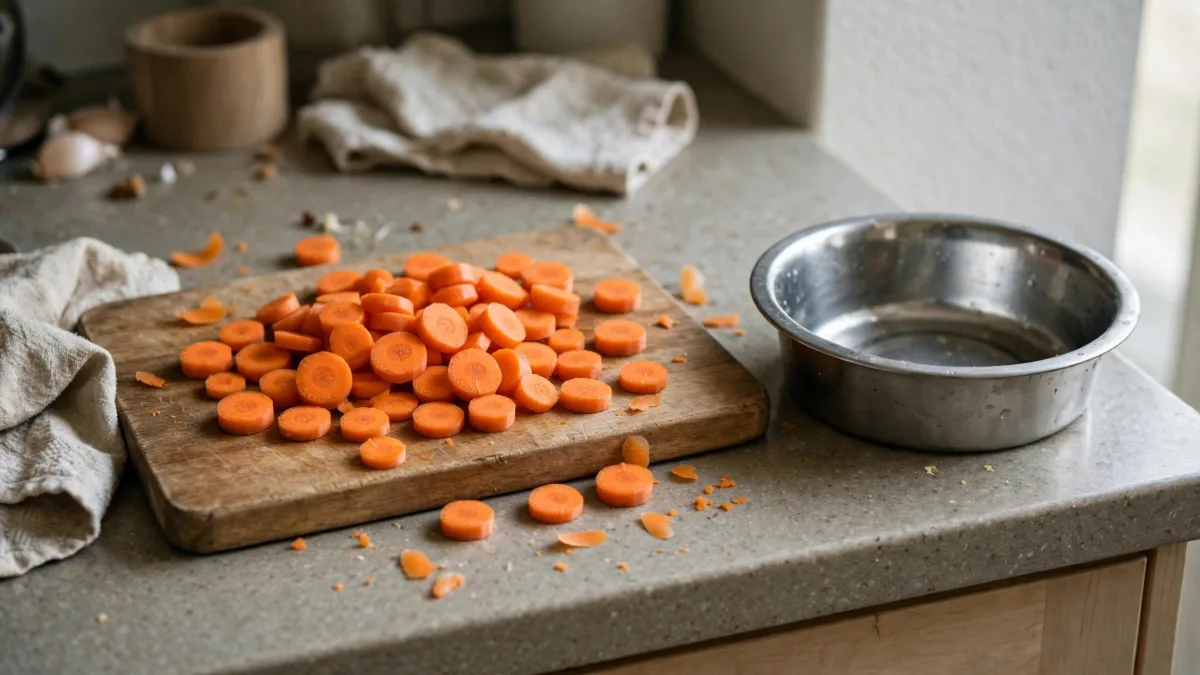
Dogs who gulp food can choke on large pieces or swallow a chunk that gets stuck in the intestines. PetMD recommends slices about 1/4 inch thick. FirstVet adds a useful point: tiny dogs may do better with a piece they have to chew, while big dogs may need smaller bites so they cannot swallow them whole. Know your dog and always supervise.
Sugar for diabetic or overweight dogs
Carrots contain natural sugar. For most dogs that is not a problem, but if your dog has diabetes or is on a weight-loss plan, ask your vet before adding them.
Too much vitamin A
Eating very large amounts of carrots over a long time could add too much vitamin A on top of a complete dog food. This is rare and only a concern if carrots become a big part of the diet rather than a snack.
Can Puppies Eat Carrots?
Yes, in small amounts once they are eating solid food. Cut carrots very small or serve them cooked and mashed. Some owners give frozen carrots to teething puppies, but PetMD advises against whole frozen carrots because they are hard enough to damage teeth and can be a choking hazard. If you want a cool chew, ask your vet about safer teething toys.
How to Serve Carrots to Your Dog
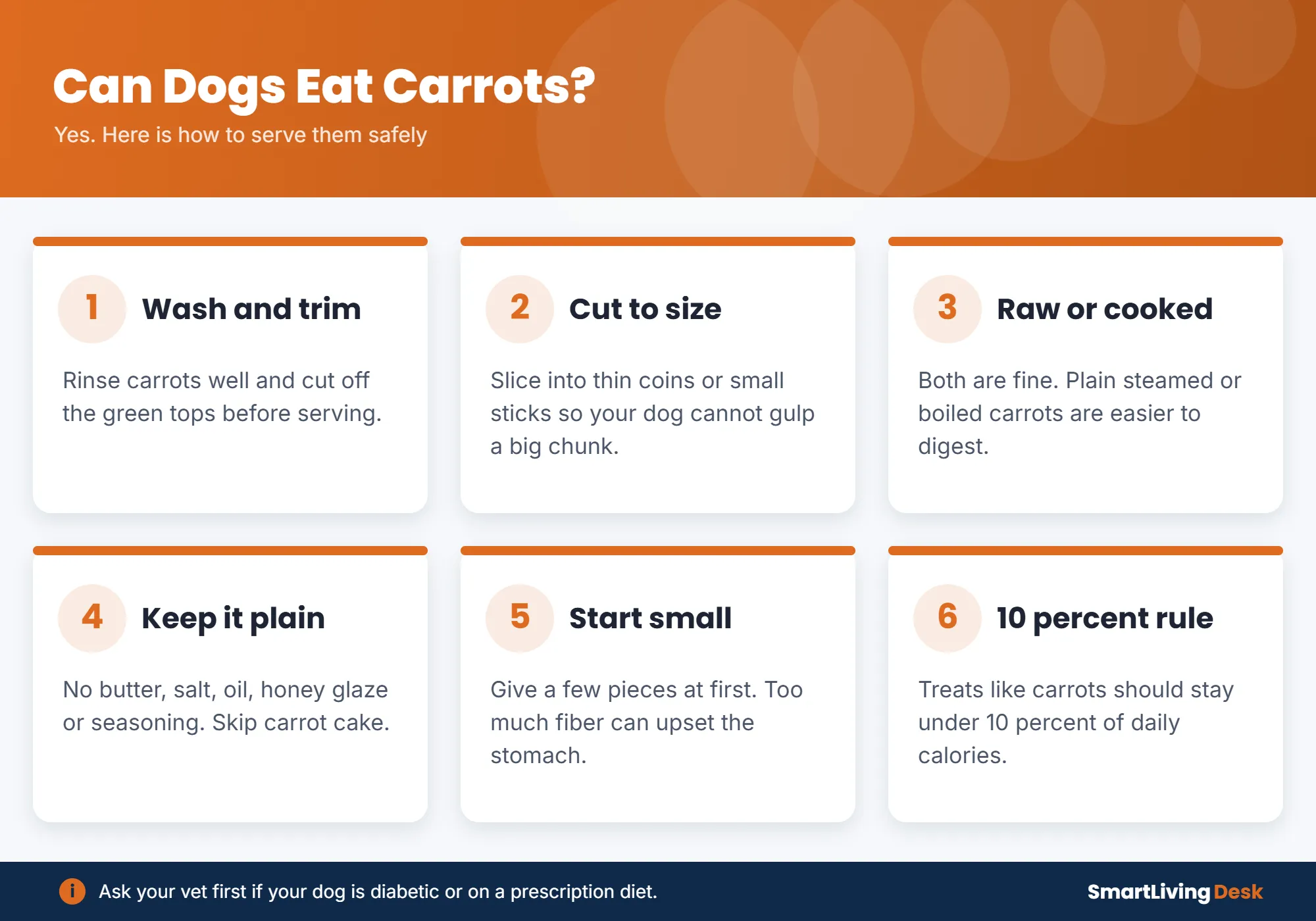
- Wash the carrot well and cut off the leafy top.
- Peel it if you like (not required).
- Slice into thin coins, sticks or small cubes that suit your dog’s size.
- Serve raw, or steam or boil until soft and let cool.
- Try mixing cooked, mashed carrot into dinner or stuffing it into a puzzle toy.
Can Dogs Eat Peas and Carrots?
Yes. Plain peas and carrots, fresh or frozen and then cooked without seasoning, are a safe combo. Avoid canned versions with added salt.
More Healthy Snacks to Try
If your dog enjoys carrots, a few other veggies and fruits also work in small amounts, including cucumbers, broccoli, blueberries and seedless watermelon.
Frequently Asked Questions
Can dogs eat carrots every day?
Yes, a few pieces a day is fine for most healthy dogs, as long as treats stay within 10 percent of their calories.
Are baby carrots safe for dogs?
Yes. Baby carrots are just regular carrots cut and peeled. Cut them in half or into coins for small dogs and fast eaters.
Can carrots upset a dog’s stomach?
Yes, if your dog eats a lot at once. The fiber can cause gas, diarrhea or constipation. Introduce them slowly.
Can dogs eat carrot tops?
Carrot greens are not toxic, but they are tough and not very appealing to most dogs. It is simpler to remove them.
Can dogs eat carrot cake?
No. Carrot cake is high in sugar and fat and may contain nutmeg, raisins or xylitol, all of which can be harmful to dogs.
The Bottom Line
Can dogs eat carrots? Yes. Plain carrots, raw or cooked, are a safe, crunchy, low-calorie treat for most dogs. Cut them to a safe size, skip the butter and seasoning, and keep portions small. If your dog has diabetes or a special diet, check with your vet first.
This article is for general information and does not replace advice from your veterinarian. Talk to your vet before making changes to your dog’s diet.