

How Long Do Hamsters Live? Lifespan by Species
Hamsters are often a first pet for kids and a cozy companion for adults, but their short lives catch many owners by surprise. Knowing how long hamsters live helps you plan, give them the best care, and prepare your family for what to expect.
Here is the average hamster lifespan, how it differs between Syrian, dwarf and Roborovski hamsters, signs of aging, and practical ways to help your hamster live a long, healthy life. We also cover the questions owners ask most on Reddit hamster communities.
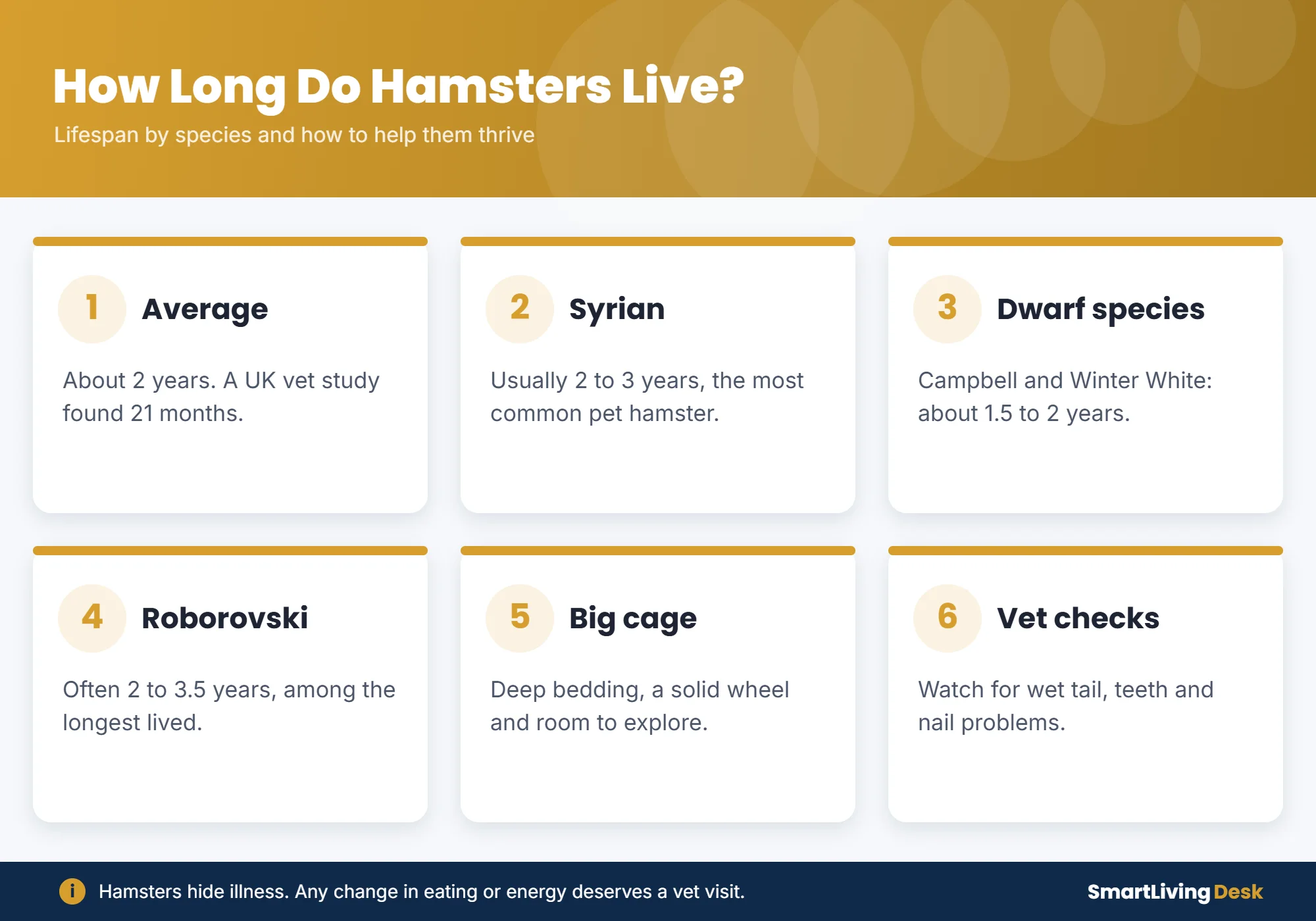
Quick answer: Most pet hamsters live about 2 to 3 years. Syrian hamsters usually live 2 to 3 years, dwarf hamsters such as Campbell’s and Winter White live about 1.5 to 2 years, and Roborovski hamsters often live 2 to 3.5 years. A large UK veterinary study found an average lifespan of about 21 months. Genetics, diet, cage size, exercise and early vet care all affect how long a hamster lives.
Average Hamster Lifespan
The largest study of pet hamsters, by the Royal Veterinary College’s VetCompass program, looked at nearly 4,000 hamsters seen by UK vets and found an average lifespan of about 21 months. Many hamsters live past two years with good care, and three years is considered a great age.

How Long Do Hamsters Live by Species?
| Species | Typical lifespan | Notes |
|---|---|---|
| Syrian (golden, teddy bear) | 2 to 3 years | Largest and most common pet hamster; must live alone |
| Campbell’s dwarf | 1.5 to 2 years | Prone to diabetes |
| Winter White dwarf | 1.5 to 2 years | Coat may turn white in winter |
| Roborovski dwarf | 2 to 3.5 years | Smallest and fastest; often longest lived |
| Chinese hamster | 2 to 3 years | Long tail, slender body |
“How long do dwarf hamsters live” is one of the most searched versions of this question. The answer depends on the type of dwarf. Roborovskis tend to outlive Campbell’s and Winter Whites.
Common Health Problems in Hamsters
The RVC study found the most common problems were:
- Wet tail (diarrhea), a serious and often fast-moving illness
- Bite injuries from fighting with other hamsters
- Overgrown nails
- Overgrown front teeth
- Injuries from falls or accidents
Hamsters also commonly develop skin problems, tumors and, in some dwarf species, diabetes.

How to Help Your Hamster Live Longer
- Big enough cage: Many hamster welfare groups recommend a large enclosure with plenty of floor space, often far bigger than standard pet store cages.
- Deep bedding: Hamsters love to burrow. Several inches of paper-based bedding reduces stress.
- A solid wheel: Large enough that their back stays straight, with a solid running surface.
- Healthy diet: A quality hamster mix or pellets, small amounts of fresh vegetables and occasional protein like plain cooked egg.
- Chew items: Safe wooden chews help keep constantly growing teeth in check.
- House Syrians alone: Syrian hamsters are solitary and fight if housed together.
- Quiet location: Away from direct sun, drafts, loud noises and other pets.
- Gentle handling: Falls are a common cause of injury.
- Find an exotic vet early: Hamsters hide illness, so early checkups matter.
Signs Your Hamster Is Getting Old
- Sleeping more and moving slowly
- Thinning fur or bald patches
- Weight loss
- Eating less or struggling with hard food
- Less interest in the wheel or exploring
- Cloudy eyes
Senior hamsters do well with softer foods, easy-to-reach water, lower platforms and a calm routine.
Hamster Care by Age
| Age | Life stage | Care focus |
|---|---|---|
| 0 to 3 months | Baby (pup) | Stays with mother until about 3 to 4 weeks; gentle handling once settled |
| 3 months to 1 year | Young adult | Most active stage; big wheel, tunnels and toys |
| 1 to 1.5 years | Adult | Steady routine, weekly health checks |
| 1.5 years and up | Senior | Softer food, lower climbs, more frequent vet visits |
Choosing a Healthy Hamster
A long life starts with a healthy hamster. Many experienced owners on Reddit suggest adopting from a rescue or a reputable breeder rather than buying on impulse. Before you bring one home, look for:
- Bright, clear eyes with no discharge
- A clean, dry bottom (a wet or dirty tail area can signal wet tail)
- Smooth, full fur with no bald patches
- Short, even front teeth
- Alert, curious behavior when awake
Frequently Asked Questions
Can a hamster live 5 years?
It is extremely rare. Most hamsters live 2 to 3 years, and anything over 3 is a long life.
Do hamsters live longer in bigger cages?
Larger, enriched cages reduce stress and encourage exercise, which supports better health, although genetics still play a big role.
Why did my hamster die so young?
Illnesses like wet tail can progress quickly, and some hamsters have genetic problems from breeding. If a hamster dies suddenly, it is rarely the owner’s fault.
How long do hamsters live as pets compared to the wild?
Wild hamsters often live shorter lives because of predators and harsh conditions.
The Bottom Line
Most hamsters live 2 to 3 years, with Roborovskis often living longest and Campbell’s and Winter Whites a little shorter. A spacious cage, deep bedding, a good diet and early vet care give your hamster the best chance at a full, happy life.
Compare other small pets in our guides on how long guinea pigs live and what turtles eat, or read how long cats live.
This article is for general information and does not replace advice from an exotic animal veterinarian.