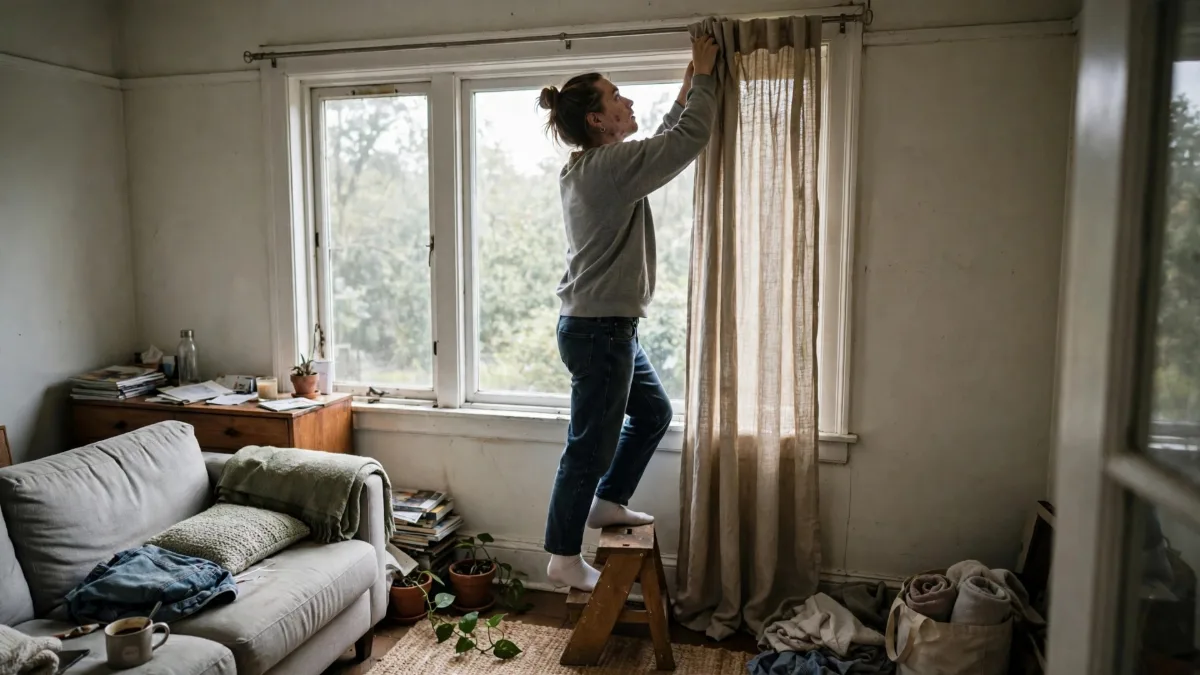
How to Hang Curtains (Height, Width and Length Guide)
Curtains can make a room look taller, brighter and more finished, or they can make it look smaller and a little off. The difference usually comes down to a few inches: how high the rod sits, how wide it goes and where the fabric stops.
This guide covers how to hang curtains step by step, including how high to hang them, how wide the rod should be, which length to choose, and how to hang curtains without drilling if you rent.
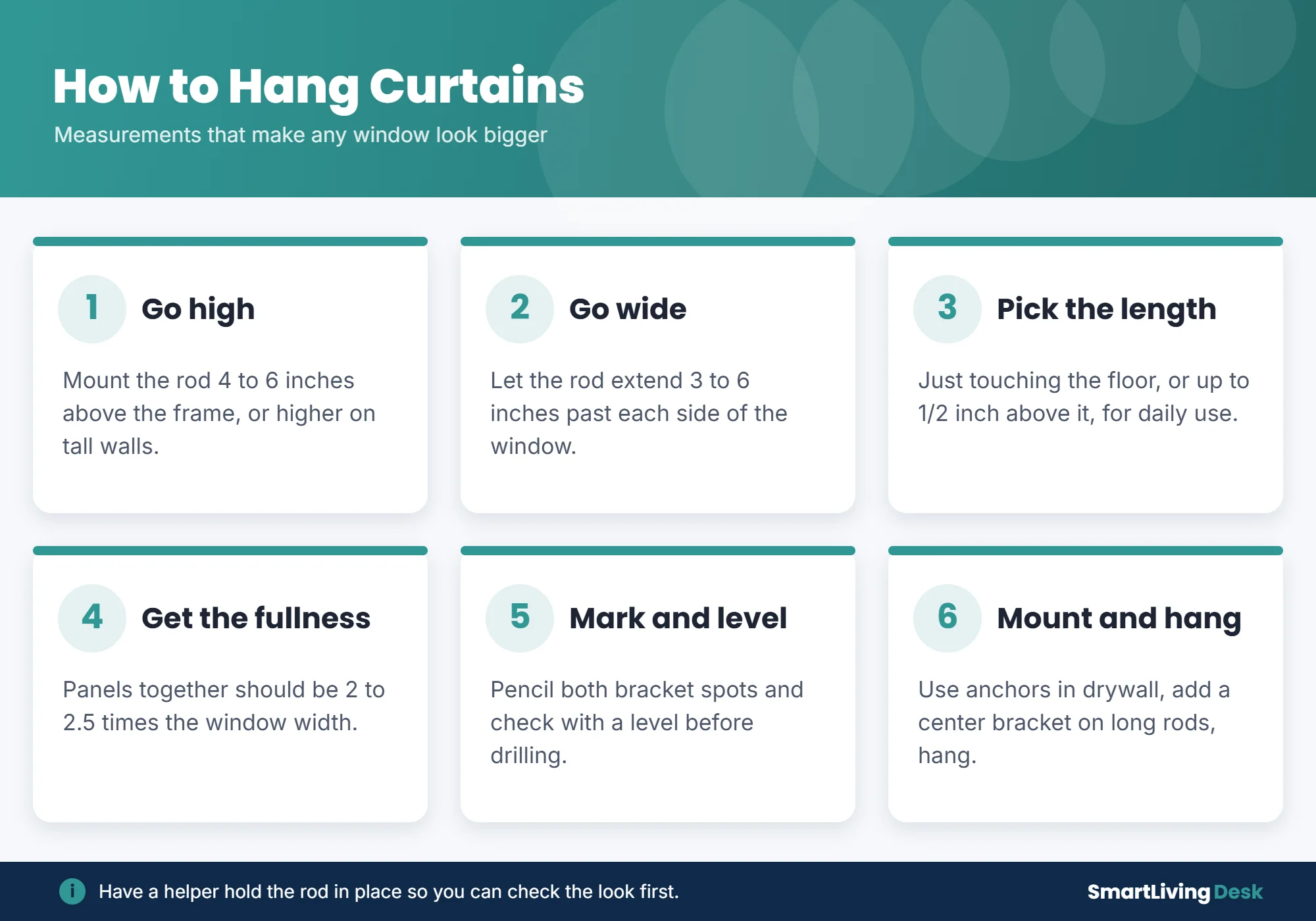
Quick answer: To hang curtains, mount the rod about 4 to 6 inches above the window frame (higher on tall walls) and extend it 3 to 6 inches past each side of the window. Choose panels that just touch the floor or stop about 1/2 inch above it, with a combined width of 2 to 2.5 times the window width. Mark the bracket spots, check them with a level, drill pilot holes, use wall anchors in drywall, mount the brackets, and hang the rod and curtains.
What You Need
- Curtain panels
- Curtain rod with brackets and screws
- Tape measure and pencil
- Level
- Drill and drill bits
- Drywall anchors (if not drilling into studs)
- Step stool or ladder
- A helper (very useful)
How High to Hang Curtains
Hanging the rod higher than the window makes the ceiling feel taller. According to Bob Vila, on an 8-foot ceiling you should mount the rod about 4 to 6 inches above the window frame. If there is less than 12 inches between the top of the window and the ceiling, go higher, close to the ceiling. On ceilings 10 feet or taller, keep the rod within about 8 inches of the frame so it does not look disconnected from the window.
Before you buy panels, decide the rod height first, then measure from that spot to the floor. That number is your curtain length.
How Wide Should a Curtain Rod Be?
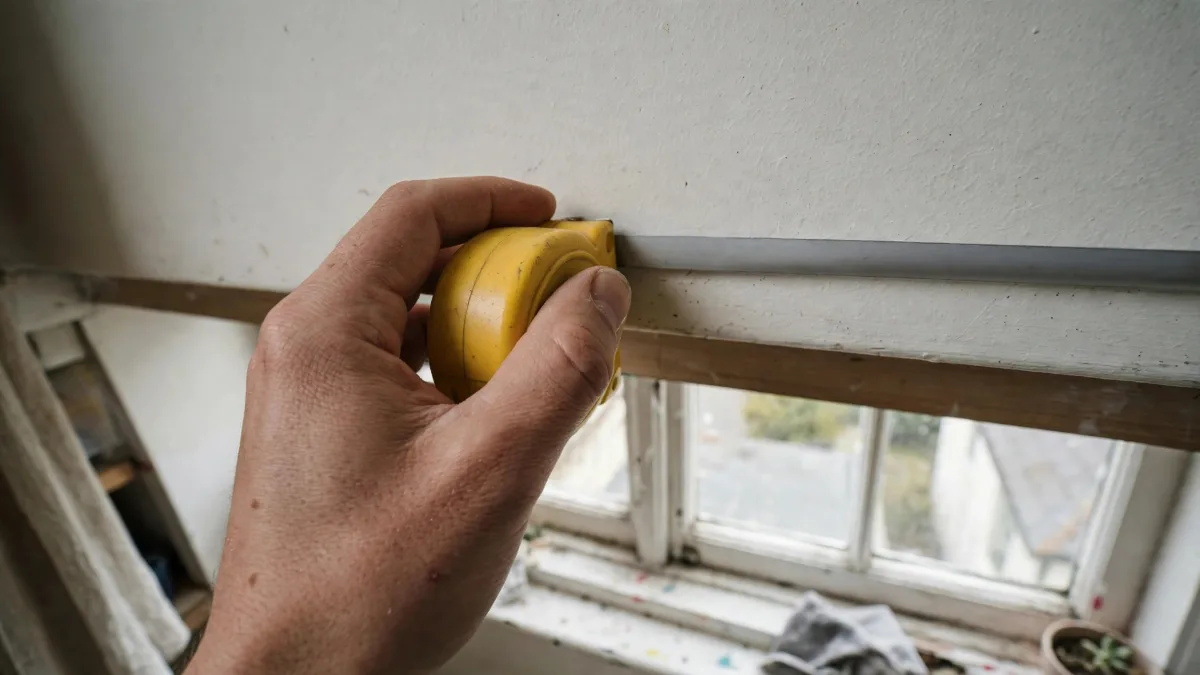
Crate & Barrel recommends extending the rod 3 to 6 inches past each side of the window frame. This lets the curtains stack against the wall when open instead of blocking the glass, so more light gets in and the window looks bigger. Bob Vila suggests keeping the rod no more than about one-third wider than the window overall.
How Long Should Curtains Be?
| Style | Where it stops | Best for |
|---|---|---|
| Float | About 1/2 inch above the floor | Clean, tailored look; curtains you open often |
| Kiss | Just touches the floor | Classic look in most rooms |
| Light puddle | 1 to 3 inches extra on the floor | Soft, relaxed look on curtains you rarely move |
| Sill length | At or just below the sill | Windows above radiators, counters or furniture |
Standard panel lengths are 63, 84, 96, 108 and 120 inches. If your measurement falls between sizes, round up and hem or adjust the rod height slightly.
How Wide Should Curtain Panels Be?
For a full look, the total width of all panels should be about 2 to 2.5 times the width of the window. For a lighter, more modern look in small rooms, 1.5 times is enough. Panels that are too narrow look stretched and flat when closed.
How to Hang Curtains Step by Step
- Mark the height. Measure up from the top of the window frame to your chosen height and make a small pencil mark on each side.
- Mark the width. Measure out 3 to 6 inches from each side of the frame and mark where the brackets will go.
- Check level. Hold a level between the marks. Floors and ceilings in older homes are often not straight, so trust the level, not the ceiling line.
- Drill pilot holes. If you hit a stud, screw straight into it. If not, use drywall anchors rated for the weight of your curtains.
- Attach the brackets. For rods longer than about 5 feet or heavy drapes, add a center support bracket to stop sagging.
- Thread the curtains. Slide the panels onto the rod, then set the rod in the brackets and tighten any set screws.
- Adjust. Spread the panels evenly and steam out any creases from the packaging.

How to Hang Curtains Without Drilling
If you rent or do not want holes in the wall, try one of these:
- Tension rods: Fit inside the window frame for light curtains.
- Adhesive hooks or brackets: Strong command-style hooks can hold lightweight rods and sheer panels.
- No-drill brackets: Some brackets clamp onto the top of the window frame or tap into the frame with tiny nails.
- Magnetic rods: Work on metal doors and some metal window frames.
These options are best for light fabrics. Heavy blackout curtains usually need properly mounted brackets.
Common Mistakes to Avoid
- Mounting the rod right on top of the window frame, which makes the room look shorter.
- Using a rod the same width as the window, so the open curtains cover the glass.
- Buying panels that are too short and hover awkwardly above the floor.
- Skipping anchors in drywall, which leads to brackets pulling out.
- Not checking for level before drilling.
Still deciding what to buy? Our guide on how to measure for curtains walks through measuring before you shop.
Frequently Asked Questions
How high should curtains be hung above a window?
About 4 to 6 inches above the frame on a standard 8-foot ceiling. Go higher if there is less than a foot between the window and the ceiling.
Should curtains touch the floor?
For most rooms, yes, or stop about 1/2 inch above it. Very short curtains that end mid-wall usually look unfinished, unless a radiator or furniture is in the way.
How far should a curtain rod extend past the window?
About 3 to 6 inches on each side, so open curtains rest on the wall instead of covering the glass.
How many curtain panels do I need?
Add up the panel widths until they equal about 2 to 2.5 times your window width. For most standard windows, that means two panels.
Do I need a center bracket?
For rods longer than about 5 feet or heavy fabric, yes. It keeps the rod from bowing in the middle.
The Bottom Line
To hang curtains well, go high and wide: mount the rod about 4 to 6 inches above the frame and 3 to 6 inches past each side. Choose panels that touch or nearly touch the floor and are about twice as wide as the window. Measure, level, use anchors, and your windows will look bigger and the room more finished.